🦄 These are the 20 Weirdest National Animals From Around the World (#1 is Truly Crazy!)
Most countries pick something sensible for their national animal — the U.S. has the bald eagle 🦅 Canada has the beaver 🦫 and Australia has the kangaroo 🦘
However, some countries looked at that playbook and said “nah, let’s go FULL weird.” These countries turnt their volume up to 11, and honestly, we’re here for it.
From mythical beasts to extinct creatures and animals that look like they were assembled from spare parts, these 20 weirdest national animals prove that sometimes the best way to represent your country is to get absolutely unhinged with it.
🦤 20. Dodo in Mauritius

As if creating a joke that would never not be funny, Mauritius picked an animal that’s been extinct since the 1600s as their national symbol.
That’s right, the dodo, that famously clumsy flightless bird that became the poster child for extinction, is still the pride of this tiny island nation east of Madagascar.
Portuguese sailors first spotted dodos in the early 1500s, and by the end of the next century, they were gone forever.
The combination of human hunting and introduced species (rats, pigs, monkeys) wiped out the entire population in less than 200 years.
Yet Mauritius still plasters dodo images on everything from their coat of arms to government stamps to tourist merchandise.
When it was still around, the dodo bird grew up to 3 feet (1 m) tall and weighed about 50 pounds (23 kg) on average.
Its beak was large and hooked, perfect for eating fallen fruits, and it had tiny useless wings that couldn’t lift its chubby body off the ground.
The Natural History Museum of Mauritius houses one of only a few complete dodo skeletons in the world, basically a monument to the country saying “we had something amazing, but whoopsie 🫣”
It’s honestly kind of hilarious that Mauritius refuses to move on as most countries would be embarrassed to celebrate an animal they accidentally hunted to extinction.
However, Mauritius wears it like a weird badge of honor, and there’s definitly something to be said for that.
🐕 19. Pharaoh Hound in Malta
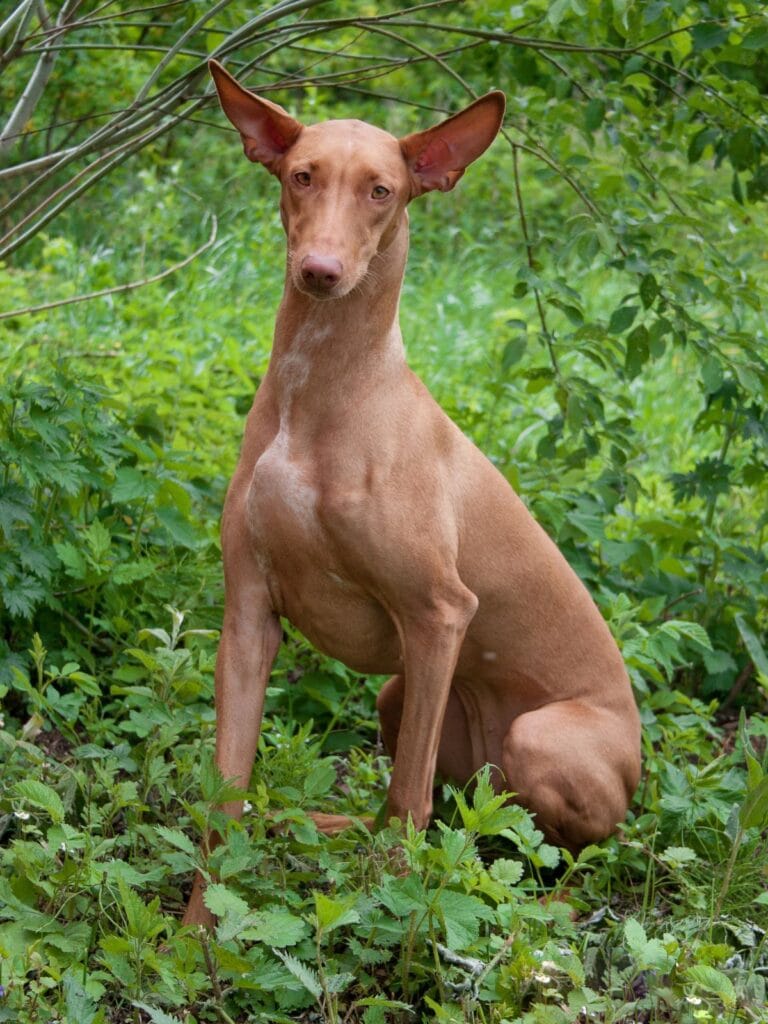
Despite the name screaming “Egypt,” the Pharaoh Hound is actually from Malta, a tiny European island nation located just south of Italy.
This would be like if France’s national animal was the Texas Longhorn when those are 1) totally associated with America, and 2) not even found in France.
Pharaoh Hound dogs have pointy ears, a reddish-tan coat, and an athletic build perfect for hunting rabbits across Malta’s rocky terrain.
They can reach speeds of 35 mph (56 km/h) and have been used by Maltese hunters for centuries.
Some people claim the breed descended from the ancient Egyptian Tesem hunting dogs that Phoenicians brought to Malta thousands of years ago, but genetic testing suggests that’s probably just a romantic myth.
The really weird part is that Pharaoh Hounds have a unique trait called “blushing.”
When they get excited or happy, their nose and ears actually turn bright pink due to increased blood flow.
It’s like the dog version of your friend who turns red when they’re embarrassed, except the dog does it when you pull out treats.
Malta designated the Pharaoh Hound (aka Kelb tal-Fenek) as their national dog in 1974, and you can even find them on Maltese stamps.
The breed is rare outside Malta, with only about 200 to 500 in the United States, making them one of the most exclusive national animals on this list.
🥝 18. Kiwi in New Zealand

New Zealand picked one of the few birds that can’t fly, has hair instead of feathers, nostrils at the tip of its beak, and lays an egg that’s 20 percent of the mother’s body weight.
The kiwi is basically what happens when evolution gets drunk and decides to make a bird that acts like a mammal.
Kiwis stand about 18 inches (46 cm) tall and weigh 3 to 8 pounds (1.4 to 3.6 kg) depending on the species.
Their feathers are loose and hair-like, giving them a shaggy appearance more suited to a small mammal than a bird.
They have functional lungs but also breathe through their skin, and their body temperature is 100°F (38°C), which is unusually low for a bird and closer to a mammal’s temperature 🌡️
The kiwi is the only bird in the world with nostrils at the tip of its bill instead of near the base.
This allows it to sniff out worms and insects up to 6 inches (15 cm) underground while probing the forest floor.
The bird has tiny, useless wings only 1 inch (3 cm) long that are completely hidden under its feathers, and it has no tail whatsoever.
Here’s the really bonkers part about kiwi reproduction: The female lays an egg that weighs up to 20% of her body weight, which is proportionally the largest egg of any bird.
To put this in perspective, if human babies were proportionally this large, women would give birth to 30-pound (14 kg) infants.
The egg takes 70 to 85 days to hatch 🐣 and once born, kiwi chicks are fully developed with eyes open and can walk within hours.
Kiwis evolved without mammalian predators, so they never developed proper anti-predator responses.
When European settlers introduced stoats, cats, and dogs to New Zealand, kiwi populations crashed.
Today, only 5% of kiwi chicks survive to six months in the wild without human intervention.
The kiwi population has dropped from an estimated 12 million to fewer than 100,000.
Despite few New Zealanders ever seeing a kiwi in the wild, the bird became the national symbol and New Zealanders themselves are nicknamed “Kiwis.”
The bird appears on coins, stamps, military insignia, and even gave its name to the New Zealand dollar in currency trading.
🦙 17. Vicuña in Peru

Most people show up to Peru ready to see llamas, but Peru’s actual national animal is the vicuña, the llama’s smaller (and fancier) cousin.
The vicuña lives at alpine elevations in the Andes Mountains, often above 13,000 feet (4,000 m), where the air is so thin that most animals would pass out.
These camelids stand only 3 feet (1 m) tall at the shoulder and weigh 75 to 140 pounds (35 to 65 kg).
Their wool is ridiculously soft and expensive because each vicuña only produces about 1 pound (0.5 kg) of wool every two years.
A vicuña wool coat can cost $20,000 or more, which led to massive poaching in the 1960s that nearly drove them extinct.
Vicuñas have been on Peru’s coat of arms since 1825, representing the country’s natural wealth.
Inca royalty wore vicuña wool exclusively, and killing a vicuña without royal permission was punishable by death.
In the 1950s, a U.S. presidential aide was caught in a scandal involving a vicuña coat given to him as a bribe, proving that vicuña wool has been causing political drama for centuries.
The vicuña’s lower teeth grow continuously throughout their lives, allowing them to graze on tough alpine grasses without wearing down their teeth.
They also have special blood adaptations that allow their red blood cells to carry more oxygen in the thin mountain air.
🐦🔥 16. Phoenix in Greece

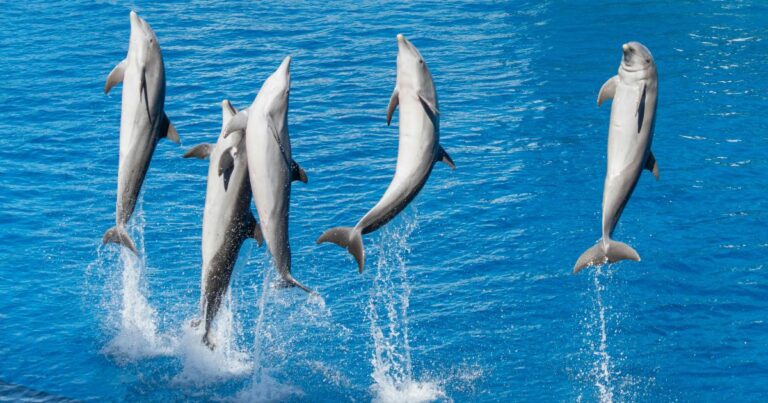
Greece wasn’t content with just the common dolphin as their national animal, so they also claimed the phoenix as their national bird.
That’s right, the mythical bird that sets itself on fire, dies in the flames, and is reborn from its own ashes.
The phoenix legend appears throughout Greek mythology and has become a symbol of resurrection, renewal, and immortality.
According to ancient texts, the phoenix lived for 500 years before building a nest of aromatic branches and setting itself ablaze.
From the ashes, a new phoenix would emerge, ready to live another 500 years — so in a sense, the phoenix represents Greece’s own history of rising from adversity.
The country has endured countless invasions, economic collapses, and political upheavals, yet continues to emerge stronger.
It’s a powerful metaphor, even if the underlying message is “we had to set ourselves on fire first.”
The phoenix appears in Greek art, literature, and modern symbolism, adopted by various Greek organizations and appears in cultural contexts throughout the country.
Harry Potter fans might recognize the phoenix from Dumbledore’s pet Fawkes, who could heal wounds with his tears and burst into flames when it was time to regenerate.
All over the world and in many cultural legends, the phoenix has come to represent starting again and rebirth.
It’s definitely a very cool animal to have represent your country, even if it’s not one of the animals you can see in Greece because, well, it doesn’t really exist.
🦎 15. Komodo Dragon in Indonesia
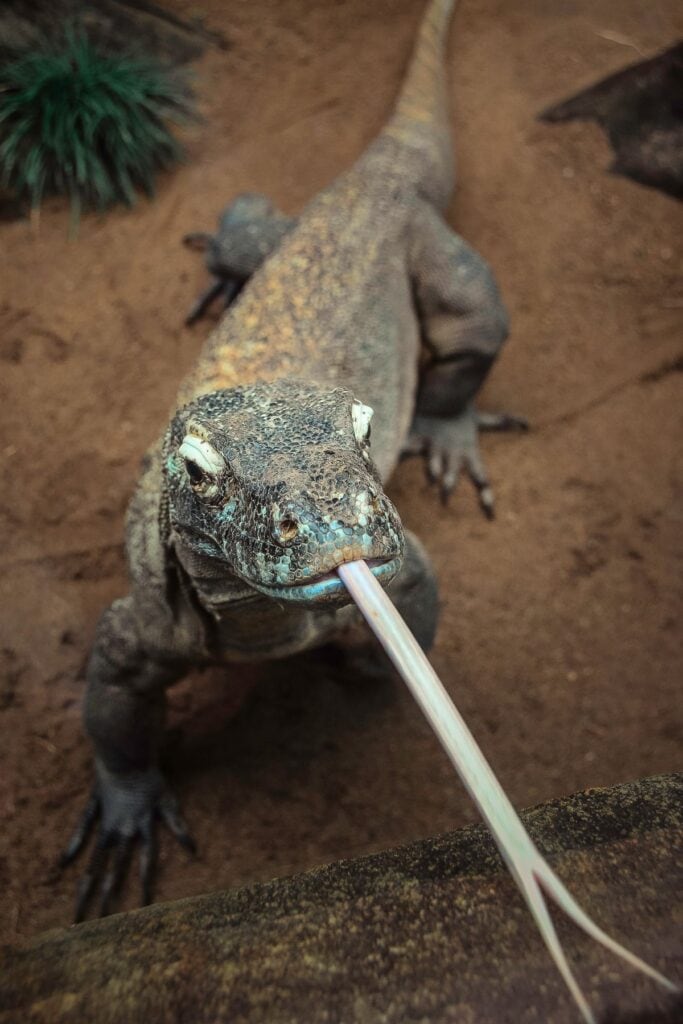
Though there are MANY “normal” Indonesian animals, they decided they’d rather have the world’s most gigantic venomous lizard that sometimes eats its own babies to represent them 🤷♀️
The Komodo dragon is the world’s largest living lizard, weighing up to 200 pounds (91 kg) and measuring up to 10 feet (3 m) long.
These massive reptiles live on Komodo Island and a few neighboring Indonesian islands (though not the popular island of Bali).
They’re ambush predators with venomous saliva that prevents blood clotting, meaning a single bite can cause prey to bleed out over hours or days.
The prey goes into shock, the dragon tracks it, and boom, dinner is served.
Komodo dragons have a forked yellow tongue they flick out constantly to “taste” the air for chemical signals.
They can detect a rotting carcass from 6 miles (10 km) away, which is both impressive and disgusting.
Female Komodo dragons can reproduce through parthenogenesis (no male needed), laying eggs 🪺 that develop into clones of themselves.
Oh, and they’re cannibals, as adult Komodo dragons frequently eat juvenile Komodo dragons.
For this reason, the babies usually spend their first few years living in trees where the adults can’t easily reach them.
Indonesia definitely picked the most bizarre lizard possible for their national animal — and talk about a rough childhood when your own species is your biggest predator!
🦜 14. Sisserou Parrot in Dominica
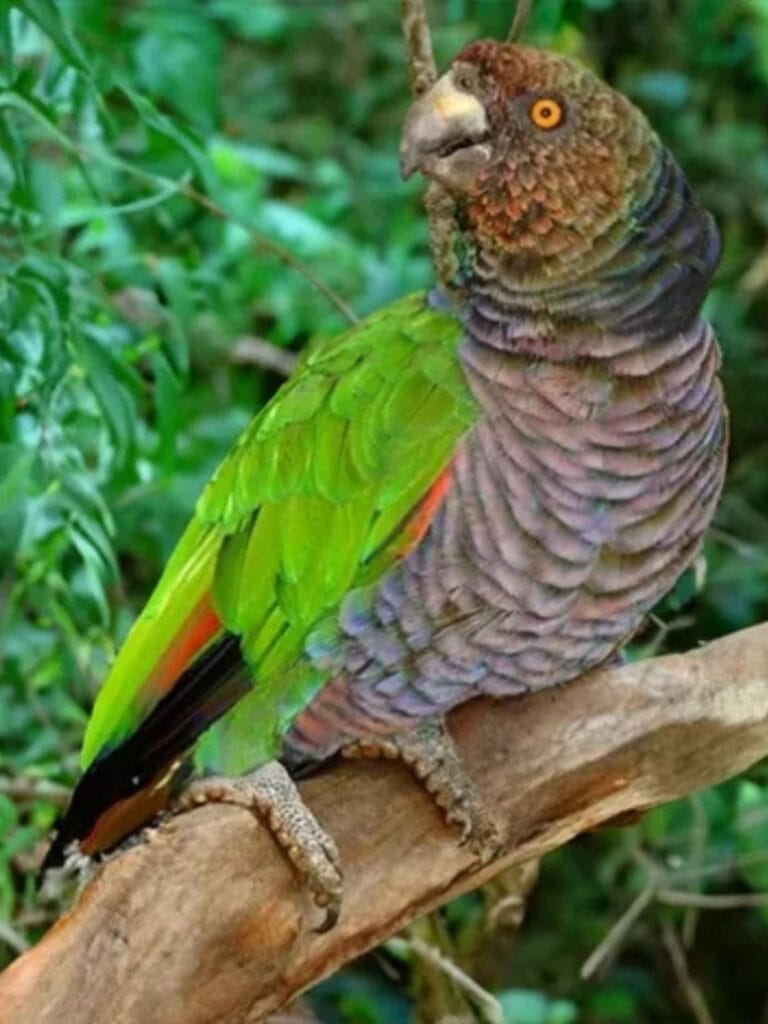
The Sisserou parrot appears on Dominica’s flag — making it possibly the only national symbol that might go extinct while still on the flag 😳
Dominica’s national bird is so critically endangered that there are only about 200 left in existence.
These parrots measure 18 to 20 inches (46 to 51 cm) long and sport brilliant purple plumage on their head and chest, with green wings and back.
They live exclusively in Dominica’s mountain forests at elevations above 2,000 feet (600 m), and they mate for life.
Hurricane Maria in 2017 absolutely wrecked their habitat, and scientists scrambled to find survivors in the aftermath.
The Sisserou’s scientific name is Amazona imperialis, and “imperial” is right, these birds act like royalty.
They’re incredibly picky eaters, feeding only on specific native fruits, flowers, and seeds found in old-growth forest canopy.
When Dominica’s forests get damaged by hurricanes (which happens often), the Sisserou population crashes because they refuse to adapt to secondary forest or lowland areas.
Conservation groups are working overtime to breed Sisserou parrots (aka Imperial Amazon parrots or Dominican amazon parrots) in captivity and protect their remaining habitat.
It’s basically a race against time, and against the 6-month-long Caribbean hurricane season, which runs from June 1 to November 30 each year.
🦣 13. Baird’s Tapir in Belize
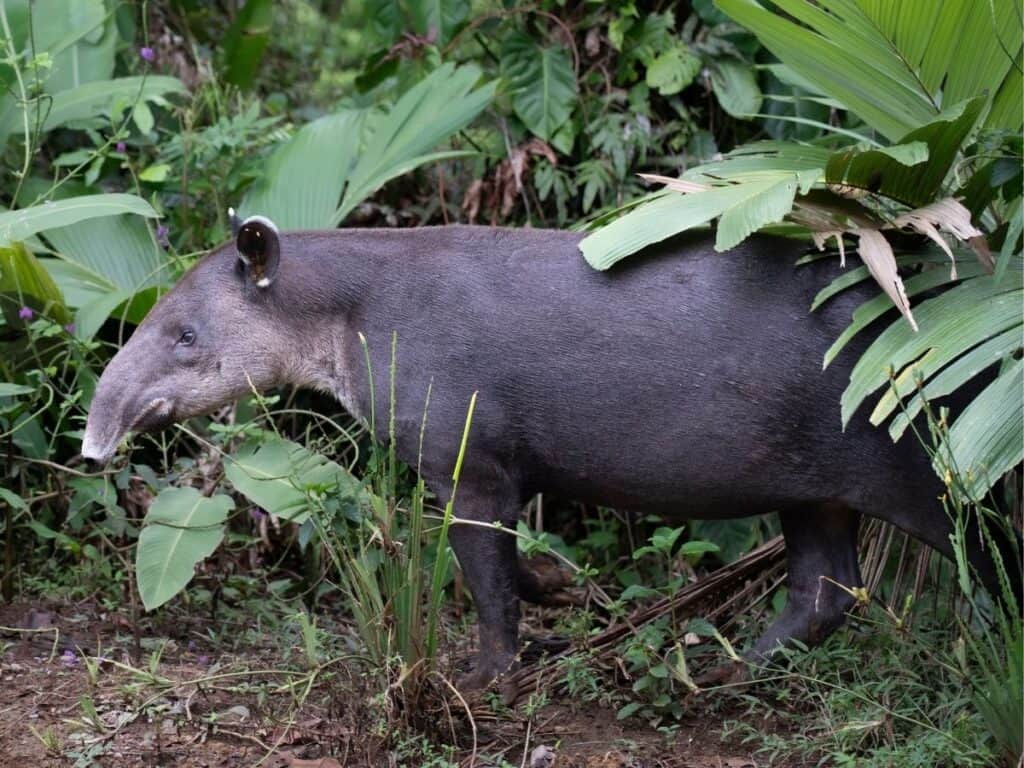
Belize chose an animal that honestly looks like nature’s computer crashed halfway through creating it — but still somehow came out kinda cute.
The Baird’s tapir appears to be part pig, part elephant, part anteater, and 100 percent confused about what it’s supposed to be.
These mammals are the largest land animals in Central America, measuring up to 6 feet (2 m) long and weighing 300 to 600 pounds (136 to 272 kg).
They stand about 4 feet (1.2 m) tall at the shoulder, with stocky bodies covered in thick gray-brown skin and short, bristly hair.
The tapir’s most distinctive feature is its long, flexible proboscis, basically a stubby elephant trunk that it uses to grab leaves and vegetation.
Belizeans call the tapir the “mountain cow,” which is hilarious because tapirs are not cows, not bovines, and not even remotely related to cattle.
They’re actually most closely related to horses and rhinoceroses, both of which look nothing like tapirs.
It’s like calling a dolphin a “sea chicken” because they both live and breathe 🤪
Baird’s tapirs are excellent swimmers and spend hours wallowing in water on hot days, sometimes with only their heads above the surface.
When threatened, their first instinct is to run for water rather than stand their ground.
They’re primarily nocturnal, spending nights foraging along forest floors and riverbanks for leaves, fruits, and aquatic plants.
The tapir’s feet are another weird feature with four toes on the front feet and three on the back, leaving tracks that look oddly dinosaur-ish 🦖
These splayed hooves help the Baird’s tapir, one of four types of tapirs in the world, walk on muddy ground without sinking.
Baby tapirs are born with white spots and stripes that fade as they mature, looking like someone spilled paint on a regular tapir.
Tapirs have terrible eyesight but excellent hearing and sense of smell. Their ears are large and mobile, and they can detect predators from far away.
When alarmed, tapirs make shrill whistles and stamp their feet before either fleeing or defending themselves with powerful bites.
The tapir has been on Belize’s coat of arms and currency, symbolizing the country’s biodiversity.
It’s protected by law, though habitat loss and poaching continue to threaten the species.
The tapir is listed as endangered, with only about 5,500 remaining throughout its range from Mexico to Colombia.
🐐 12. Markhor in Pakistan

Pakistan’s national animal is a massive wild goat with corkscrew horns that can reach 63 inches (160 cm) long.
The markhor’s name literally means “snake-eater” in Persian, though no one is quite sure if that refers to the goat’s ability to crush snakes with its hooves, or the fact that its horns look like giant serpents spiraling upward 🐍
These goats live in the Himalayas at elevations between 2,000 and 13,000 feet (600 to 4,000 m).
Males can weigh up to 240 pounds (110 kg) and have shaggy beards and long hair on their throat and chest.
During mating season, males fight by rearing up on their hind legs and crashing down onto each other, trying to use those spiral horns like battering rams.
The markhor is Pakistan’s national animal because it symbolizes strength, bravery, and the ability to survive in harsh mountain environments.
It appears on the logo of Pakistan’s intelligence agency (ISI) and various military insignia.
The species is listed as near threatened on the ICUN Red List, with only about 5,700 left in the wild due to habitat loss and poaching for their horns, which are used in traditional Chinese medicine.
Conservation efforts for the Markhor mountain goat have had mixed success.
Trophy hunting programs generate revenue for local communities who protect markhor habitat, which is controversial but appears to be working in some regions.
🐁 11. Cuban Hutia in Cuba

Cuba went out on a limb and picked the largest rodent in the Caribbean as their national animal 🇨🇺
The Cuban hutia looks like someone tried to build a guinea pig from memory and accidentally made it 2 feet (60 cm) long and up to 19 pounds (8.5 kg).
These chunky rodents were a major food source for indigenous Cubans for more than 5,000 years, and Fidel Castro’s rebels famously ate hutias while hiding in the Sierra Maestra mountains during the revolution.
Today, Cubans sometimes keep them as pets, though they’re still occasionally eaten in rural areas.
Cuban hutias have the most complex stomach system of any rodent, with three chambers that help them digest tough plant material.
They live in mangrove forests and rocky areas, and they move in this hilarious waddle-hop pattern, walking like a penguin until they get spooked and then bouncing away like a rabbit.
When threatened, hutias can drop their tail like a lizard — though it doesn’t grow back like a lizard’s tail would.
Much like the capybara, Cuban hutias are surprisingly long-lived for rodents, surviving 8 to 11 years in the wild.
Baby hutias are precocial, meaning they’re born fully furred with eyes open and can walk within hours, which is wild for a rodent.
The hutia is officially protected in Cuba, but enforcement is spotty in rural areas where people still hunt them for food.
🐐 10. Takin in Bhutan

Bhutan’s national animal looks like a bee stung a moose-goat hybrid, and then that hybrid fell down a mountain (while still managing to have an adorable face).
The takin is technically related to sheep and goats, but good luck convincing anyone of that when they see one.
These animals have massive, bulky bodies covered in thick, shaggy fur that can be yellowish, brownish, or almost gold in color.
They have large, curved horns and a prominent nose that makes them look perpetually confused.
Takins weigh 440 to 770 pounds (200 to 350 kg) and live in the mountainous forests of Bhutan at elevations up to 14,000 feet (4,300 m).
According to Bhutanese legend, a 15th-century Tibetan saint named Lama Drukpa Kunley (aka the Divine Madman) was asked him to perform a miracle.
Said miracle came when he snapped his fingers together and magically fused a goat’s head with a cow’s body.
The result was this magnificent disaster of an animal, the takin, which is one of the most weird national animals we have today if you’re going by looks alone.
The takin’s closest living relative is the another strange animal called the muskox; which actually don’t look anything like takins.
All jones aside: Sadly, takins are listed as a vulnerable species, with fewer than 10,000 remaining in the wild.
They travel in herds of 20 to 30 animals during summer, foraging on bamboo shoots, leaves, grasses, and other alpine vegetation.
In winter, they migrate to lower elevations where food sources are more abundant.
🐮 9. Dugong in Papua New Guinea

Papua New Guinea chose the dugong, essentially a 1,000-pound (450 kg) underwater potato that spends its entire life grazing on seagrass.
Dugongs are often called “sea cows” because they slowly munch on underwater meadows like aquatic bovines.
These marine mammals can grow up to 10 feet (3 m) long and live for 70+ years — which is longer than most sea creatures live.
They have paddle-like flippers, a whale-like tail, and a face only a marine biologist could love.
Dugongs are more closely related to elephants than to other marine mammals, which makes no sense when you look at them.
In Papua New Guinea, dugongs have been hunted for their meat, oil, and hide for centuries by coastal communities.
The animal holds significant cultural importance, and traditional hunting is still permitted, though commercial harvesting is banned.
Dugongs are incredibly slow breeders, with females only producing one calf every 3 to 7 years, meaning populations recover very slowly from overhunting.
Sailors used to mistake dugongs for mermaids 🧜♀️ which tells you everything you need to know about how desperate and isolated those sailors must have been.
The dugong’s habitat is threatened by coastal development, pollution, and damage to seagrass beds.
Papua New Guinea’s choice of the dugong as their national animal represents the country’s deep connection to the ocean and marine ecosystems.
The country also lists the Raggiana bird-of-paradise, one of the world’s most beautiful birds, as its national bird.
🦫 8. Pine Marten in Croatia

Croatia’s national animal is a weasel-sized forest creature whose fur was literally used as currency in medieval times.
The European pine marten (or “kuna” in Croatian) is so deeply embedded in Croatian culture that the country named their former currency after it.
Pine martens measure 16 to 23 inches (40 to 58 cm) long with a bushy tail adding another 9 to 11 inches (23 to 28 cm).
They weigh 2 to 4 pounds (1 to 1.8 kg) and have soft, luxurious brown fur with a distinctive cream or yellow throat patch.
These carnivorous mammals are related to weasels, otters, and badgers, and they’re exceptional climbers who spend most of their time in forest canopies.
During the Middle Ages in Croatia, marten pelts were used to pay taxes and purchase goods.
This practice was called “kunovina” or “marturina,” and marten fur was considered extremely valuable.
In 13th century Slavonia, silver coins called “banovac” featured images of martens, cementing the animal’s place in Croatian monetary history.
When Croatia gained independence from Yugoslavia in 1991, they established the kuna as their official currency in 1994.
The currency featured a marten on 1-, 2-, and 5-kuna coins and remained in use until Croatia adopted the euro in January 2023.
Even now, Croatian 1 euro coins feature the pine marten, proving the country refuses to let go of its favorite weasel.
The pine marten appears on the Slavonian coat of arms in Croatia’s national heraldry.
Legend says the king wanted a lion on the coat of arms, but the designer had never seen a lion, so he drew a marten instead 🤷♀️
Whether that story is true or not, Croatia ended up with one of the only national symbols that doubles as historical currency.
Pine martens are shy, nocturnal predators that hunt small mammals, birds, and insects.
They’re now strictly protected in Croatia as their numbers have declined due to habitat loss and tree felling.
You might spot one in Plitvice Lakes National Park, Papuk Nature Park, or on the island of Brač if you’re extremely lucky.
🐔 7. Rooster of Barcelos in Portugal

Portugal didn’t pick just any rooster as their national animal — they picked a specific legendary rooster with a wild backstory involving a false murder accusation and a supernatural resurrection.
According to Portuguese legend, a pilgrim was falsely accused of theft and sentenced to death in the town of Barcelos.
Before his execution, he pointed to a roasted rooster on a judge’s dinner table and proclaimed that the rooster would crow to prove his innocence.
The judge laughed, but mid-execution, the dead roasted rooster stood up on the plate and crowed loudly, proving the pilgrim’s innocence and saving his life.
The Rooster of Barcelos (Galo de Barcelos in Portuguese) is now everywhere in Portugal, and decorated in traditional Portuguese patterns.
The roosters come brightly-painted in red, yellow, blue, orange, and green, with each color having a symbolic meaning in Portuguese folk traditions.
You’ll find ceramic roosters in every tourist shop, on Portuguese currency designs, and as a general symbol of Portuguese culture.
The rooster represents faith, justice, and good fortune, and the Portuguese Football Federation even uses it as their emblem ⚽️
Some people argue Portugal’s “real” national animal should be the Iberian wolf, but the rooster’s cultural significance is so strong that it’s basically the unofficial official symbol.
🐎 6. Chollima in North Korea

North Korea’s national animal is a mythical winged horse that can gallop 1,000 li (311 miles) in a single day.
The Chollima horse appears throughout North Korean propaganda, symbolizing the country’s desire to rebuild at supernatural speed.
The Chollima originated in Chinese mythology as an untamable celestial horse that moved so fast it was essentially a blur.
North Korean president Kim Il Sung adopted the Chollima as a national symbol in the 1950s after the Korean War ceasefire.
He urged citizens to “rebuild at Chollima speed,” basically asking people to work with the productivity of a magical horse.
A massive bronze Chollima statue stands in Pyongyang (seen in the photo above), depicting a winged horse with a worker and peasant riding on its back.
The statue is 151 feet (46 m) tall and weighs 50 tons, because when North Korea does propaganda, they don’t mess around.
The Chollima Movement became a key part of North Korean ideology, pushing workers to exceed production quotas through sheer revolutionary fervor.
The weird part is that North Korea and Scotland are the only two countries with purely mythical animals as their national emblems.
Everyone else at least pretends their national animal exists or used to exist — but North Korea just went full fantasy and said “our national animal is a flying horse from ancient legends; deal with it.”
The Chollima represents North Korea’s ambitions to achieve rapid industrial and economic development.
It’s basically the country saying “we’re moving so fast, only a magical horse can represent our speed,” which is one way to handle a struggling economy.
🦁 5. Double-Tailed Lion in Czech Republic

The Czech Republic decided that normal lions were too mainstream, so they put TWO tails on theirs.
The double-tailed lion appears on the Czech coat of arms and represents Bohemia, one of the historical regions that makes up the modern Czech Republic.
This lion has existed in Czech heraldry since at least the 13th century, when the rulers of Bohemia decided their symbol needed to be more extra than everyone else’s.
Regular lions were everywhere in European heraldry — but a lion with two tails? Now that’s memorable 💯
The double-tailed lion is silver or white in color, on a red background, rearing up on its hind legs with both tails flowing dramatically behind it.
Some historians think the double tail represents the union of two regions or two dynasties, but honestly, it might just be medieval graphic designers saying “you know what would be sick?”
Making this choice even weirder as a national animal symbol to represent the country, lions never actually lived in the Czech lands.
The closest lions got was likely to Bohemia, located in western Czech Republic, and the was about 2,000 years ago during Roman times.
So the Czechs not only picked an animal that doesn’t exist, they picked a modified version of an animal that never lived anywhere near their country.
Still, the double-tailed lion appears on Czech currency, government documents, and official seals to this day.
It’s become such an iconic symbol that Czechs immediately recognize it as representing their country’s history and independence.
🦓 4. Okapi in Democratic Republic of the Congo
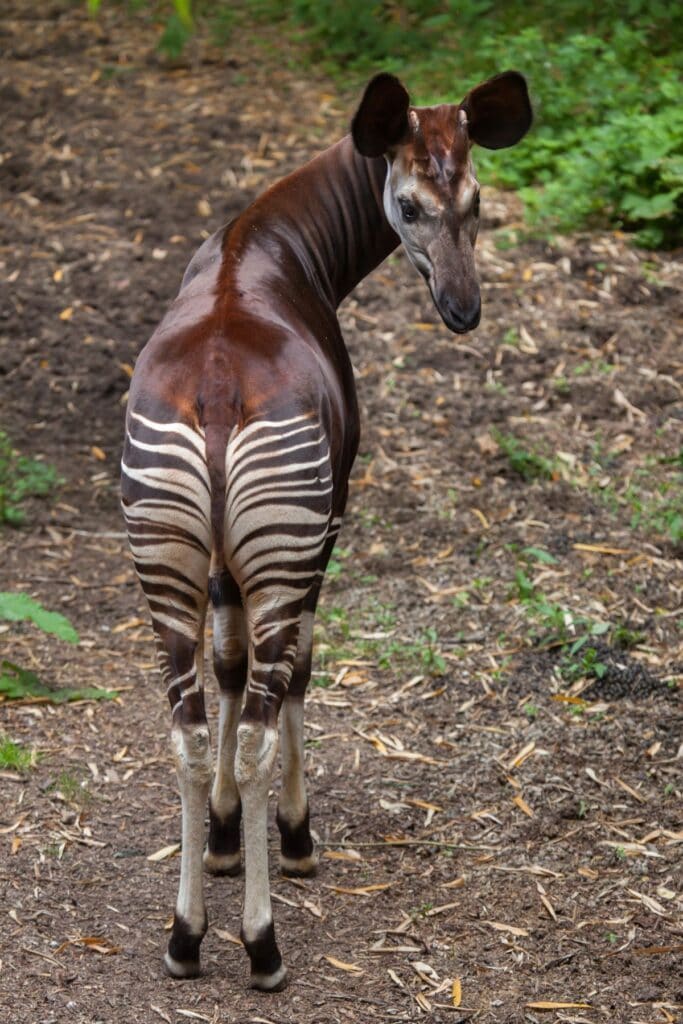
The Democratic Republic of the Congo (DRC) picked an animal that looks like someone played Frankenstein with leftover zoo parts.
The okapi has zebra stripes on its legs, a giraffe’s face, ossicones (horn-like knobs on its head), a horse’s body, and a deer’s shy personality.
Their stripes aren’t random either; they’re unique to each okapi like fingerprints allowing researchers to identify specific animals in camera trap photos.
Scientists actually didn’t confirm the okapi’s existence until 1901, despite local Mbuti people knowing about it for centuries.
Western explorers heard rumors of a “forest horse” or “African unicorn” and assumed it was just a myth. (Spoiler: It wasn’t 😜)
When British official Sir Harry Johnston finally obtained okapi skin samples and a skull, scientists were stunned to discover it was actually the giraffe’s only living relative.
Okapis stand 5 feet (1.5 m) tall at the shoulder and weigh between 440 to 770 pounds (200 to 350 kg).
Their tongue is 14 to 18 inches (35 to 45 cm) long, blue-black in color, and can reach up to their eyes and ears to clean them, just like their giraffe cousins.
They use this ridiculous tongue to strip leaves from branches in the dense Ituri Rainforest of DRC.
The okapi appears on Congolese bank notes and the logo of the Institut Congolais pour la Conservation de la Nature, the country’s conservation agency.
Fewer than 25,000 okapis remain in the wild, all within DRC’s borders, making them one of Africa’s most endangered animals.
Poaching, habitat destruction, and political instability threaten their survival.
🦅 3. Turul Bird in Hungary

Hungary’s national animal is a giant divine falcon with the power to impregnate princesses through prophetic dreams. (Yes, really.)
The Turul is a mythological bird from Hungarian folklore, described as a large hawk or falcon with immense power.
According to legend, the Turul appeared to Princess Emese in a dream and impregnated her, leading to the birth of Álmos, founder of the Hungarian dynasty.
Another legend claims the Turul guided the Magyar tribes to their new homeland (present-day Hungary) by showing them the path and fighting off attacking eagles.
The Turul is basically Hungary’s answer to the phoenix 🐦🔥 except instead of bursting into flames and being reborn, it just beats up other birds and delivers divine messages.
It represents power, strength, and divine protection in Hungarian mythology.
You can see Turul statues all over Hungary, particularly the massive monument at Tatabánya that shows the bird perched atop a sword with outstretched wings.
The Turul bird appears on Hungary’s coat of arms and various military insignia.
Turul birds probably evolved from ancient shamanic traditions where birds represented the connection between earth and sky, mortal and divine.
It’s considered a divine messenger that perches atop the Tree of Life in Hungarian cosmology.
Modern Hungary fully embraces the Turul despite it being completely made up, which is honestly way cooler than picking a regular bird.
🐉 2. Red Dragon in Wales

Wales looked at all the real animals in the world and said “nah, we’re going with the fire-breathing lizard from fantasy novels.”
The Red Dragon, or Y Ddraig Goch in Welsh, appears on Wales’s flag (seen in the image above), and it’s possibly the coolest flag in existence 🏴
The Welsh dragon appears in a vividly red against a white and green background, standing on its hind legs with wings spread.
Dragons have been associated with Wales since at least the 7th century, and possibly much earlier.
Welsh mythology describes the red dragon fighting against a white dragon (representing the Saxons), with the red dragon ultimately triumphing.
The dragon symbol gained prominence during the 15th century when Welsh-born Henry Tudor (Henry VII) used it on his battle standards before becoming King of England.
The red dragon has remained Wales’s national symbol ever since, appearing on everything from rugby jerseys to government buildings.
Some historians claim the Welsh dragon is one of the oldest national flags still in use today, though that’s debated.
Either way, Wales wins the “most metal national animal” award by a landslide 🤘
Game of Thrones did a solid by featuring dragons prominently, giving Wales a cultural relevance boost when everyone started caring about dragons again.
The dragon represents power, strength, and Wales’s determination to maintain its identity separate from England.
Unlike some mythical creatures on this list, the Welsh dragon never gets old because dragons are objectively cool.
🦄 1. Unicorn in Scotland

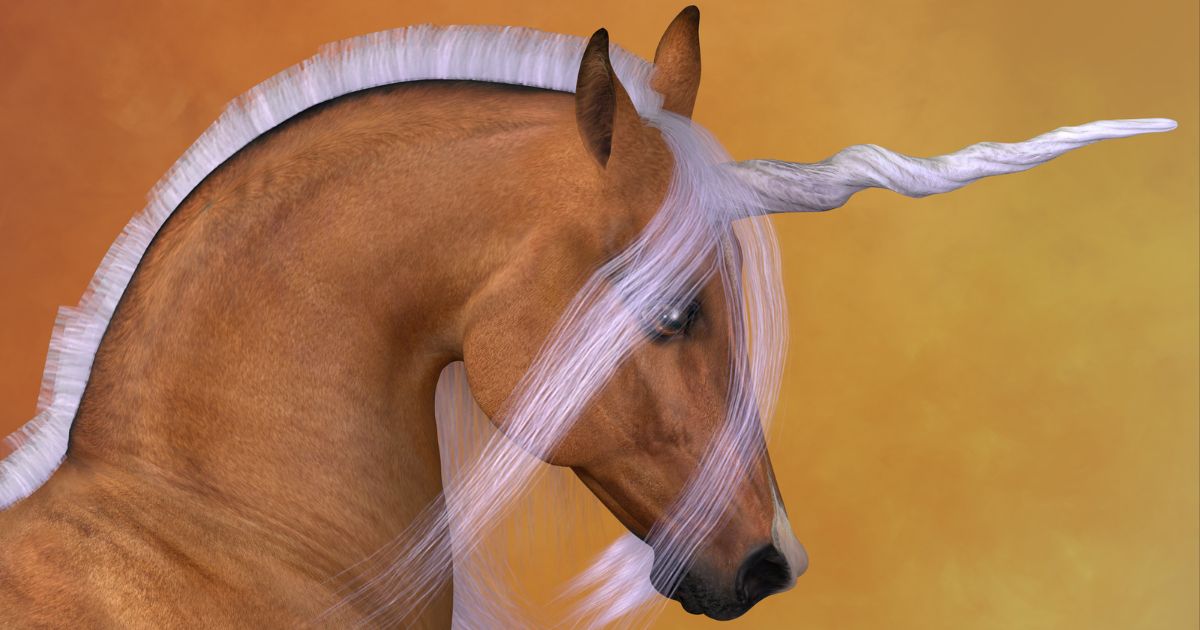
Scotland’s national animal is a unicorn — no, this is not a drill, and yes, you read that right — the national animal of Scotland is in fact the unicorn.
When Scotland was choosing its national symbol back in the 12th century during King William I’s reign, someone said “majestic horse” and another person said “but with a horn” and everyone just ran with it 🤷♀️
The unicorn has been Scotland’s official animal since at least the 1300s, appearing on the royal coat of arms.
In Scottish folklore, the unicorn represents purity, innocence, and untamed power.
Free unicorns were considered dangerous beasts that could only be tamed by virgin maidens, making them a symbol of wildness and independence, which fits Scotland’s vibe.
Here’s the really weird part: When Scotland and England unified their crowns in 1603, the royal coat of arms became the lion (England) and the unicorn (Scotland) facing each other.
The unicorn is shown wearing a golden chain around its neck, symbolizing that it’s been “tamed” by the crown (which Scottish nationalists are definitely not still salty about 🤣).
The unicorn appears throughout Scotland, from the Mercat Cross in Edinburgh to Stirling Castle.
You can’t walk through a Scottish castle without seeing unicorns carved into walls, painted on ceilings, or standing guard as stone statues.
Medieval people genuinely believed unicorns were real, mainly because travelers brought back narwhal tusks from Arctic expeditions and claimed they were unicorn horns.
The narwhal’s “unicorn horns” could sell for more than their weight in gold because people thought they had magical healing properties and could neutralize poison.
(👉 Side Note: In case you’ve never heard of a narwhal, they’re known as the “unicorn of the sea,” and on our list of the 100 Weirdest Animals on Earth.)
Scotland keeping the unicorn as their national animal is a power move, and they’re truly deserving of the weirdest national animal of any country title.
While every other country might be thinking “We have powerful bears, eagles, lions, etc.” — Scotland proudly declares “We have a magical horse with a horn that can defeat elephants and only virgins can ride it.”
The unicorn represents Scotland’s fierce independence, mythological heritage, and refusal to conform to boring standards.
It’s the perfect symbol for a country that historically spent centuries telling England to piss off.
🦄 Fun Fact: The closest we have to a real unicorn is likely the white Lipizzaner horse (aka Lipizzan horse), which is Slovenia’s national animal.
Our Final Thoughts on the Weirdest National Animals From Countries Across the World
From dodos to dugongs, mythical birds to magical horses, these 15 weirdest national animals prove that sometimes the best way to represent your nation is to go absolutely buckwild with your choice.
Whether they’re extinct, imaginary, or just plain weird looking, these creatures tell stories about their countries’ history, mythology, and cultural identity.
The next time someone tells you America’s bald eagle is impressive 🦅 just remind them that Scotland has a magical unicorn that can allegedly kill elephants.