🦇 16 Weird Animals in Texas That Seem Made Up (But Aren’t!)
Nearly 20 million bats roost in a single cave near San Antonio. That makes Bracken Cave the largest known bat colony on Earth.
Not all the weird animals in Texas come in millions, though. Fewer than 100 ocelots survive in the U.S., and every one of them lives in deep South Texas.
The state runs from Gulf beaches and coastal prairie to Hill Country caves, East Texas rivers, and the Chihuahuan Desert.
That range leaves room for a fish with a paddle on its face and a wasp that hunts tarantulas.
There’s also a salamander that spends its whole life in pitch-black caves, and a lizard that aims jets of blood from its eyes.
Austin’s bridge bats lead the list, since you can watch them pour out from under a downtown bridge on a summer evening.
1. Mexican Free-Tailed Bat

Every summer evening, a living cloud pours out from under a bridge in downtown Austin.
The Congress Avenue Bridge is home to an estimated 1.5 million Mexican free-tailed bats, the largest urban bat colony in the world.
It’s a maternity colony. The mothers raise an estimated 750,000 pups there each year.
The bats moved in during the early 1980s, shortly after the Congress Bridge was renovated.
Locals were scared of them at first, but today the nightly flight draws about 140,000 visitors a year.
While Austin’s large bat colony is very well known, an even bigger colony lives in Bracken Cave near San Antonio, Texas.
The largest known bat colony on Earth, nearly 20 million bats roost at Bracken Cave from about March to October 🦇
These bats are fast, too. One study clocked them at up to 99 mph (160 km/h), though some researchers say that’s not the norm.
They’re Texas’s official state flying mammal, which is one of several state animals of Texas, including the Texas longhorn and the Monarch butterfly.
2. Texas Horned Lizard

The Texas horned lizard looks like a pocket-sized dinosaur covered in thorns 🦖
It’s the official state reptile of Texas, and Texans have been calling it a “horny toad” for generations.
Its menu is surprisingly picky. About 70% of its diet is harvester ants, the big red ants that sting.
When a coyote or dog grabs one, it has a gross trick ready. It aims a jet of blood out of the corners of its eyes.
The blood tastes terrible to dogs and their wild relatives, but the trick doesn’t seem to work on hawks.
Females grow to only about 5 inches (13 cm) long, not counting the tail.
The lizard has disappeared from almost half its range. Pesticides and invasive fire ants, which wipe out harvester ant colonies, are big reasons why.
It’s listed as threatened in Texas, so it’s illegal to pick one up or take one home.
3. Texas Blind Salamander

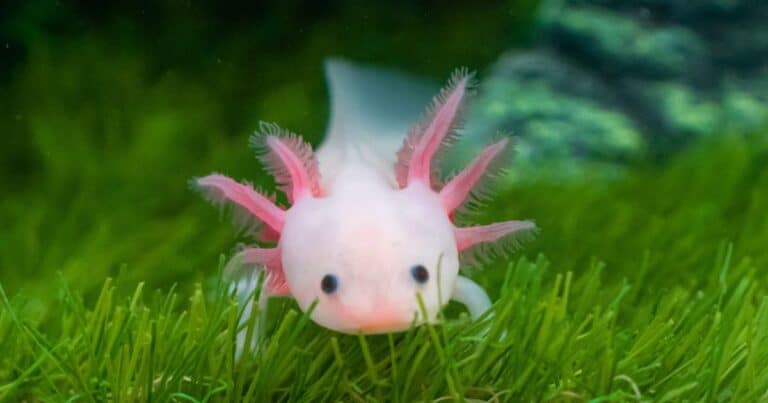
The Texas blind salamander spends its whole life in pitch-black, water-filled caves. It’s ghostly white, with long, skinny legs and bright red gills on the sides of its head.
Adults average about 4.7 inches (12 cm) long, and its eyes are reduced to two tiny black dots under the skin.
It finds food by sensing pressure waves in the water, eating tiny snails, amphipods, and even blind cave shrimp.
It lives only in the Edwards Aquifer near San Marcos, and nowhere else in the world.
It’s been federally endangered since 1967, and pumping too much groundwater is one of its biggest threats.
It shares one trait with the axolotl; both keep their gills for life.
4. Alligator Gar

The alligator gar looks like someone crossed a fish with an alligator.
It has a long, wide snout, and its upper jaw holds a double row of big, sharp teeth.
Adults commonly reach 6 feet (1.8 m) and more than 100 pounds (45 kg).
A 283-pound (128 kg) gar was caught on rod and reel at Sam Rayburn Lake in 2023, and a 290-pound (132 kg) gar was taken by bowfishing in the Trinity River in 2001.
It can also breathe air. A lung-like swim bladder lets it gulp air at the surface, so it can survive in warm, stagnant water.
Its scales are so hard that Native Americans used them as arrowheads.
While Texas is gar country, don’t try the caviar. Alligator gar eggs are poisonous to people.
5. Javelina

The javelina looks like a wild pig, but it isn’t one. Javelinas, also called collared peccaries, split from pigs about 40 million years ago, so they’re only distant cousins.
Adults stand nearly 2 feet (0.6 m) tall at the shoulder and weigh about 50 pounds (23 kg).
Their favorite food is prickly pear cactus.
Javelinas have poor eyesight but a very strong sense of smell.
You may smell a herd before you see it. A scent gland on the rump gives off a skunky odor that helps family members recognize each other.
You’ll find them in South and West Texas brush country. Give them space, especially if they have babies.
6. Whooping Crane

The whooping crane is North America’s tallest bird, standing about 5 feet (1.5 m) tall with a wingspan of more than 7 feet (2.1 m).
It’s also one of the biggest comeback stories in the bird world.
In 1941, only 15 whooping cranes wintered at Aransas National Wildlife Refuge on the Texas coast. Every whooping crane alive today descends from that small group.
Each fall, these cranes fly about 2,500 miles (4,000 km) from Wood Buffalo National Park in Canada to the Texas coast.
Aransas National Wildlife Refuge is the best place to see them in winter. For the 2025–2026 winter, the U.S. Fish and Wildlife Service estimated about 540 whooping cranes around Aransas.
7. Ocelot

Yes, Texas has a wild spotted cat.
The ocelot is about the size of a bobcat, growing up to 3.5 feet (1.1 m) long and 35 pounds (16 kg).
It wears chain-like black spots and has two black stripes on each cheek.
But it’s one of the rarest cats in the country. Fewer than 100 ocelots survive in the U.S., all in deep South Texas.
They live in thick thornscrub at Laguna Atascosa National Wildlife Refuge and on private ranches in Willacy County.
Getting hit by cars is one of their biggest threats, since they have to cross roads to get between patches of brush.
Texas once had another small wild cat, the jaguarundi. The last one confirmed in the U.S. was a roadkill near Brownsville in 1986.
8. Attwater’s Prairie Chicken
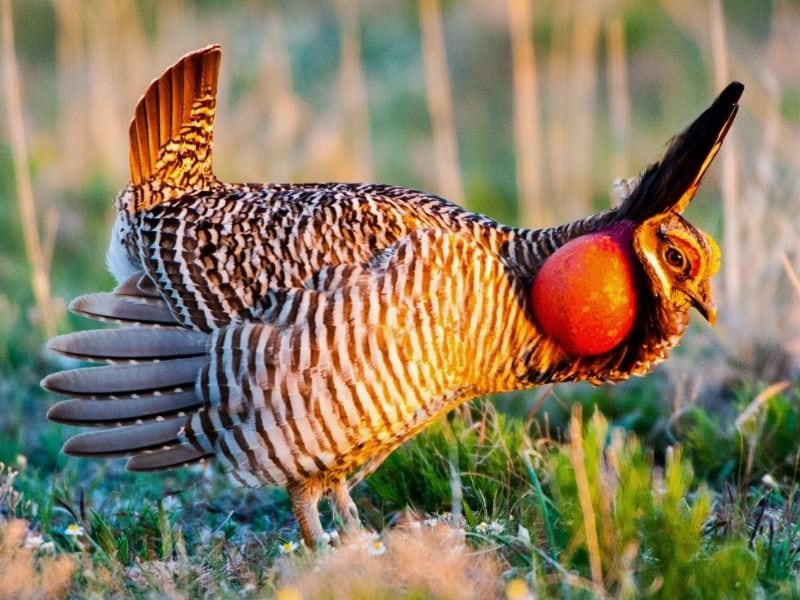
Every spring, male Attwater’s prairie chickens put on one of the strangest shows in Texas.
They gather on traditional display grounds, strut, and inflate bright orange air sacs on their necks.
Then they make a low “booming” sound that carries across the prairie.
Around 1900, up to a million of these birds lived on coastal prairies from Louisiana to South Texas.
In 2023, fewer than 200 were left in the wild. After Hurricane Harvey flooded their nests in 2017, the wild population dropped below 20.
Captive breeding at zoos is helping keep the species alive.
You can try to see one at Attwater Prairie Chicken National Wildlife Refuge near Eagle Lake, about 60 miles (97 km) west of Houston.
Booming season runs from late February to early April.
9. American Paddlefish

The paddlefish has a long, flat paddle sticking out of its face that makes up about one-third of its body length.
It isn’t for digging. It’s covered in tens of thousands of sensors that pick up tiny electrical signals from plankton.
The paddlefish swims with its huge mouth wide open, straining tiny animals out of the water.
It can grow to 7 feet (2.1 m) long and more than 200 pounds (91 kg), but most weigh 10 to 15 pounds (4.5 to 6.8 kg).
Its skeleton is mostly cartilage, like a shark’s, and paddlefish fossils go back about 125 million years.
Only small numbers live in Texas, mostly in the Sabine and Trinity rivers. Since 2014, biologists have been releasing young paddlefish into Caddo Lake.
It’s protected in Texas. Its only relative, the Chinese paddlefish, hasn’t been seen since 2003.
10. Ringtail

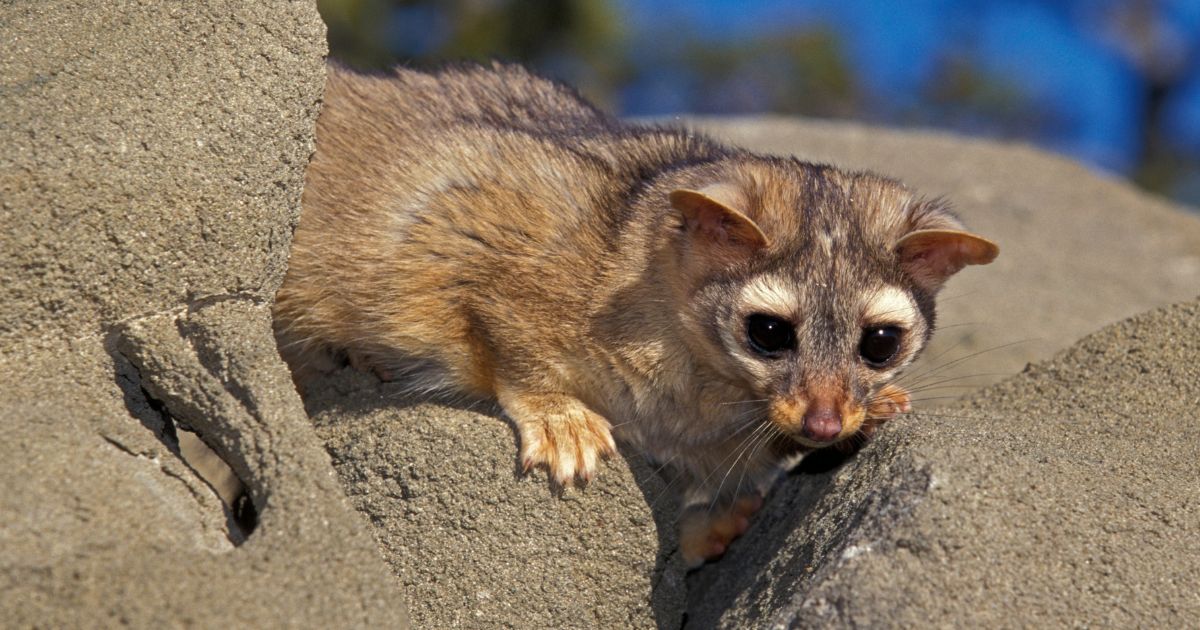
The ringtail has the face of a fox, the body of a cat, and a tail borrowed from a raccoon.
It’s sometimes called a “ringtail cat,” but it’s actually a member of the raccoon family.
Its bushy tail is about as long as its body and has 14 to 16 black-and-white rings.
It’s smaller than a house cat, weighing only about 1.5 to 3.3 pounds (0.7 to 1.5 kg).
Its secret weapon is its ankles. They can rotate more than 180 degrees, so it can scramble down cliffs and trees headfirst.
Miners and settlers once kept ringtails in their cabins to catch mice, which earned them the nickname “miner’s cat.”
Ringtails live in Texas, but they’re nocturnal and shy, so few people ever see one.
11. Kemp’s Ridley Sea Turtle
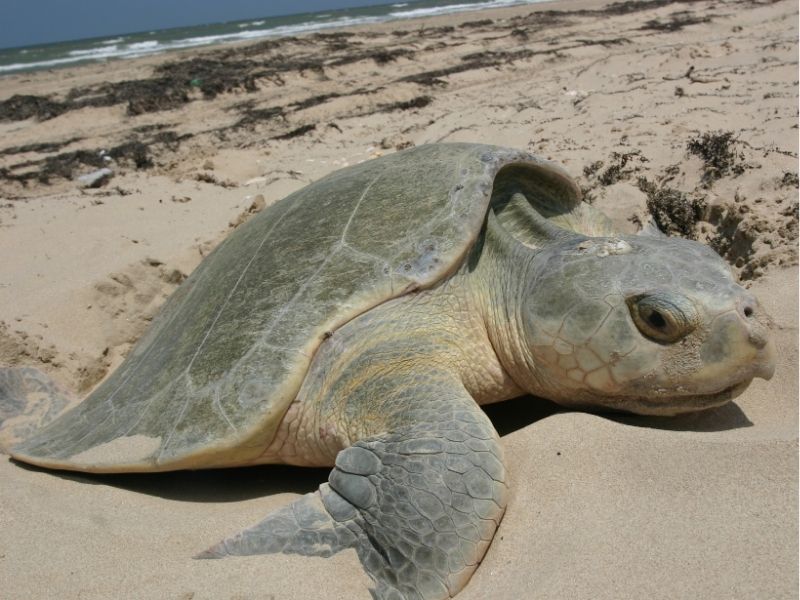
The official state sea turtle of Texas, the Kemp’s ridley is also the most endangered sea turtle in the world.
It’s a small sea turtle, too.
Adults have shells only 24 to 28 inches (61 to 71 cm) long and weigh 70 to 100 pounds (32 to 45 kg).
Kemp’s ridleys are the only sea turtles that nest in huge synchronized groups called arribadas.
In 1947, a pilot filmed an estimated 40,000 females nesting on one Mexican beach on a single day.
By the mid-1980s, fewer than 300 females were nesting each year. Today, most nest in Mexico, and about 55 nest in Texas each year.
More Kemp’s ridley nests are found at Padre Island National Seashore than anywhere else in the U.S.
From mid-June through August, the park holds public hatchling releases at Malaquite Beach, usually at 6:45 a.m.
12. Tarantula Hawk
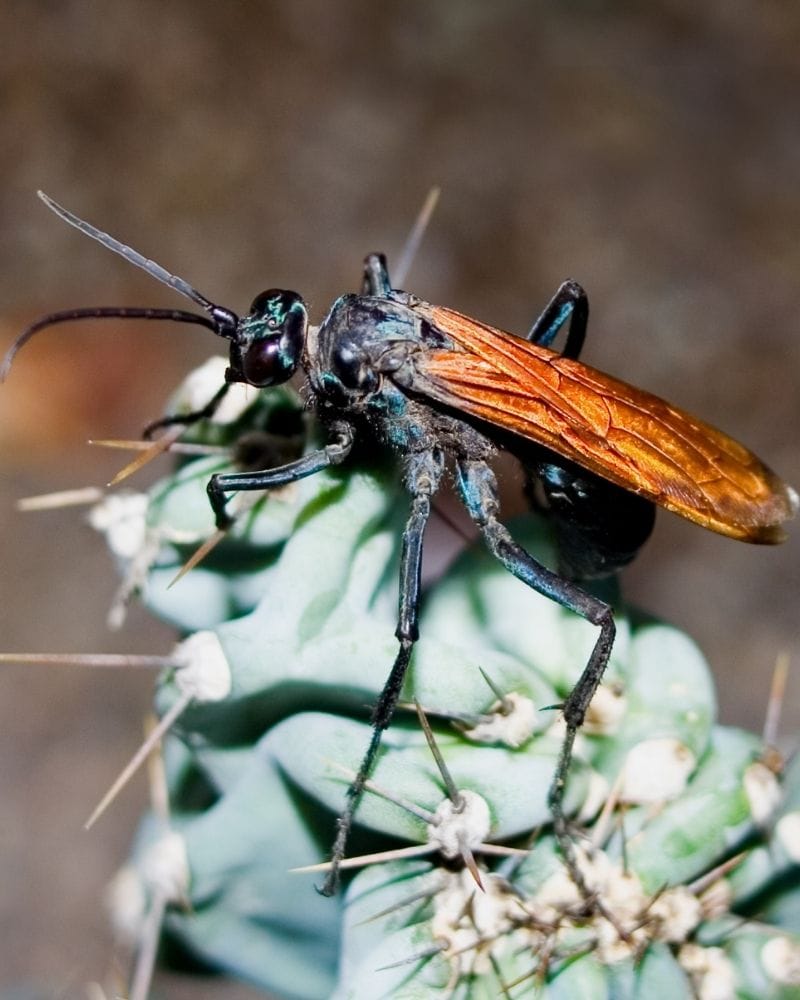
The tarantula hawk is a wasp that hunts spiders bigger than itself.
About 13 species live in Texas, and they can grow up to 2 inches (5 cm) long, with shiny blue-black bodies and orange or black wings.
The female flips a tarantula onto its back and stings it, paralyzing it within seconds.
Then she drags it into a burrow, lays a single egg on it, and seals it in.
When the larva hatches, it eats the paralyzed tarantula alive.
Its sting rates a 4 on the Schmidt sting pain index, the top level.
Luckily, the pain fades within a few minutes, and these wasps aren’t aggressive toward people. Still, never handle one.
13. Texas Tortoise
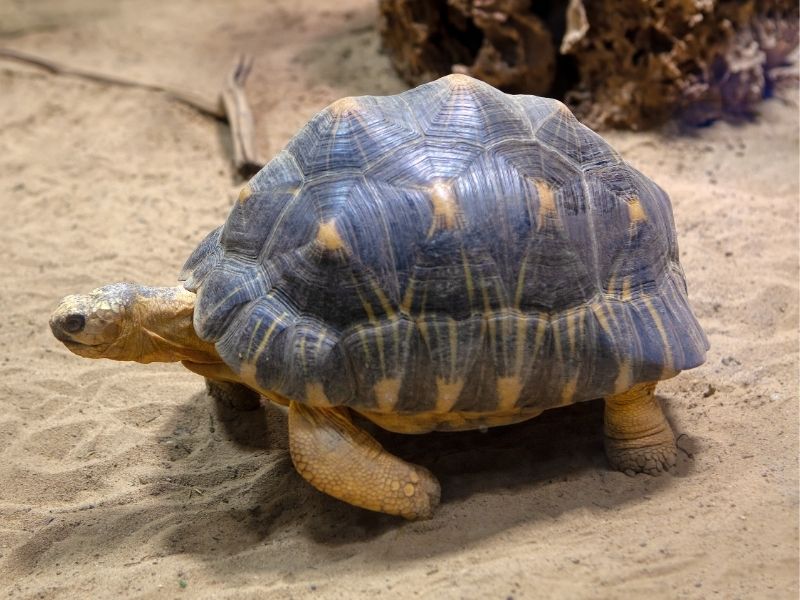
The Texas tortoise is the smallest tortoise in North America, with a shell only about 8.5 inches (22 cm) long.
The only tortoise native to Texas, it lives in the brushlands of South Texas and northeastern Mexico, where it loves to eat prickly pear fruit.
Unlike its gopher tortoise cousins, it isn’t much of a digger. It usually hides under thick brush instead.
Texas tortoises can live up to 60 years, and they don’t start breeding until they’re about 15. Each one has a tiny home range, smaller than a city block.
It’s illegal to collect, keep, or harm a Texas tortoise. Even handling a wild one can spread disease to it, so admire it from a distance.
14. Texas Indigo Snake
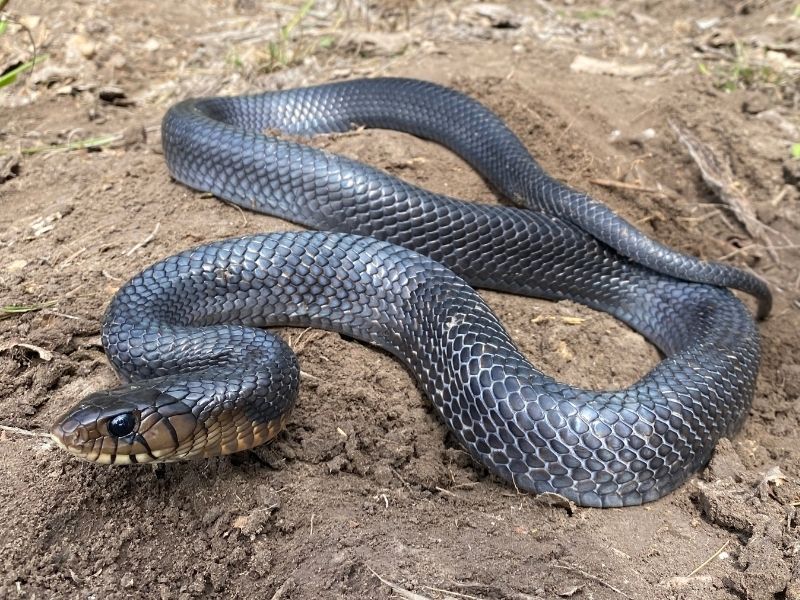
The Texas indigo snake is a gentle giant that’s on your side!
This glossy black snake regularly grows longer than 6 feet (1.8 m) and can reach 8 feet (2.4 m).
It’s not venomous and it eats other snakes, including rattlesnakes, which is why many South Texas ranchers are happy to have one around.
The Texas indigo snake is listed as threatened in Texas, so leave it alone if you see one. It lives in South Texas, and ranges south into northern Mexico.
15. Monarch Butterfly

The monarch butterfly is the official state insect of Texas, and for good reason.
Every fall, monarchs from the eastern U.S. and Canada travel south through Texas on their way to Mexico.
Some fly up to 3,000 miles (4,830 km) to spend the winter on fir trees in the mountains of Michoacán and Estado de Mexico.
The strange thing is that none of them have ever made the trip before, as summer monarchs live less than two months.
The generation that migrates lives many months longer and finds its way to forests it has never seen.
In spring, the first generation flies back north only as far as Texas and Oklahoma, where it lays eggs on milkweed.
Their children and grandchildren finish the trip north.
16. Eastern Hercules Beetle

The eastern Hercules beetle is among the longest and heaviest beetles in the U.S. Males have two big horns, one sticking forward from the body and one curving up from the head.
With horns included, males grow 1.6 to 2.4 inches (4 to 6 cm) long. They use those horns to wrestle rivals.
Its oddest feature is easy to miss: the wing covers change color. They look darker when they’re damp and get lighter as they dry out.
Despite the scary horns, Hercules beetles are completely harmless to people.
Weird Animals in Texas FAQ
What is the weirdest animal in Texas?
The Texas blind salamander, if we had to choose one. This ghost-white salamander has no working eyes, and it lives only in flooded caves under San Marcos.
Where can you see the bats in Austin, Texas?
At the Congress Avenue Bridge. About 1.5 million Mexican free-tailed bats fly out from under the bridge around dusk, mostly from spring through fall.
You can watch from the bridge, the hike-and-bike trail, or a bat-watching boat tour on Lady Bird Lake.
Are there ocelots in Texas?
Yes, but very few. Fewer than 100 ocelots survive in the U.S., all in deep South Texas.
The jaguarundi hasn’t been confirmed in the U.S. since 1986.
Can you pick up a horned lizard in Texas?
No. The Texas horned lizard is listed as threatened, so it’s illegal to pick one up, keep one, or take one home.
The same goes for the Texas tortoise and the Texas indigo snake.
Where can you see sea turtles in Texas?
Padre Island National Seashore is your best bet.
It has more Kemp’s ridley nests than anywhere else in the U.S., and it holds public hatchling releases from mid-June through August.
What are the official state animals of Texas?
There are several.
The longhorn is the state large mammal, the armadillo is the state small mammal, and the Mexican free-tailed bat is the state flying mammal.
The Texas horned lizard is the state reptile, the monarch is the state insect, and the Kemp’s ridley is the state sea turtle.