🇮🇩 20 Unique Animals in Indonesia You Might See When You Visit (#17 is Super Weird!)
Indonesia’s 17,000+ islands create the world’s most biodiverse marine environment and mind-blowing terrestrial wildlife across tropical rainforests and volcanic mountains.
This archipelago nation hosts species found nowhere else on Earth, from ancient dragons to singing gibbons and tiny tarsiers with huge eyes.
Discover 20 amazing animals in Indonesia that make this island nation an absolute bucket-list destination for wildlife lovers.
🦎 1. Komodo Dragon

The world’s largest lizard is basically a real-life dragon 🐉 that can take down water buffalo.
These massive reptiles can reach lengths exceeding 10 feet (3 m) and weigh more than 200 pounds (91 kg).
Found only on a few Indonesian islands, they’re apex predators with zero natural enemies.
Their bite delivers venom that prevents blood clotting, causing prey to slowly bleed out and go into shock.
Komodos can smell dead animals from more than 6 miles (10 km) away using their forked tongues.
They eat pretty much anything, including deer, pigs, smaller komodo dragons, and occasionally humans who get too close 😳
These animals in Indonesia attract thousands of tourists yearly to Komodo National Park, though only about 5,000 remain wild.
🦧 2. Bornean Orangutan
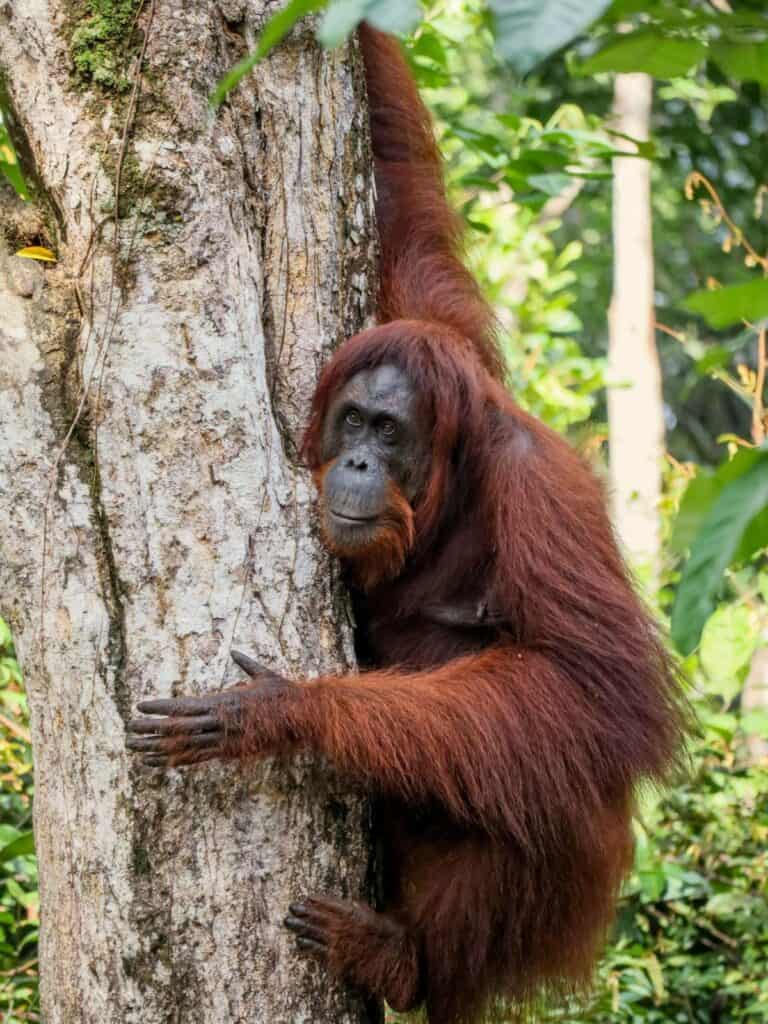
These incredibly intelligent great apes are basically forest people — and fun fact, the word orangutan literally means “person of the forest” in Malay.
Adults can weigh up to 220 pounds (100 kg), with males developing those iconic cheek pads as they mature.
They spend nearly their entire lives in trees, building new sleeping nests every single night.
Orangutans are crazy smart at problem-solving, using tools to extract insects, crack nuts, and even fashion umbrellas from leaves ☂️
Sadly, fewer than 105,000 survive in the wild due to palm oil plantations destroying their rainforest homes.
Mothers stick with their babies for up to eight years, teaching them essential survival skills.
Every individual matters desperately as populations continue declining despite protection efforts.
🐒 3. Proboscis Monkey

These bizarre primates rock massive droopy noses 👃 that look totally ridiculous but are actually super important for attracting mates.
Males have absolutely enormous noses that can exceed 4 inches (10 cm) long, which females apparently find irresistible.
They’re excellent swimmers who live in riverside and coastal forests, often leaping into water from trees.
Pot-bellied appearance comes from their specialized stomachs designed for digesting tough leaves.
These monkeys live in groups with one male and multiple females plus their young.
Found only on Borneo, habitat loss has reduced populations to fewer than 7,000 individuals.
That giant schnoz acts like a resonating chamber, amplifying their honking calls through the forest.
🐅 4. Sumatran Tiger
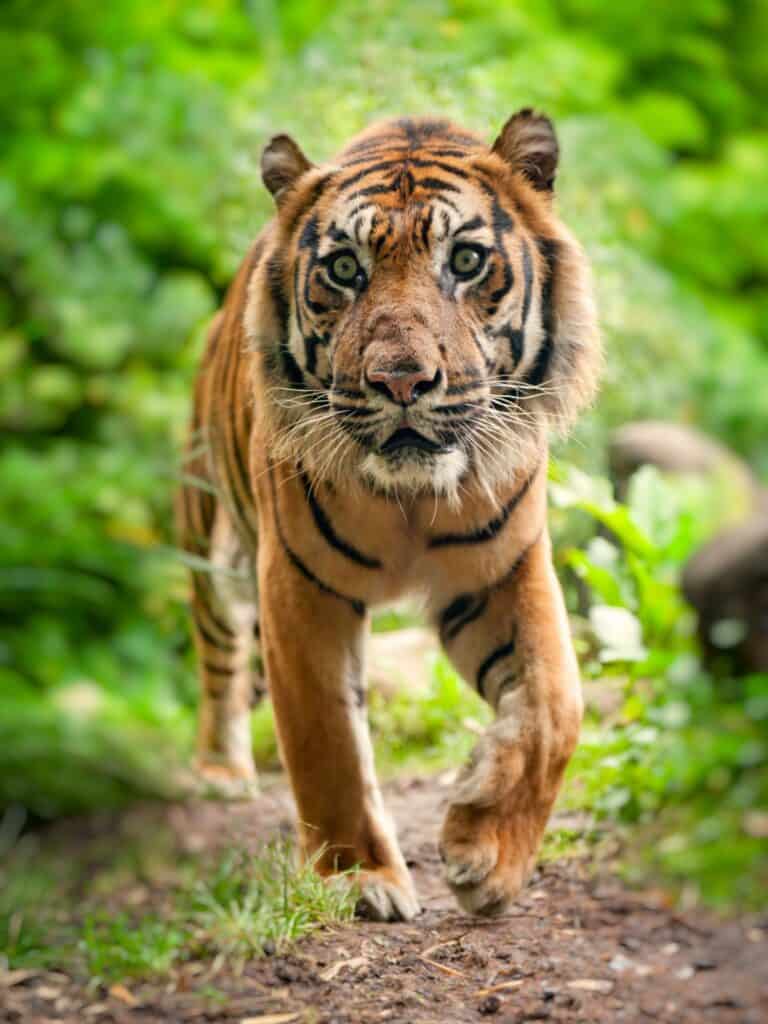
The smallest and rarest tiger subspecies prowls the jungles of Sumatra, with fewer than 400 left in the wild.
These critically endangered cats typically weigh 165 to 308 pounds (75-140 kg), smaller than their mainland cousins.
Darker orange coats with thicker black stripes help them blend into dense rainforest shadows.
Each tiger needs huge territories of up to 39 square miles (100 sq km) to find enough prey.
They’re incredibly strong swimmers who don’t hesitate to cross rivers and even swim between islands 🤯
Palm oil plantations, poaching, and human conflict drive their numbers lower every year.
Indonesian wildlife authorities desperately work to protect remaining forest habitat and reduce human-tiger encounters.
🐘 5. Sumatran Elephant

These smaller elephants are critically endangered, with populations crashing to fewer than 2,500 individuals.
They’re significantly smaller than African elephants, with adults weighing 4,400 to 8,800 pounds (2,000-4,000 kg).
Baby elephants are absolutely adorable, staying close to mom and learning from the entire herd.
These intelligent giants can live more than 60 years, forming tight family bonds.
Palm oil expansion has destroyed more than 70 percent of their forest habitat in recent decades.
Human-elephant conflict kills dozens yearly as desperate elephants raid crops for food.
Conservation programs try creating corridors between fragmented forests, but it’s a tough battle.
🐒 6. Javan Slow Loris

These adorable nocturnal primates have huge eyes and toxic bites, making them dangerously cute.
They’re the only venomous primate, secreting toxin from elbow glands that they lick before biting.
Moving super slowly through trees helps them avoid detection by predators.
Cute videos online have fueled illegal pet trade, devastating wild populations.
They weigh just 9 to 11 ounces (250-300 g) and fit easily in one hand — which is one of the reasons why poachers love them 😢
Tooth removal by traders leaves them unable to eat properly, causing horrible suffering to this adorable endangered species.
These animals in Indonesia need protection from the exotic pet industry that’s driving them toward extinction.
🦅 7. Javan Hawk-Eagle
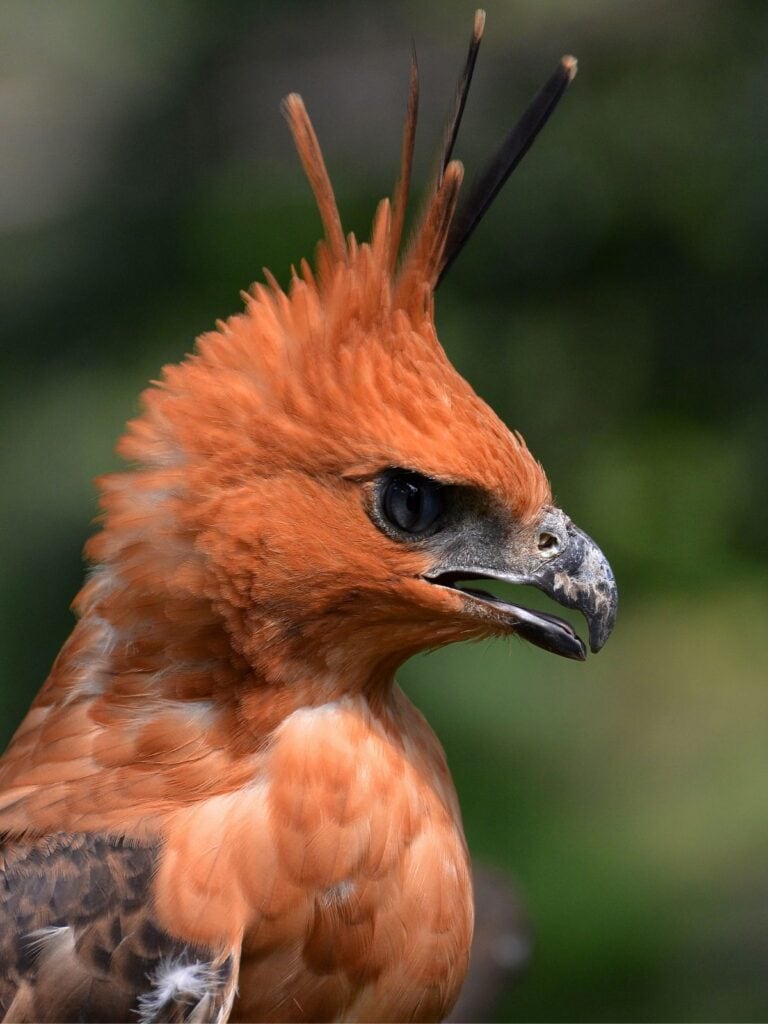
Indonesia’s national bird is a stunning raptor found only on Java island, with fewer than 600 remaining in the wild.
Distinctive crest feathers shoot up when they’re excited, making them look like tiny dinosaurs 🦖
Wingspans reach 4 feet (1.2 m), allowing them to navigate dense rainforest canopy while hunting.
They snatch snakes, lizards, birds, and small mammals from tree branches with precision strikes.
Mated eagles stay together for life, raising typically one chick per year in massive stick nests 🪺
Deforestation has restricted them to tiny forest fragments and protected areas.
Seeing one in the wild is incredibly rare, and a special treat for Indonesian birdwatchers.
🦏 8. Javan Rhinoceros
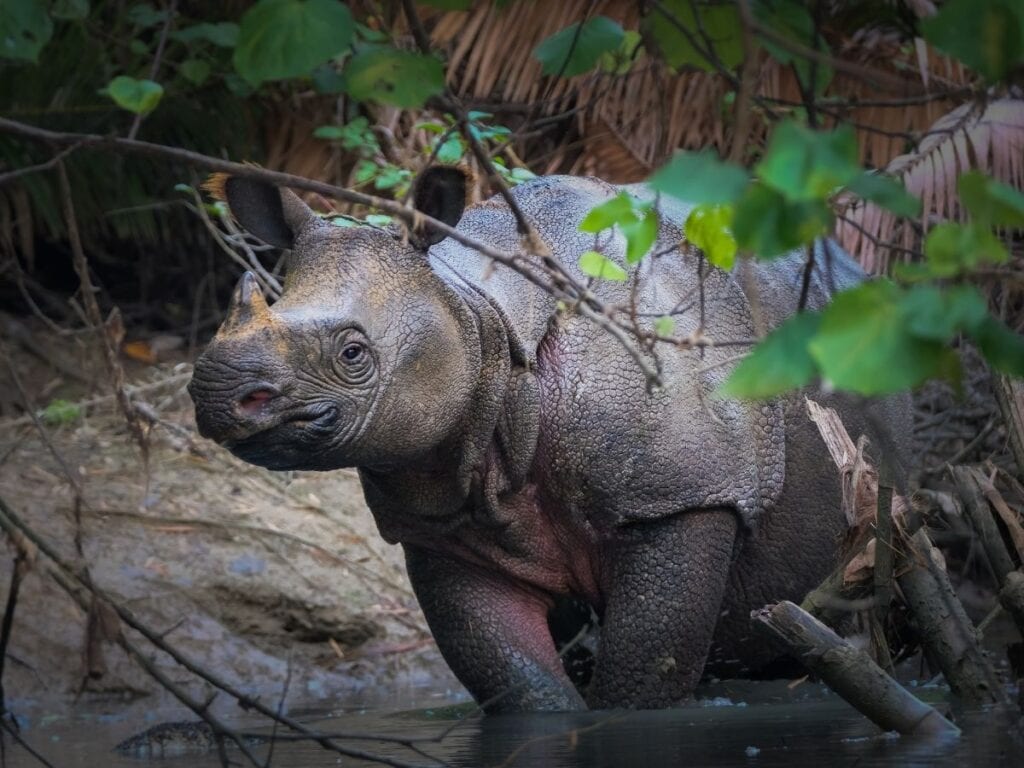
Possibly the world’s rarest large mammal, there are only about 75 individuals surviving in a single park.
These prehistoric-looking giants can weigh up to 5,070 pounds (2,300 kg) with a single horn.
They’re incredibly shy and solitary, spending most time hidden in dense jungle vegetation.
All remaining Javan rhinos live in Ujung Kulon National Park on Java’s western tip.
Poaching nearly eliminated them, with traditional medicine using horns made of the same stuff as fingernails.
Tsunami risk, disease, and tiny population size threaten their precarious existence.
Every single rhino matters critically, as losing even one is devastating for the survival of the entire species.
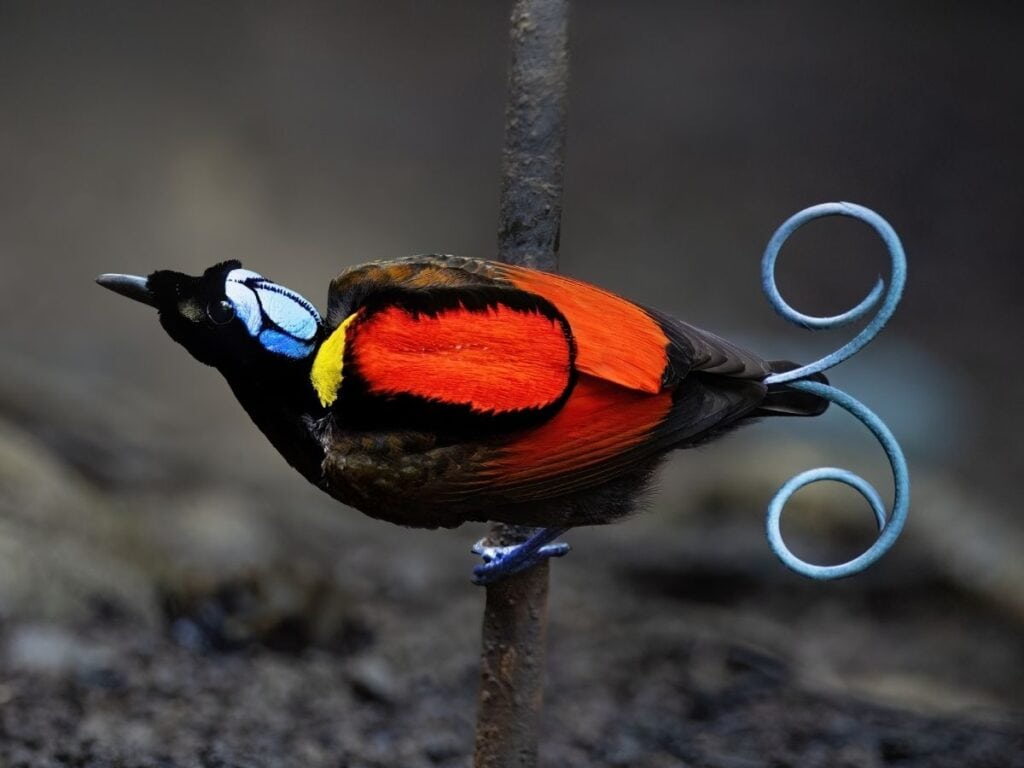
🦜 9. Birds of Paradise

These absolutely spectacular birds perform the most elaborate courtship dances in nature.
Males sport insane plumage like iridescent feathers, long streamers, and weird head decorations.
Several species live in Indonesian Papua, each with unique colors and dance moves.
Males clear forest floor stages and practice their choreography for hours daily.
Females watch multiple performances before choosing mates, super picky about dance quality.
Their feathers of these beautiful birds 🪶 were historically harvested for traditional ceremonies and European fashion.
Protected status now helps preserve these incredible dancers, though habitat loss remains a threat.
🐢 10. Leatherback Sea Turtle

The world’s largest turtle nests on Indonesian beaches, weighing up to 2,000 pounds (900 kg).
Unlike other sea turtles, they have leathery skin instead of hard shells, hence the name.
They can dive more than 4,000 feet (1,200 m) deep, deeper than any other turtle species.
Leatherbacks migrate thousands of miles between feeding grounds and nesting beaches.
They eat mainly jellyfish, consuming their body weight in jellies daily.
Sadly, plastic bags floating in oceans look like jellyfish, killing turtles who eat them by mistake 🥺
Indonesian beach communities work to protect nesting sites from poachers and development.
🐒 11. Tarsier

These tiny primates have absolutely enormous eyes, and in fact, each eyeball is bigger than their brain 🧠
Weighing just 3 to 5 ounces (80-140 g), they’re among the world’s smallest primates.
Those huge eyes can’t move in their sockets, so tarsiers rotate their heads 180° like owls.
They’re the only fully carnivorous primate, hunting insects, lizards, and small birds at night.
Powerful hind legs let them leap more than 16 feet (5 m) between trees 🌳
Their ultrasonic calls are too high-pitched for humans to hear without special equipment.
Several species of tarsiers live across Indonesian islands, each adapted to specific forest types.
🐍 12. Reticulated Python

The world’s longest snake can exceed 20 feet (6 m), with some giants reaching nearly 30 feet (9 m).
Beautiful geometric patterns cover their bodies, providing perfect camouflage in dappled forest light.
These powerful constrictors can take down prey as large as pigs, deer, and occasionally humans.
They’re excellent swimmers, often found near water where prey comes to drink.
Despite their size, they’re surprisingly good climbers when young, though adults mostly stay grounded.
Snake skin trade and habitat loss threaten wild populations, though they remain relatively common.
Local communities both fear and respect these massive serpents, featuring them in traditional stories.
🐊 13. Saltwater Crocodile

The world’s largest living reptile lurks in Indonesian coastal waters, rivers, and swamps.
Monster males can exceed 20 feet (6 m) and weigh more than 2,200 pounds (1,000 kg).
They’re incredible swimmers who sometimes travel hundreds of miles between islands.
Their bite force is the strongest of any living animal, and absolutely crushing at more than 3,700 psi.
Saltwater crocs eat pretty much anything they can catch – fish, birds, pigs, water buffalo, and unlucky people.
They can stay completely still for hours, looking like logs until prey gets too close 👀
Attacks on humans occur regularly in remote areas, making them genuinely dangerous animals in Indonesia.
🦜 14. Eclectus Parrot
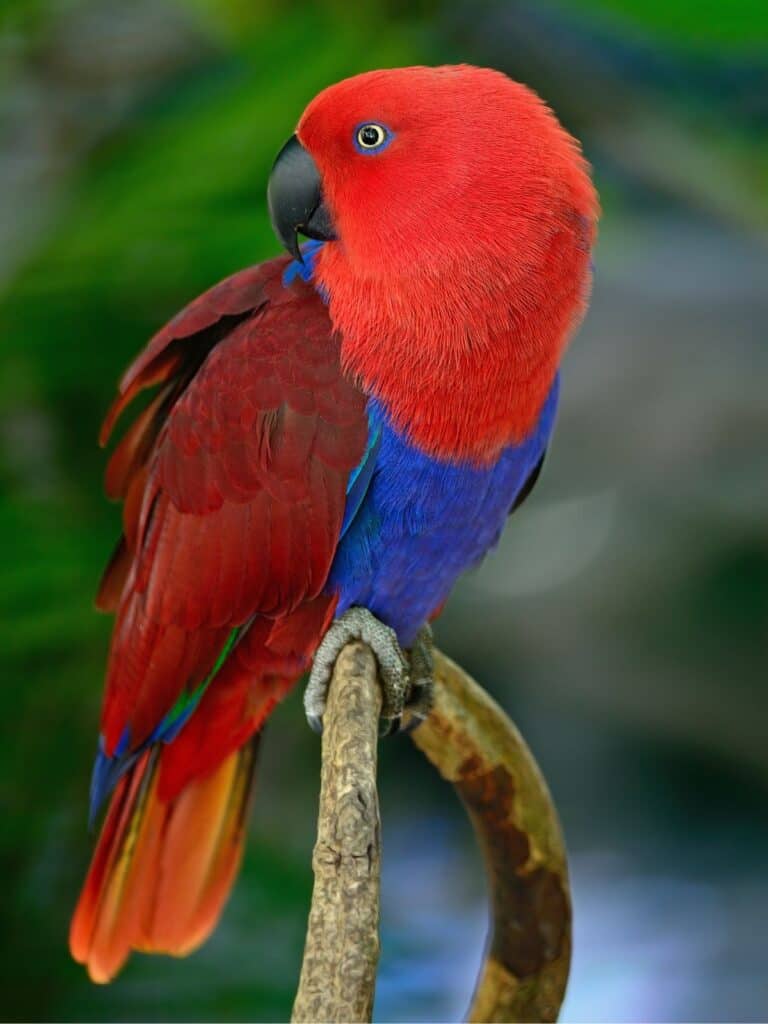
These parrots are so sexually dimorphic that males and females were originally thought to be different species.
Males are brilliant emerald green while females rock vibrant red and purple — total opposites 🤪
They’re relatively large parrots, measuring 14 to 17 inches (35-43 cm) long.
Unlike most birds where males are fancier, female eclectus parrots are actually more colorful.
They nest in high tree cavities, with females sometimes having multiple male partners helping raise chicks.
Their powerful beaks crack hard nuts and seeds that other birds can’t access.
Popular in the pet trade, wild populations face pressure from trappers and habitat loss.
🐋 15. Whale Shark

These gentle giants regularly visit Indonesian waters, especially around Raja Ampat and Cenderawasih Bay.
The world’s largest fish, whale sharks can reach 40 feet (12 m) long and weigh more than 20 tons (18,000 kg).
Despite massive size, they’re totally harmless filter-feeders munching plankton and small fish.
Each whale shark has unique spot patterns (much like human fingerprints ), which scientists use for identification.
They swim with mouths wide open, filtering thousands of gallons of water hourly.
Some areas see them congregating near fishing platforms, feeding on small fish attracted to nets.
Swimming alongside these peaceful giants — which I did it in Mexico — is an unforgettable bucket-list experience I highly recommend.
🦎 16. Flying Dragon (Draco Lizard)

These small lizards actually glide through the air using extendable skin flaps along their ribs.
When threatened or traveling, they unfold wing-like membranes and sail between trees.
They can glide more than 200 feet (60 m) horizontally while only losing about 30 feet (9 m) of height.
Males display colorful throat flaps and dewlaps to attract females and warn off rivals.
They measure just 8 to 10 inches (20-25 cm) long, making them pretty tiny dragons — similar to the bearded dragon.
Multiple species live across Indonesian forests, each with slightly different colors and patterns.
Watching them launch from trees and glide gracefully is absolutely magical.
🐻 17. Sun Bear

The world’s smallest bear species roams Indonesian rainforests, weighing just 60 to 145 pounds (27-66 kg).
That distinctive yellow chest patch supposedly resembles the rising sun, hence their name.
They have incredibly long tongues of up to 10-inches-long (25 cm); ideal for extracting insects and honey 🍯 from places other animals can’t get to.
Powerful claws let them rip open tree bark searching for grubs and tear apart termite mounds.
These solitary bears are mostly active at night, sleeping in tree nests during daytime.
Deforestation and wildlife trade have reduced populations across Southeast Asia.
Their cute appearance makes them targets for illegal pet trade, which is devastating for conservation.
🦇 18. Flying Fox

These massive fruit bats have wingspans exceeding 5 feet cross (1.5 m), making them look like actual foxes with wings 🦊
Unlike smaller bats, they use their excellent eyesight and sense of smell rather than echolocation to find food.
Huge colonies of flying fox bats roost in trees, sometimes containing tens of thousands of individuals.
They’re crucial for rainforest health, pollinating flowers and dispersing seeds across vast distances.
Evening flights to feeding grounds create spectacular sky-darkening migrations.
Some species fly more than 31 miles (50 km) nightly searching for fruiting trees 🍌
Despite their ecological importance, they’re sometimes killed as crop pests or food.
🐚 19. Giant Clam

The world’s largest living mollusks can weigh more than 440 pounds (200 kg) and live for more than 100 years.
Their shells can exceed 4 feet (1.2 m) across, providing homes for countless reef creatures.
Bright blue, green, or purple mantles contain symbiotic algae that produce food through photosynthesis.
Despite scary movies showing them trapping divers, these sea creatures close way too slowly to actually catch anyone.
They filter enormous quantities of water, helping keep Indonesian reefs clean and healthy.
Overharvesting for food, the aquarium trade, and shells has devastated many populations.
Protected status in marine parks helps preserve these incredible reef architects.
🐒 20. Siamang
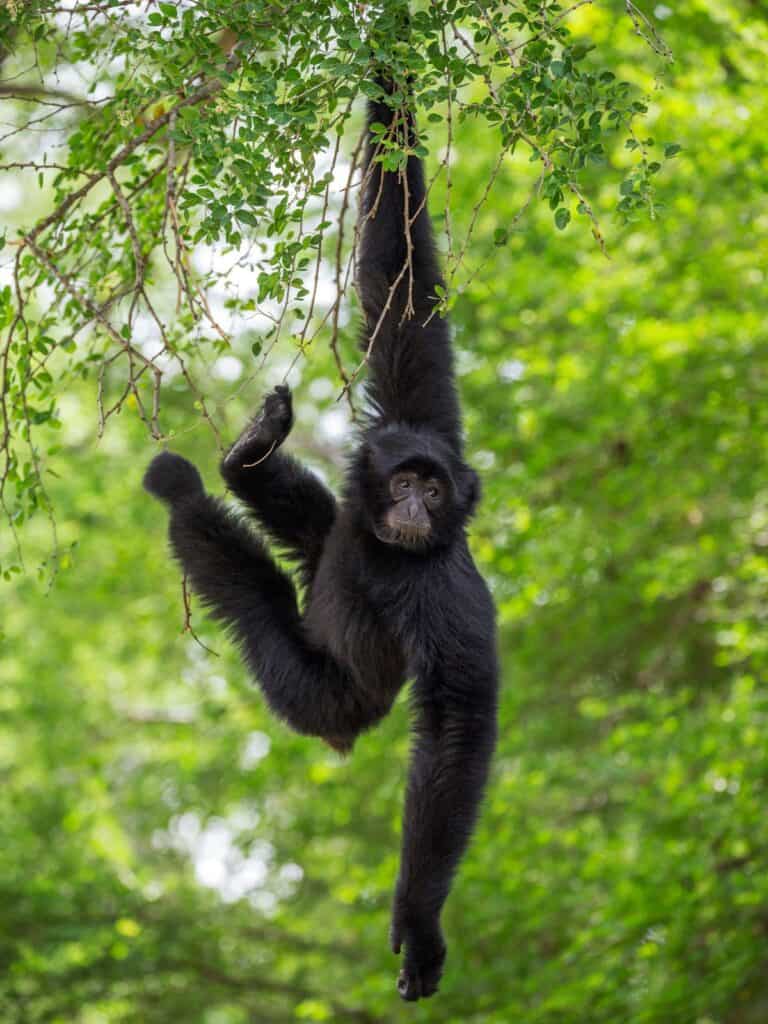
The largest gibbons belt out incredible duet songs 🎶 that echo through Indonesian forests at dawn.
Mated pairs sing together daily, with throat pouches amplifying their calls up to 2 miles (3 km) away.
They weigh 22 to 35 pounds (10-16 kg), with long arms that are perfect for swinging through trees.
Siamangs brachiate (move by using their arms to swing from branch to branch) through canopy at speeds exceeding 35 miles per hour (56 km/h).
Unlike other gibbons, they have webbed second and third toes — and nobody’s quite sure why 🤷♀️
Family groups typically include mated adults plus 2 to 3 offspring of different ages.
Deforestation continues shrinking their rainforest habitat across Sumatra and neighboring regions.
Our Final Thoughts on the Animals in Indonesia You Might See
Indonesia’s 17,000+ islands create the world’s most biodiverse tropical archipelago, hosting creatures found absolutely nowhere else on our planet.
From critically endangered Javan rhinos to thriving Komodo dragons, conservation here faces both heartbreaking challenges and inspiring successes.
The animals in Indonesia remind us that island nations carry enormous responsibility for protecting unique species that represent millions of years of isolated evolution.