🇦🇱 10 Fun Facts You Don’t Know About the National Animal of Albania (#9 Is So Cool!)
When you think of Albania, you might imagine pristine Adriatic beaches, ancient ruins, or the dramatic Albanian Alps.
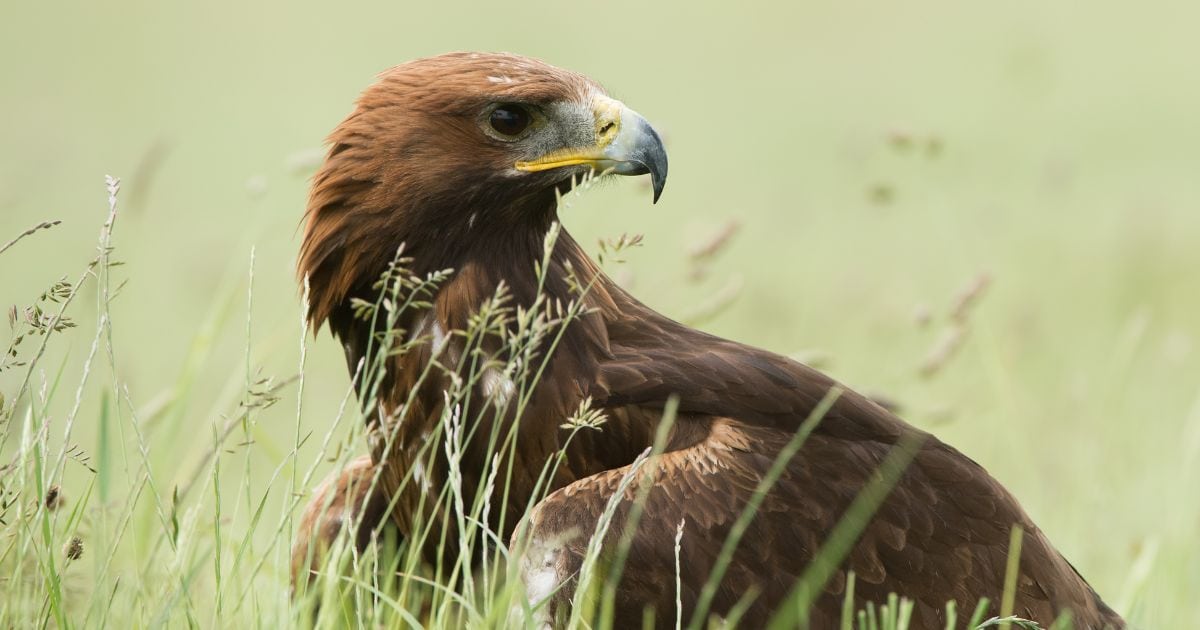
But did you know this Balkan nation’s name literally means the “Land of Eagles” in Albanian — and that the golden eagle is the national animal of Albania!?
This massive bird of prey soaring over Albania’s mountains represents freedom, strength, and the Albanian people’s fierce independence.
Below are 10 fascinating and fun facts about the national animal of Albania that reveal why Albanians and eagles are inseparable.
1. Albania is Named After the Eagle

Though we do, Albanians don’t call their country Albania. Instead, they call it “Shqipëri,” which translates to “Land of Eagles” in the Albanian language.
The word comes from “shqiponjë,” the Albanian word for eagle, and the people call themselves “Shqiptarë,” meaning “Sons of the Eagle” or “Eagle People.”
This isn’t a modern invention either; the eagle connection goes back more than a thousand years in Albanian culture and mythology.
When Albanians refer to their homeland, they’re literally calling it “Eagle Land.”
That’s some next-level commitment to a national animal (just imagine if Americans called the USA the “United Eagle States” instead).
2. Albania’s Flag Features a Black Double-Headed Eagle
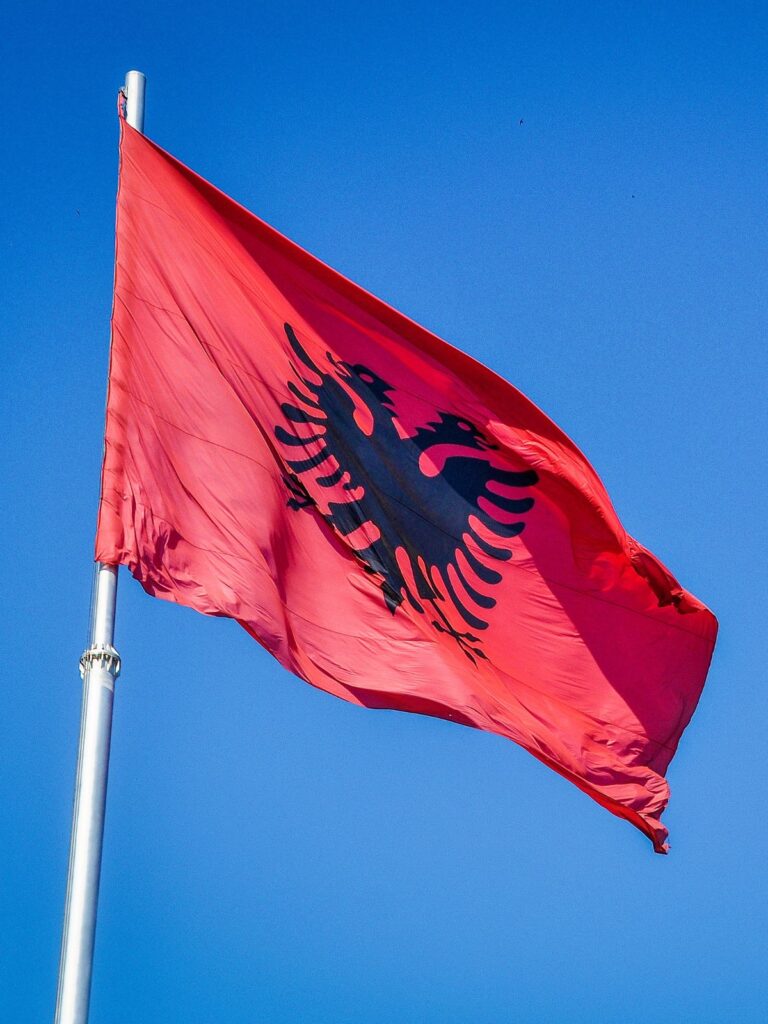
Albania’s flag is one of the most distinctive in the world with a black double-headed eagle on a solid red background.
The red represents bravery, strength, valor, and the blood shed by Albanian ancestors fighting for independence.
This double-headed eagle symbolizes Albania looking both north and south, representing the unity of northern and southern Albanian territories.
This design is believed to have originated with Skanderbeg, Albania’s greatest national hero from the 15th century.
Skanderbeg (whose real name was Gjergj Kastrioti) led a successful 25-year rebellion against the Ottoman Empire starting in 1443.
He adopted a red flag with a black double-headed eagle as his banner, and it eventually became Albania’s national flag.
The flag has been modified slightly over the years (King Zog added a crown from 1928-1939, and communists added a yellow star from 1946-1992), but the eagle has remained constant.
3. Golden Eagles Have a Massive Wingspan and Can Dive Really Fast

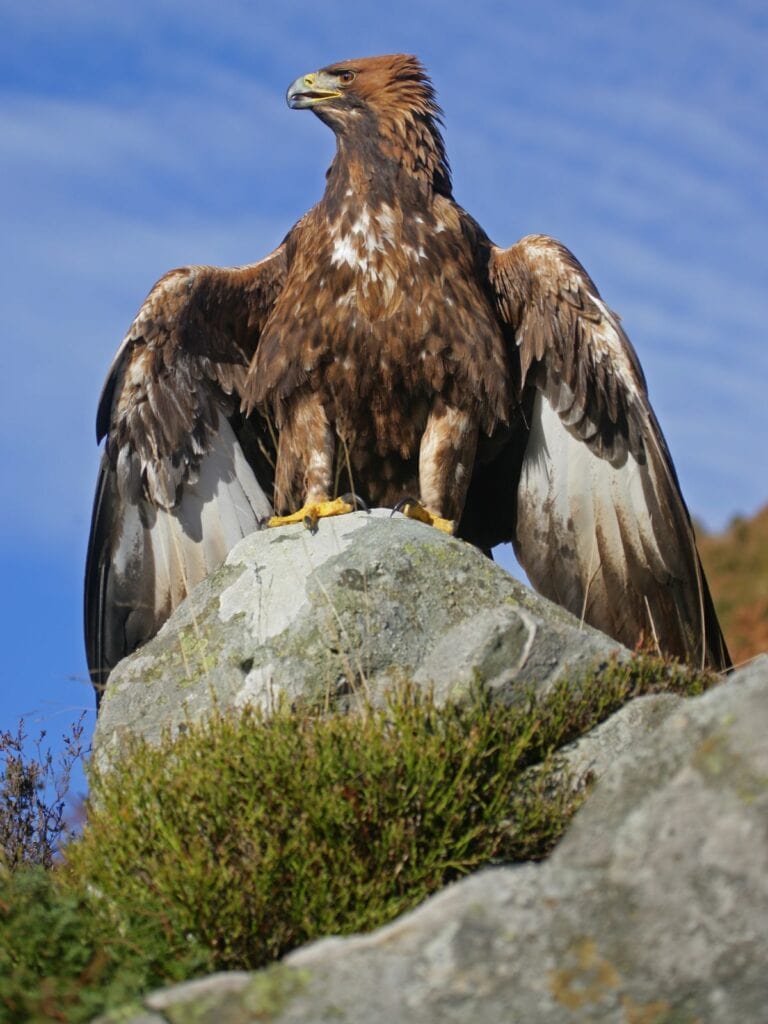
The national animal of Albania is one of the largest and most powerful birds of prey in the world.
Adult golden eagles have wingspans ranging from 6 to 8.5 feet (about 2 to 2.5 m), with females being larger than males.
They weigh between 7 to 15 pounds (3 to 7 kg), with some exceptional females reaching as much as 18 pounds (8 kg).
When hunting, golden eagles can dive at speeds exceeding 200 mph (320 km/h), making them one of the fastest animals on Earth.
Their talons are incredibly powerful, with a gripping force of about 750 pounds per square inch (5 kilopascals), strong enough to crush prey skulls.
Golden eagles hunt rabbits, marmots, ground squirrels, and even larger prey like young deer or goats.
In the Albanian Alps, these eagles are apex predators with essentially no natural enemies.
4. Albania Has Only 25-63 Breeding Pairs of Golden Eagles Left

Here’s the heartbreaking reality: Despite being Albania’s national animal and namesake, golden eagles are critically endangered in Albania.
Recent estimates suggest only 25 to 63 breeding pairs remain in the entire country.
The population has declined by 50 to 60% over the past two decades due to poisoning, illegal killing, and habitat loss.
Albania is now one of the worst-performing countries in the Mediterranean for illegal bird killing 😢 with an estimated 206,000 to 325,000 birds illegally killed or captured annually.
Golden eagles are often poisoned accidentally when they eat animals killed by poisoned bait meant for other predators.
Illegal shooting remains a major problem despite a national hunting ban in place since 2014.
Conservation groups like the Albanian Ornithological Society are working desperately to save the species before it disappears from Albania entirely.
5. Golden Eagles are the Most Common National Animal in the World

🦅 Golden Eagle Fun Fact: Albania shares its national animal with more countries than any other species on Earth.
The golden eagle is the national animal of Mexico, Germany, Austria, Kazakhstan, and of course, Albania.
As the national bird of many other countries, they also appears on flags (including the Mexican flag), coins, and coats of arms worldwide.
This makes sense, as golden eagles live across the entire Northern Hemisphere, from North America to Europe to Asia.
They’re found in mountains, deserts, tundra, and grasslands, showing their remarkable adaptability.
The golden eagle’s combination of power, beauty, and wide distribution has made it a universal symbol of strength and freedom.
However, only Albania has the unique distinction of literally naming itself after the golden eagle.
6. The Earliest Albanian Eagle Carving Dates to 1190 AD

The oldest known depiction of the eagle in Albanian art is said to be a stone carving from 1190 AD.
This carving predates the Albanian nobleman and military leader Skanderbeg by more than 250 years, proving the eagle symbol’s ancient roots in Albanian culture.
During the medieval period, various Albanian noble families used eagle imagery on their coats of arms and seals.
The eagle represented power, nobility, and divine protection in medieval Albanian Christianity and folklore.
Some Albanian legends claim that Albanians descended from eagles or that an eagle saved the first Albanian from danger.
These mythological origin stories reinforced the connection between the Albanian people and their national bird.
By the time Skanderbeg adopted the double-headed eagle in the 1400s, it was already deeply embedded in Albanian identity.
7. Golden Eagles Mate for Life (And Use the Same Nest for Decades)

The national animal of Albania forms monogamous pair bonds that last until one partner dies.
Golden eagle pairs stay together year-round, defending their territory and hunting cooperatively.
They build massive nests called eyries (also spelled as aeries) on cliff faces or in tall trees that often measure 5 to 6 feet (1.5 to 2 m) in diameter.
The same nest is used for many years 🪺 with the eagles adding new material each breeding season.
Some golden eagle nests have been used continuously for more than 50 years, growing to enormous sizes or more than 10 feet (3 m) across.
Female eagles typically lay 1 to 3 eggs, but usually only one chick survives to fledging.
The stronger chick often kills weaker siblings in a behavior called cainism. This form of siblicide is a brutal, but effective, means for survival.
8. Albania’s Most Remote Mountains Still Provide Eagle Habitat
The Albanian Alps in northern Albania remain one of Europe’s wildest and least developed mountain regions.
These rugged peaks reach elevations of more than 8,000 feet (2,400 m) and provide perfect golden eagle habitat with cliffs for nesting, open areas for hunting, and minimal human disturbance.
Valbonë Valley National Park and other protected areas in northern Albania are critical refuges for the remaining eagle population.
The parks also host brown bears, wolves, lynx, and chamois, making this region a biodiversity hotspot.
However, even these remote areas face threats from illegal logging, unregulated tourism, and infrastructure development.
Conservation groups are working with local communities to promote wildlife tourism as an economic alternative to destructive activities.
9. Golden Eagles Can See Way Better Than Us

As with so many beautiful birds of the world, the national animal of Albania has absolutely incredible eyesight.
Golden eagles can spot a rabbit from more than 2 miles (3.2 km) away while soaring high above the landscape.
Their sight is estimated at 4 to 8 times sharper than human vision 👀 hence expressions like “eagle eyed” to describes someone with excellent vision.
They have two foveae (focal points) in each eye, compared to humans’ one, allowing them to focus on two objects simultaneously.
Eagles can see both forward (for hunting) and to the sides (for navigation and predator detection) at the same time.
Their eyes are so large relative to their head that they can’t move them in their sockets. This is why eagles turn their entire head to look around.
This extraordinary vision allows golden eagles in Albania to hunt effectively from incredible heights and distances.
10. Albania Has a National Anti-Poisoning Program to Save Eagles

In response to the golden eagle crisis, Albania established a National Anti-Poisoning Working Group in recent years.
This initiative coordinates government agencies, non-governmental organizations (NGOs), hunters, and academics to combat wildlife poisoning.
The Albanian Parliament passed legal amendments in 2019 explicitly banning poison baits and misuse of agricultural chemicals.
The Albanian Ornithological Society leads conservation efforts, including education programs, anti-poisoning campaigns, and monitoring of eagle populations.
They’ve also created a chain of custody for poisoning incidents and established legal responsibilities for enforcement.
Established 2021 under the Ministry of Tourism, the Albania National Wildlife Council now oversees wild fauna protection and hunting regulation.
While progress has been made, golden eagles remain critically endangered and need continued protection to survive in Albania.
Our Final Thoughts on Golden Eagles, the National Animal of Albania

Sadly, the national animal of Albania faces an uncertain future in the very land that bears its name.
From ancient stone carvings to modern flags, the golden eagle has represented Albanian identity for more than 800 years 🇦🇱
Yet today, only a few dozen breeding pairs remain in Albania’s mountains, threatened by poisoning, shooting, and habitat loss.
If conservation efforts fail, Albania “the Land of Eagles” risks losing its namesake animal for good to extinction.
The challenge Albania faces is clear: Protect the eagle that symbolizes their nation, or watch it vanish from Albanian skies forever 🥺