🇳🇵 10 Fun Facts You Don’t Know About the National Animal of Nepal (#9 Is Seriously Wild!)
Nestled in the Himalayas between India and China, Nepal is home to Mount Everest, ancient temples, and some of the friendliest people on Earth.
But did you know this mountain nation chose an animal that most countries eat as their sacred national symbol?!
The cow holds the honored position as the national animal of Nepal, officially recognized in the 2015 constitution.
For Nepalese people (especially the Hindu majority), cows represent wealth, motherhood, and divine connection in ways most Westerners would never imagine.
Below are 10 fascinating and fun facts about the national animal of Nepal that will completely change how you think about cows 🐮
1. Killing a Cow in Nepal Can Get You 14 Years in Prison

Nepal doesn’t mess around when it comes to protecting its national animal.
The country’s constitution explicitly bans cow slaughter, making it a serious criminal offense with penalties up to 14 years in prison.
This makes Nepal one of the only countries in the world where killing the national animal is illegal nationwide.
Even exporting cows to other countries (where they might be slaughtered) can land you 20 years behind bars.
This isn’t just about religious belief, it’s written directly into Nepal’s legal code and actively enforced across the country.
Compare that to other national animals like Australia’s kangaroo (which Australians do eat) and you’ll see just how seriously Nepal takes cow protection.
2. Street Cows Roam Freely and Nobody Can Touch Them

If you visit Nepal, you’ll see cows just chillin’ in the middle of streets, blocking traffic, and wandering wherever they please.
Drivers patiently wait for cows to move, nobody honks at them, and pedestrians walk around them like they own the place (because, well, they do).
These street cows aren’t owned by anyone, they’re community animals that everyone feeds and nobody harms.
Some cows have learned to wait at restaurants and shops where kind people regularly give them food scraps.
During Gai Tihar, even these random street cows get decorated with garlands and fed treats by complete strangers.
It’s like an entire nation has collectively adopted millions of cows as sacred communal pets.
For visitors, the sight of cows causing traffic jams in Nepal while everyone patiently waits is both hilarious and beautiful.
3. Cows are Believed to Have 330 Million Gods Living Inside Them

According to Hinduism — the religion of about 80% of Nepalese people 🔯 — cows contain all 330 million Hindu gods and goddesses within their bodies.
This makes cows walking temples, essentially mobile shrines that deserve the same respect as any holy site.
Nepalese Hindus believe the cow represents the goddess Lakshmi, a deity of wealth and prosperity, which is why harming a cow brings terrible luck.
Different parts of the cow’s body are also associated with different Hindu deities.
- 🐮 The cow hump represents Lord Shiva
- 🐮 The cow horns represent the gods Brahma and Shiva
- 🐮 The cow face represents the Sun God (Surya or Surya Deva) and the Moon God (Chandra or Soma)
This belief transforms every cow into a sacred being worthy of worship and protection.
When you understand this, the whole “national animal of Nepal” thing starts making way more sense.
4. There’s a Whole Festival Day Just for Worshipping Cows

During Tihar (Nepal’s second-biggest festival after Dashain), the third day is called Gai Tihar, and entirely dedicated to worshipping cows.
On this day, Nepalese people wake up early, find cows (whether pets, farm animals, or random street cows), and decorate them with marigold garlands 🌼 and colorful tika powder on their foreheads.
They feed cows special treats, sing songs honoring them, and some people even crawl under cows as a symbolic act of passing through the gates of heaven.
The belief is that you’ll meet this cow at the river Vaitarani, which souls must cross to reach heaven, and the cow will help you across.
No joke, Gai Tihar is basically cow Christmas in Nepal (though they’re also revered in other religions and even one of the more common animals in the Bible).
Millions of cows across the country get pampered, worshipped, and treated like royalty for an entire day every October or November.
5. People Tie Sacred Threads to Cow Tails to Book Their Ride to Heaven

During Gai Tihar, Nepalese Hindus perform a fascinating ritual involving sacred threads and cow tails.
People tie the sacred thread (doro) that they received during Janai Purnima festival to the tail of a cow during cow worship.
The belief is that after death, your soul must cross the mythical river Vaitarani to reach heaven, and this journey is terrifying and dangerous.
According to Hindu belief, the cow you worshipped and tied your thread to 🎗️ will meet you at this river and help you cross safely.
You’ll grab the cow’s tail (the one with your thread) and the cow will pull you across the deadly waters to paradise.
So basically, Nepalese people are literally tying their eternal salvation to a cow’s backside during this festival.
This might sound strange to Westerners, but imagine how meaningful it is that your passage to heaven literally depends on your relationship with cows.
It’s really no wonder Nepal made the cow their national animal.
6. Cow Milk Products are Required for Hindu Religious Ceremonies

No proper Hindu puja (worship ceremony) in Nepal is complete without cow-derived products.
Ghee (clarified butter from cow milk) is poured into sacred fires, cow milk is offered to deities, and cow yogurt is used in purification rituals.
These products are considered the purest offerings you can give to gods, far superior to anything else.
During Lakshmi Puja (part of Tihar), families prepare special sweets using cow milk and ghee to welcome the goddess of wealth.
Nepal even exports cow ghee and butter to India (and beyond), generating significant national revenue.
The dairy industry built around sacred cow products contributes about 25% of Nepal’s agricultural GDP.
So cows aren’t just spiritually important, they’re economically critical to Nepalese society.
7. Cow Dung Is Considered Pure (and People Use It Everywhere)

Here’s where Western minds get blown: In Nepal, cow dung isn’t considered waste 💩 it’s considered pure and auspicious.
Nepalese people use cow dung to plaster the floors and walls of homes because it’s believed to purify spaces and ward off evil spirits.
It’s also burned as fuel for cooking, used as fertilizer for crops, and even mixed with mud to make building materials.
During religious ceremonies, cow dung is smeared on the ground before placing deities because it sanctifies the area.
The smell might take some getting used to, but for Nepalese people, cow dung is basically nature’s cleaning product meets spiritual cleanser.
Modern science has even found that cow dung has antimicrobial properties, so maybe ancient wisdom was onto something.
8. Cow Urine Is Used as Traditional Medicine in Nepal

If cow dung seemed weird, wait until you hear about cow urine (called “gomutra” in Nepali).
In traditional Ayurvedic medicine practiced throughout Nepal, cow urine is believed to have healing properties.
It’s used to treat everything from skin conditions to digestive issues, and some people drink small amounts mixed with herbs for purification rituals 😳
Ancient texts claim cow urine can eliminate toxins from the body and cure various ailments.
During the Nepalese Tihar festival, people collect cow urine along with milk, yogurt, ghee, and dung to create “panchagavya” (five products of the cow), which is considered extremely sacred.
Whether it actually works medically is debatable, but millions of Nepalese people have used these traditional remedies for thousands of years.
9. Nepal Has More Than 7 Million Cows (But Most Barely Produce Milk)
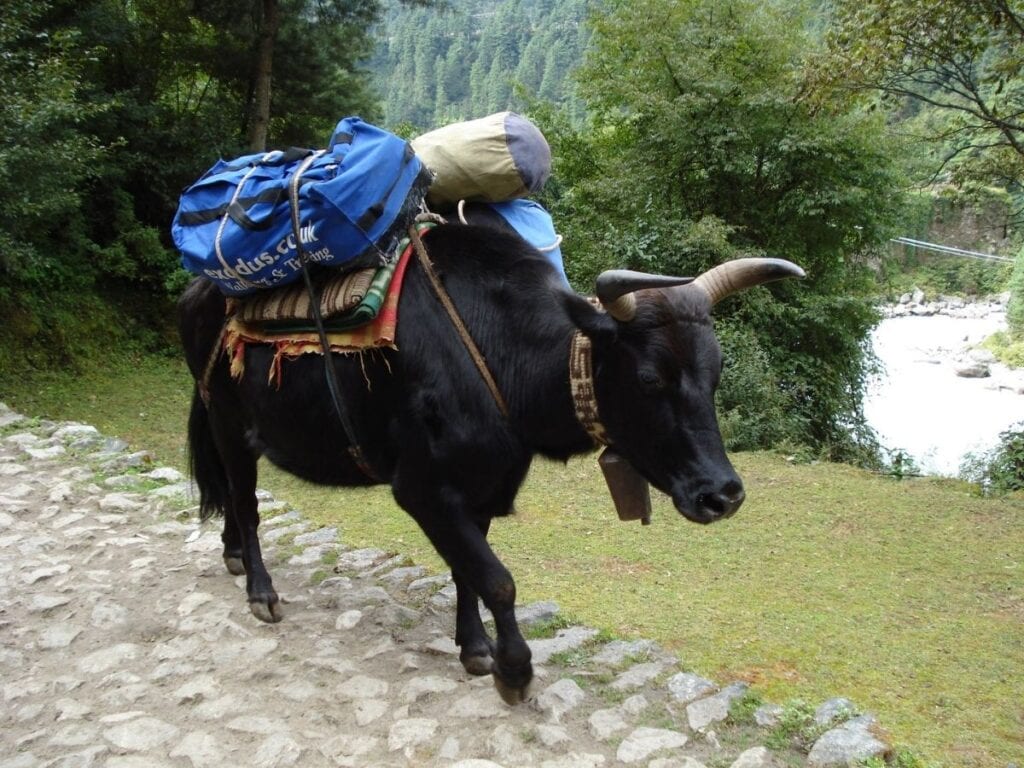
One of the most common animals in Nepal, there were about 7 million cattle in 2015, which seems like a lot for a small country.
But here’s the catch: Only about 14% of those cows are actually milking cows and producing milk at any given time.
The rest are non-productive cows (too old, too young, male, or infertile) that farmers must keep because religious laws forbid culling them.
This creates a massive economic problem where farmers spend money feeding millions of cows that produce zero income.
An average Nepalese cow produces only about 1,380 pounds (627 kg) of milk per lactation period, compared to high-producing breeds in other countries that can produce 22,000+ pounds (10,000+ kg).
Farmers can’t improve genetics through selective breeding or culling because removing unproductive cows violates religious and legal codes.
10. Some Nepalese Communities Eat Beef (But It’s Super Controversial)

Plot twist: Not everyone in Nepal worships cows 🐄 and in fact, some Nepali people do eat them.
Indigenous Adivasi Janajati communities and some Buddhist groups in Nepal have traditionally eaten beef as part of their culture for centuries.
This creates massive tension because the Hindu-majority government bans beef nationwide, criminalizing these minority groups’ traditional practices.
When someone from these communities is caught with beef, it often becomes a huge controversy with arrests and protests.
Some activists argue that forcing a beef ban on non-Hindu communities violates religious freedom and minority rights.
Meanwhile, you can find beef quietly sold in some Kathmandu department stores and restaurants (often run by non-Hindu minorities), creating a weird double standard.
It’s one of Nepal’s most contentious cultural issues where the national animal is sacred to some but food to others.
Our Final Thoughts on Cows, the National Animal of Nepal

The national animal of Nepal reveals everything about this country’s unique relationship between spirituality, law, and everyday life.
For most Nepalese Hindus, cows aren’t just animals but living embodiments of the divine, walking temples that deserve protection and reverence.
While this creates economic challenges and cultural tensions, it also showcases Nepal’s commitment to ancient traditions in our modern world.
Whether you find it fascinating or perplexing, one thing is clear: Now other country treats their national animal quite like Nepal.