🇷🇴 15 Animals in Romania You Might Encounter When You Visit (#9 Is So Cute!)

Romania harbors one of Europe’s most spectacular wildlife refuges.
The Carpathian Mountains dominate a significant portion of the landscape, covering one-third of the country’s territory and encircling the historic region of Transylvania.
This wild landscape protects Europe’s largest populations of brown bears, wolves, and lynx alongside hundreds of bird species in the biodiverse Danube Delta.
From the virgin forests of Transylvania to the wetlands bordering the Black Sea, animals in Romania create encounters that wildlife enthusiasts dream about.
Whether you’re tracking carnivores through mountain forests or photographing pelicans in delta channels, Romanian wildlife offers unforgettable adventures.
1. Eurasian Lynx
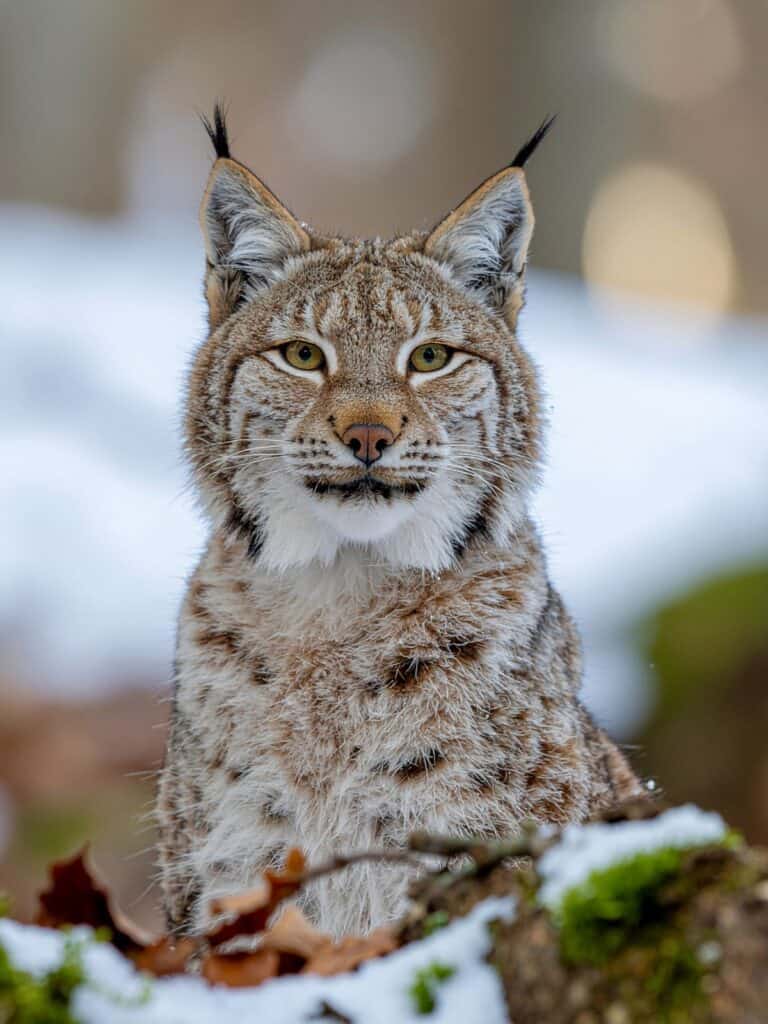
The Eurasian Lynx, with its piercing eyes and agile movements, is an elusive predator that embodies the essence of untamed wilderness.
Characterized by tufted ears and spotted coats, lynx possess an air of mystery and strength. They’re primarily nocturnal hunters specializing in deer and smaller prey.
These territorial creatures require vast expanses of up to 155 square miles (400 km²) to roam, making continuous forested areas essential for their survival.
Lynx populations face threats from habitat fragmentation and illegal hunting despite strict protection under EU law, specifically the Habitats Directive.
The Natural Reserve of Cheile Tisitei in Vrancea Area is known as the large carnivore reserve.
Here, patient wildlife watchers might glimpse this magnificent feline — or even Romania’s Carpathian lynx.
These are among Europe’s largest lynx cats, reaching up to 88 pounds (40 kg).
With an estimated population of 2,000 individuals, these secretive cats remain largely hidden from human eyes, but a lucky few may see one.
2. Brown Bear

Romania’s forests in the Carpathian Mountains boast more than 5,000 of these majestic animals, constituting the EU’s largest bear population.
These powerful omnivores can weigh up to 770 pounds (350 kg) and live 25-30 years in the wild.
Brown bears spend up to 16 hours daily foraging for herbs, mushrooms, forest fruits, and small animals.
The Piatra Craiului Mountains offer some of Europe’s best bear watching opportunities.
Professional guides lead visitors to forest hides where bears approach feeding stations at dusk.
The Liberty Bear Sanctuary near Zarnesti village, which is the largest brown bear sanctuary in the world, provides a safe home for more than 100+ former captive bears that used to live in improper conditions.
Recognized as a keystone species, their presence indicates a healthy and productive forest environment.
Bears play crucial ecological roles by dispersing seeds, controlling prey populations, and maintaining forest health.
Brown bear conservation efforts balance protecting these magnificent carnivores with supporting rural communities.
3. Chamois
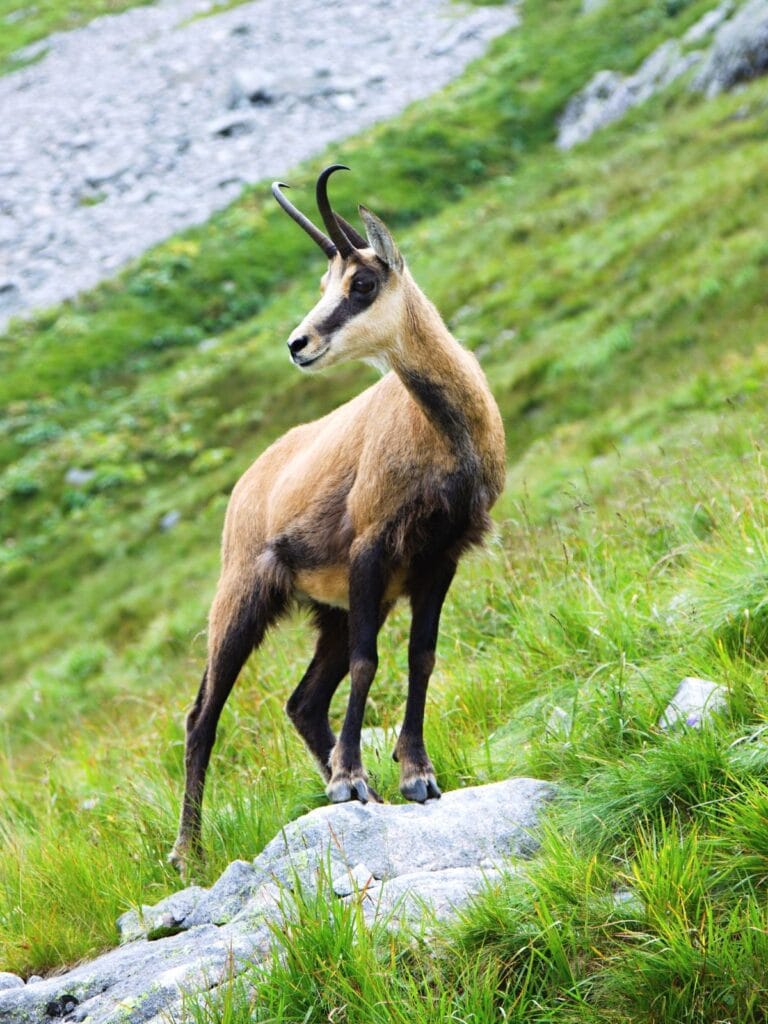
The chamois is Romania’s only mountain goat.
Inhabiting the rocky peaks of the Carpathians, these agile animals live in areas like Piatra Craiului National Park and the Bucegi, Fagaras, and Retezat mountains.
These sure-footed climbers scale vertical cliffs and leap across ravines with remarkable grace.
Chamois live in herds on steep alpine meadows above the tree line.
Early morning or evening provides the best opportunities to spot them grazing on mountain vegetation.
Their keen eyesight and ability to detect movement from great distances make them challenging subjects for wildlife photographers.
Chamois have short backward-curving horns and thick fur that changes from deep brown in summer to light gray in winter.
White contrasting marks on their heads with pronounced black stripes below the eyes make them easily recognizable.
They also sport white rumps and black stripes along their backs.
4. Gray Wolf

With more than 3,000 wolves in the wild, Romania hosts about 10% of Europe’s total gray wolf population.
These intelligent pack animals roam the Transylvanian forests, with names like Lupeni and Vulcan revealing the wolf’s historic significance.
Wolves are indispensable to ecosystems, maintaining balance by preying on vulnerable individuals and regulating herbivore populations.
Gray wolves in Romania weigh between 55-132 pounds (25-60 kg) and typically live 6-8 years in the wild.
Wolves travel in packs, and their haunting howls echo through mountain valleys at night.
Their prey consists mostly of red deer (#6 on this list), roe deer (#7), wild boar (#13), and chamois (#3).
Spotting wolves requires specialized tracking expeditions. These wary animals avoid human contact, making encounters rare without expert guides.
Wildlife researchers use camera traps and track wolves through snow, teaching visitors to identify paw prints and territorial markings.
5. European Bison
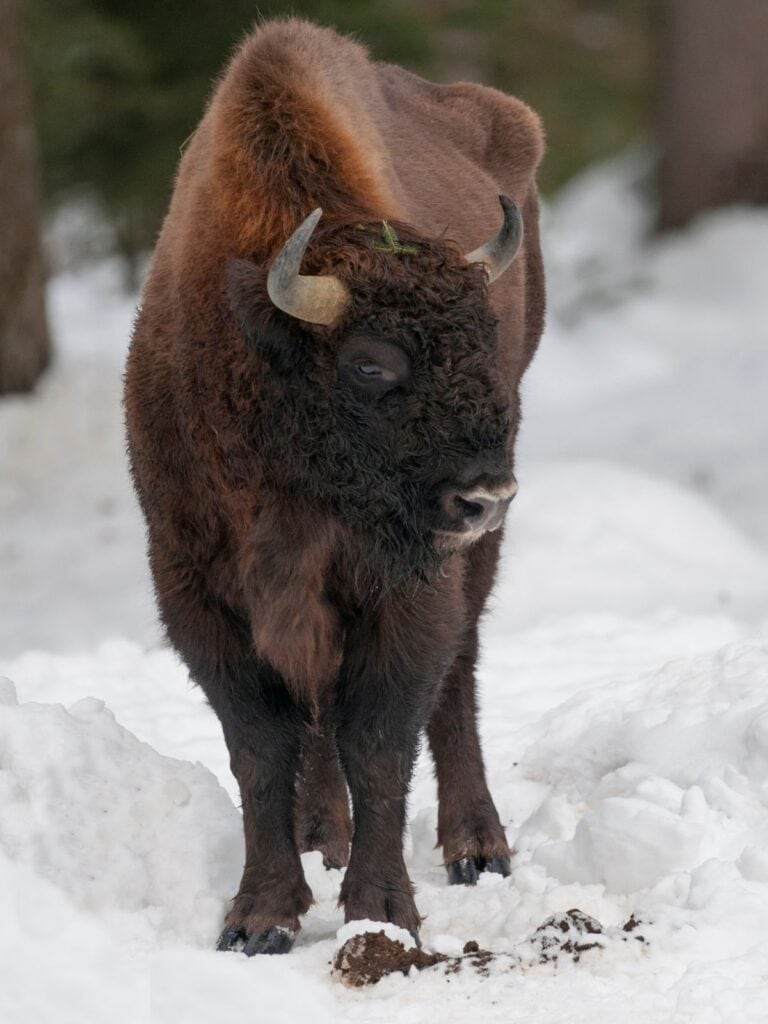
At nearly one ton (2,000 pounds), the European bison is the continent’s heavyweight champion for size.
Sadly this megafauna, Europe’s largest land mammal, was once on the brink of extinction.
In 1927, there were less than 50 European bison left in the world, all living in captivity.
Today, they have made a comeback with about 10,000 total, and more than 7,000 living freely in the wild across Europe thanks to successful reintroduction programs known as “rewilding.”
Bison reintroduction represents one of Europe’s most successful rewilding projects.
Their return helps restore natural grazing patterns that benefit plant diversity and soil health.
Visitors can observe these magnificent animals from respectful distances at multiple reserves throughout Romania, including the free-ranging herds that live in the Tarcu Mountains near Armenis village.
There’s also Vanatori Neamt Reservation in the north of the country, Hațeg Bison Reserve in Hațeg, and Valea Zimbrilor Bison Reserve in Vama Buzăului. (🦬 Fun Fact: “Valea zimbrilor” means “valley of the bison” in Romanian.)
Its reintroduction demonstrates how conservation efforts can benefit both the environment and local communities.
These gentle giants graze mountain meadows and forest floors, playing crucial roles in ecosystem balance.
6. Red Deer

The woodlands of Romania are teeming with wildlife including the large, reddish-furred red deer.
These majestic herbivores represent one of the largest deer species in Europe.
Male red deer, called stags (pictured above), sport impressive antlers that they shed and regrow annually.
During autumn rutting season, stags engage in dramatic battles for mating rights, filling forests with their powerful roars.
Red deer travel in herds, making them relatively easy to spot compared to solitary predators.
The best time to find them is early in the morning or at dusk when they are feeding.
Romanian forests provide ideal red deer habitat with a mixture of woodland cover and open meadows.
These deer play important roles as prey for wolves (#4 on this list) and lynx (#1) while shaping forest vegetation through their grazing patterns.
National parks throughout the Carpathians offer excellent opportunities for deer observation.
7. Roe Deer

The graceful, agile roe deer are among Romania’s most commonly encountered wild animals.
Smaller than red deer, roe deer have reddish-brown coats in summer that turn gray-brown in winter.
Males grow small antlers with typically three points on each side.
These deer prefer mixed woodlands with dense undergrowth providing cover. They’re often seen in small groups feeding in meadows near forest edges.
Roe deer are incredibly alert, bounding away with distinctive white rump patches flashing as they flee from perceived threats.
Roe deer serve as important prey species for lynx and wolves. What they eat is essential in determining what plants continue thrive in the forrest.
Patient observers sitting quietly near forest clearings during dawn often witness roe deer emerging to feed on fresh shoots and leaves.
8. Golden Jackal
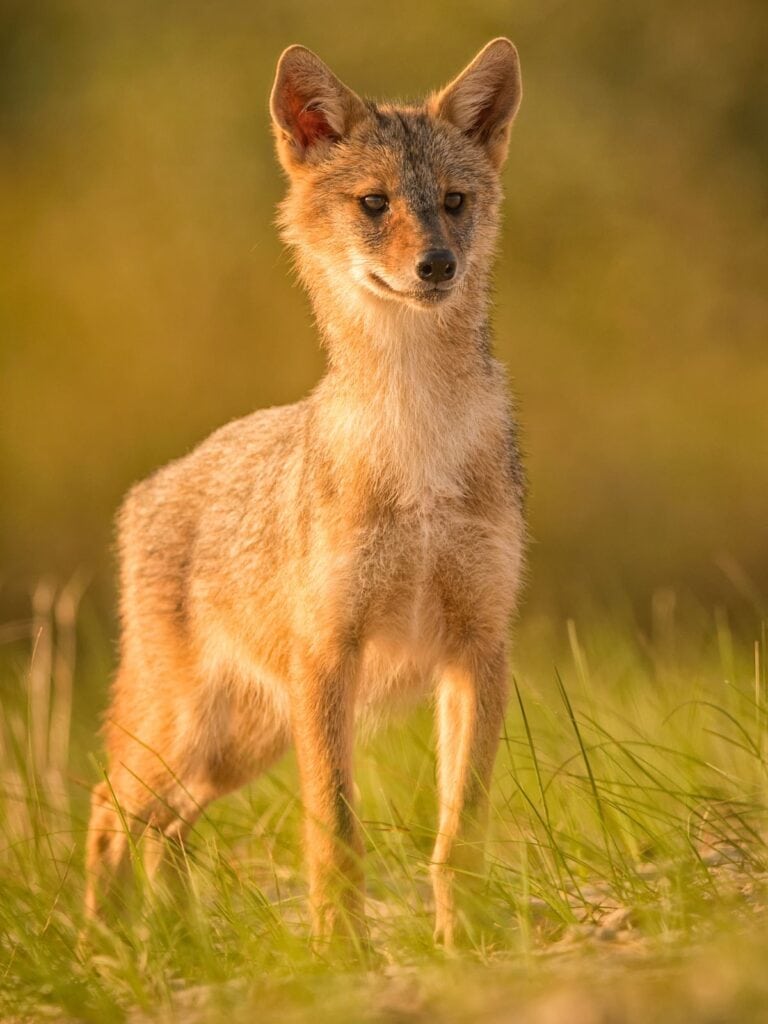
The golden jackal is expanding its range throughout Romania, and is also one of the animals in Greece you might see if you visit that country.
This wild animal has been making a remarkable comeback and is now quite common in the Danube Delta and in other parts of southern Romania, or even in the western region of Banat.
These opportunistic canids have yellowish-brown coats and are smaller than wolves. They live alone, in pairs, or in small family groups.
The Danube Delta, Europe’s second-largest river delta and a UNESCO World Heritage Site, provides ideal jackal habitat with abundant food sources and diverse terrain.
Their haunting howls create atmospheric soundtracks to Romanian nights, particularly in wetland areas where they’re a top predator.
Jackals are highly adaptable scavengers feeding on small mammals, birds, insects, fruits, and carrion.
Known as nature’s cleaners, jackals serve important ecological roles by consuming waste and carrion.
They’ve adapted successfully to human-modified landscapes, thriving near agricultural areas.
9. Stone Marten

Stone martens are type of marten species that are as comfortable in rocky habitats as they are living among humans in towns.
Shy creatures, they typically avoid humans despite living near settlements.
Living in harmony, these mustelids help play important roles controlling rodent populations in Romania.
Stone martens are excellent hunters that go after rodents, birds, insects, and fruits alike.
These agile carnivores have brown fur with distinctive white throat patches.
They’re primarily nocturnal, but occasionally active during daylight hours.
Their adaptability allows them to thrive in various habitats from forests to villages.
Patient wildlife watchers exploring Romanian forests and mountain areas occasionally spot martens darting through trees or investigating rocky crevices.
A similar species, pine martens can be seen climbing or running on tree branches throughout Romanian forests.
10. Wild Horses
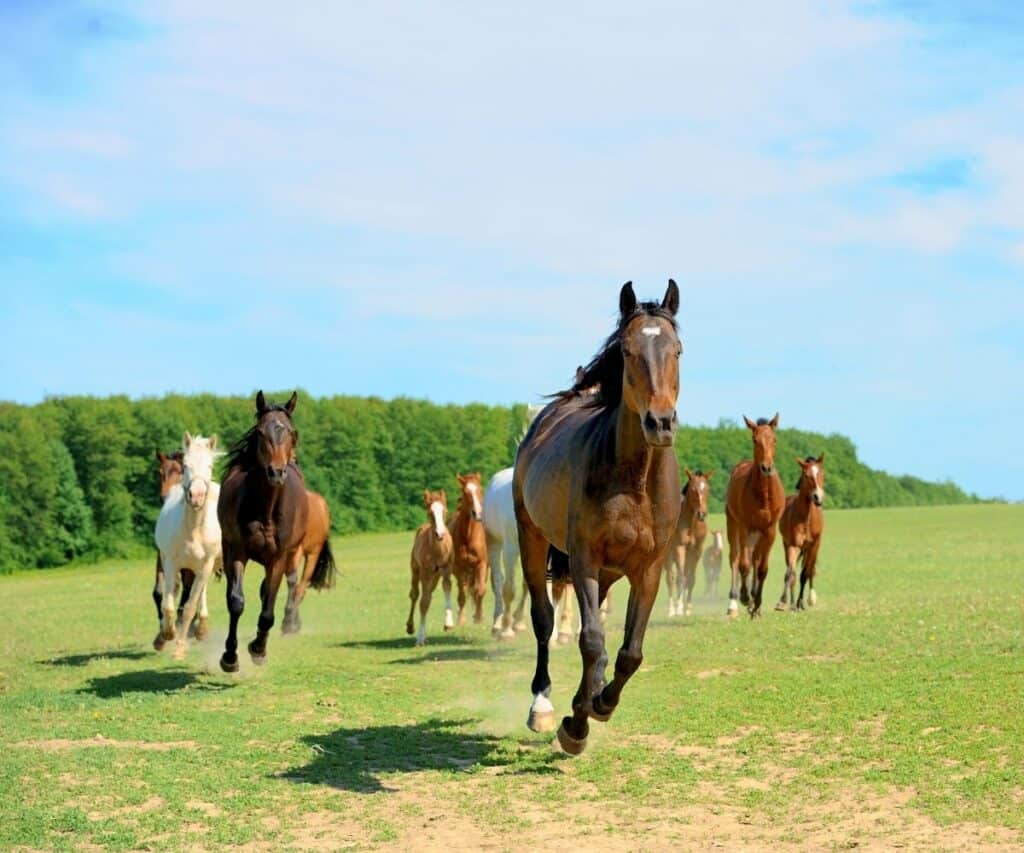
Tourists in Romania can admire the beautiful wild horses in Letea Forest, the oldest natural reservation in Romania.
This ancient forest covers about (6,980 acres) 2,825 hectares between the Sulina and Chilia branches of the Danube.
The horses roam freely through this protected wilderness.
These semi-wild horses descended from domestic stock that returned to natural living.
Adapted to forest life, grazing meadows and navigating through dense woodland, their presence adds a romantic element to Danube Delta explorations.
Wild horses play ecological roles by maintaining open grasslands through grazing. They create habitat diversity benefiting other species.
Visitors exploring Letea Forest within the Danube Delta often encounter horse herds moving through sun-dappled glades, creating scenes of timeless natural beauty.
11. Dalmatian Pelican
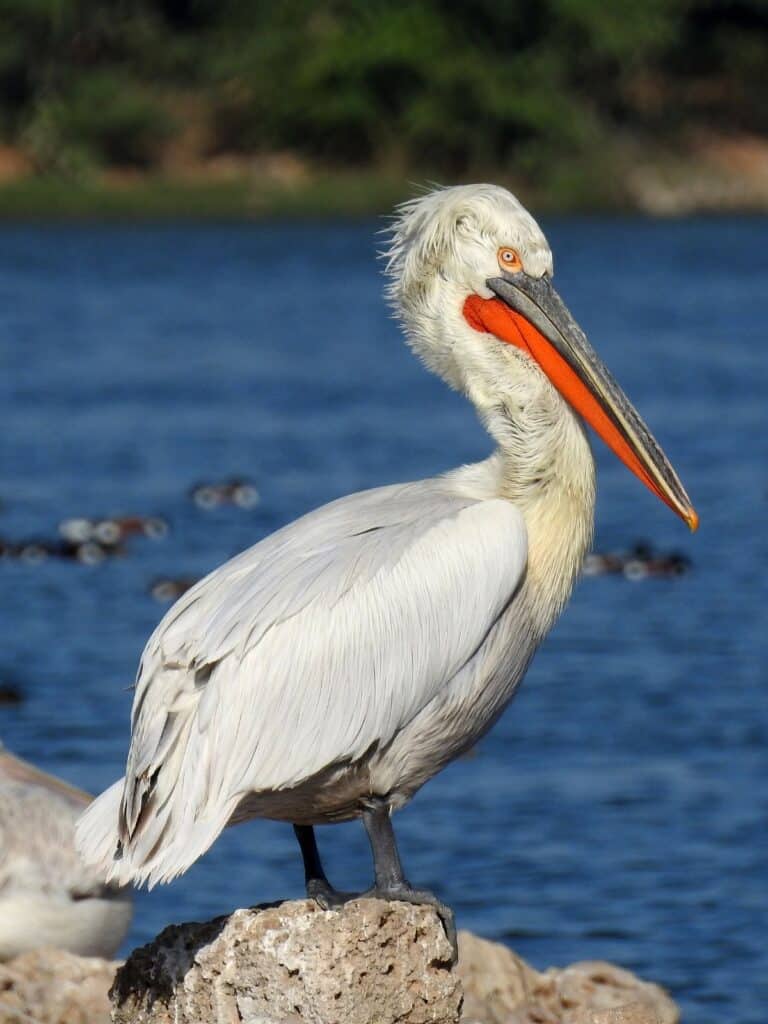
The Dalmatian pelican, the world’s biggest freshwater bird, lives in the Danube Delta.
These massive white birds have silver-gray plumage and orange throat pouches.
With wingspans reaching 11-feet-long (3.4 m), they’re among the world’s largest flying birds.
One of the best places for birdwatching in the world, there are more than 320 species of birds in the Danube Delta, including Dalmatian pelicans and Europe’s largest pelican populations.
Boat tours through delta channels provide close encounters with nesting colonies.
Dalmatian pelicans nest in reed beds during spring, offering incredible wildlife photography opportunities.
They fish cooperatively, herding fish into shallow water before scooping them up in their enormous bills.
These magnificent birds represent the ecological richness of Romania’s wetlands and the success of habitat protection.
Conservation efforts and sustainable fishing practices help pelican populations thrive.
12. White Pelican
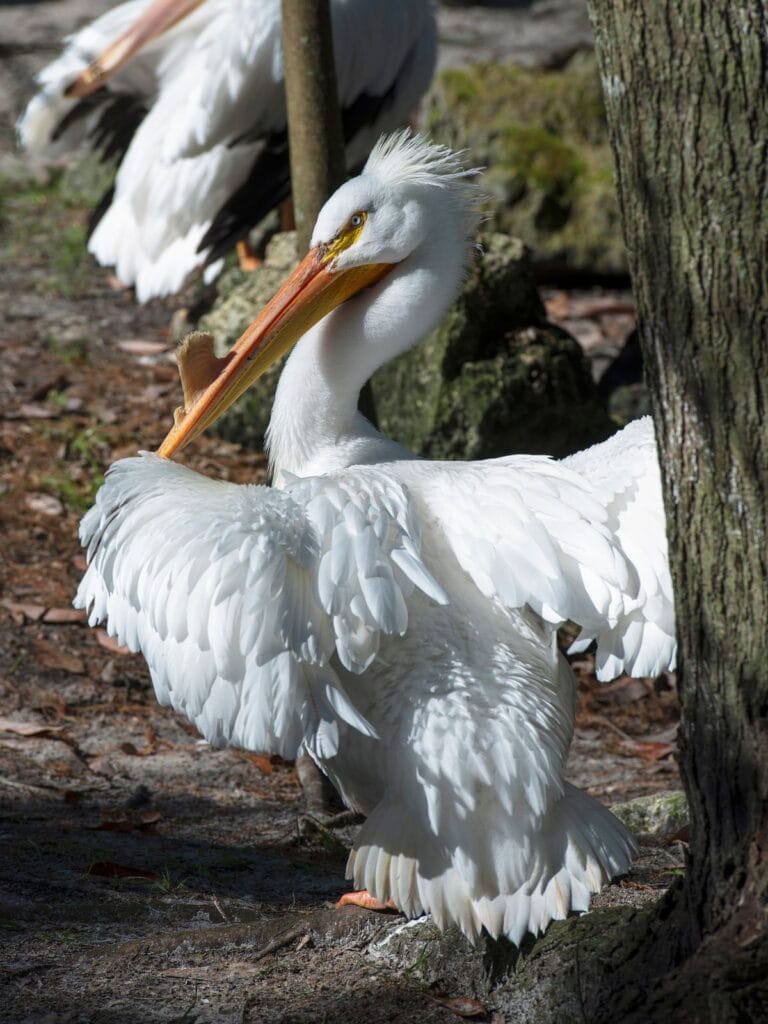
White pelicans share the Danube Delta with their Dalmatian cousins, and the largest numbers of white pelicans in Europe reside in the Danube Delta.
These elegant birds have pure white plumage with black flight feathers visible when wings are spread.
White pelicans also fish cooperatively, creating spectacular synchronized feeding displays.
Large flocks form living crescents across water surfaces, driving fish into shallow areas.
Their social behavior and impressive size make them favorites among birdwatchers and photographers.
The Danube Delta’s protected status ensures these birds have undisturbed breeding grounds.
Spring and summer bring peak nesting activity when thousands of pelicans congregate.
Witnessing pelican colonies in full breeding plumage against delta sunsets creates unforgettable wildlife moments.
13. Wild Boar

Wild boars are powerful omnivores inhabiting Romanian forests from lowlands to mountains.
While you may encounter the energetic wild boar running through oak trees, know that wild boars can be aggressive if surprised and/or protecting their young.
These muscular animals have thick bristly coats and males sport curved tusks used for defense and digging.
Boars are highly adaptable creatures consuming roots, tubers, acorns, insects, small animals, and agricultural crops.
They’re most active during dawn and dusk when they forage through forests using their strong snouts to root up earth.
Signs of boar activity include disturbed soil and muddy wallows.
The wild boar population remains stable throughout Romania, despite hunting pressure.
These animals serve as important prey for wolves while their rooting behavior affects forest floor ecology and seed dispersal.
14. Pygmy Cormorant

About 60% of the world’s pygmy cormorants, small waterbirds with dark plumage that has bronze-green iridescence, reside in the Danube Delta.
Unlike larger cormorants, pygmy cormorants measure only about 20-inches-long (51 cm), making them the smallest European cormorant species.
They dive for small fish, spending considerable time underwater hunting.
After fishing, they perch with wings spread to dry their feathers, creating distinctive silhouettes against delta landscapes.
Pygmy cormorants nest colonially in willows and reeds overhanging water, and the Danube Delta provides critical habitat for this globally important population.
Boat tours through narrow channels reveal cormorant colonies perched in riverside vegetation.
Their abundance demonstrates the delta’s productivity and ecological health as a wetland ecosystem.
15. European Ground Squirrel

If you’re on the plains, be on the lookout for cute European ground squirrels popping their heads out from their burrows.
These charming rodents hibernate during winter months, emerging in spring when vegetation returns, so you won’t see them in winter.
They feed on seeds, grains, and vegetation, storing food in their burrows for winter.
These small rodents live in underground burrow systems across grasslands and agricultural areas.
They stand upright on hind legs to survey surroundings, creating adorable wildlife viewing moments.
Ground squirrels are social animals living in colonies.
Their alarm calls warn colony members of approaching predators like foxes and birds of prey.
Their colonies create important habitat for other species including burrowing owls.
European ground squirrels represent the smaller wildlife that makes Romanian plains and foothills ecologically diverse.