🇵🇹 12 Dangerous Animals in Portugal That Can Actually Hurt You
Ask people what worries them about Portugal’s wild side, and you’ll hear about sharks off the Algarve, wolves in the northern mountains, or vipers in the hills.
Those fears don’t match the dangerous animals in Portugal that statistically hurt people.
What really ruins beach days is a small fish buried in the sand at low tide. Portuguese lifeguards even keep hot water ready for its stings.
That little fish in the sand is the weever, and it’s first on this list because it waits right where you stand in the shallows.
1. Weever Fish

The lesser weever, called peixe-aranha in Portuguese, lives in the shallow, sandy water off the Portuguese coast.
A review in the Acta Médica Portuguesa scientific journal calls weevers the most important venomous fish in Europe, mainly because bathers step on them.
The fish buries itself in the sand, with venomous spines on its back and gill covers, so you won’t see it before you feel it.
The pain is sudden and intense, with swelling and redness. Some people also get nausea, headaches, or dizziness, but the sting isn’t fatal.
The risk is highest at low tide, when more of your foot is in contact with the sandy bottom.
At high tide, the risk almost disappears.
Water shoes like these put a sole between you and the spines, which is worth it if you’ll be wading at low tide or swimming at Portugal’s beaches.
If stung, get out of the water and put the foot in hot water, above 104°F (40°C) but short of burning, for at least 30 minutes.
Pull out any visible spine with tweezers. Skip the ice, the cold spray, and the urine, which don’t help.
Lifeguards often have hot water on hand. See a doctor if the pain doesn’t ease or you feel faint or short of breath.
2. Vipers

Portugal has two vipers — the Lataste’s viper and Seoane’s viper — and they’re the most dangerous snakes in the country 🐍
The Lataste’s viper (pictured above) is known locally as the víbora-cornuda (horned viper), and lives in both northern and southern Portugal.
It likes dry, rocky ground, scrub, stone walls, and sometimes coastal dunes.
Seoane’s viper is found only in northern Portugal and northwestern Spain. Both vipers live in Spain too, and rank among Spain’s most dangerous animals.
Bites are uncommon. Portugal’s emergency medical service recorded 75 viper bites from 2017 through 2020, out of 351 snakebites in total.
Viper venom damages tissue and blood. A bite causes pain and swelling within minutes, and more serious symptoms can follow hours later.
Wear boots on rocky trails, use a flashlight on warm evenings, and never reach blindly into a stone wall or brush pile.
If bitten, keep the limb still and below heart level and get to a hospital. No tourniquet, no cutting, no suction, and no ice.
Take off rings, watches, and tight clothing before swelling starts. Antivenom is available in Portugal for serious bites.
3. Portuguese Man O’ War

The Portuguese man o’ war, or caravela-portuguesa, isn’t a jellyfish. Rather, it’s a floating colony of animals.
IPMA, Portugal’s sea and weather institute, calls it the most dangerous gelatinous species that turns up in Portugal.
In May 2024, IPMA warned of a rise in sightings in the Azores and along the mainland coast from Espinho to Sines.
Its tentacles can reach up to 98 feet (30 m) long, and they can still sting after the animal is dead on the sand.
A sting burns within minutes and can cause blisters. Serious cases bring vomiting, muscle spasms, trouble breathing, or shock.
If you spot one in the water or on the beach, keep your distance and warn the people around you.
If stung, rinse with seawater (not fresh water) without rubbing, lift off any tentacles with tweezers or a card, and apply warm compresses or vinegar for 20 minutes.
Get emergency help for any breathing trouble or signs of shock.
4. Asian Hornets
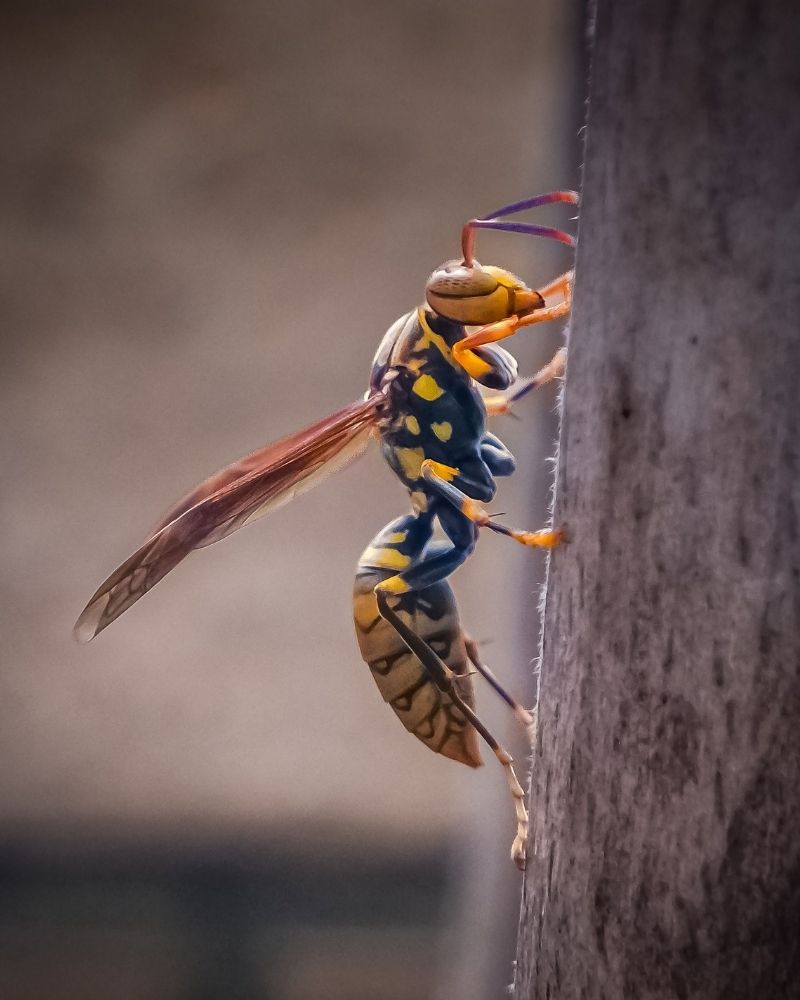
The Asian hornet is an invasive newcomer. It was first found in 2011 in apiaries in Viana do Castelo, in northern Portugal.
It’s now regularly seen in western Portugal and was reported in the Alentejo and Algarve in 2025.
In July 2023, a 60-year-old municipal worker in Mafra died after apparently being stung while dealing with a nest.
The town’s mayor said he may have been allergic without knowing it.
That’s the real risk with any stinging insect.
Most stings cause only local pain and swelling, but a single sting can be fatal to someone who is allergic.
Stay well back from any large papery nest, and don’t try to knock one down.
If stung, move away calmly and cool the area.
Call 112 at once for swelling of the lips or tongue, wheezing, or dizziness, since a severe reaction can start within 10 minutes.
If you carry an epinephrine auto-injector at home, bring it to Portugal.
5. Ticks

Ticks are easy to overlook, but in rural Portugal they carry a real disease risk.
The brown dog tick (pictured above) spreads Mediterranean spotted fever, and Portugal’s disease rate is high compared with other Mediterranean countries.
Between 1989 and 2000, Portugal averaged 9.8 cases per 100,000 people. The Alentejo had the highest regional rate, at 31.9 per 100,000.
Most cases are reported in July, August, and September.
The infection often leaves a small, painless black scab where the tick bit, followed by fever and a rash. Some severe and even fatal cases have been described.
Use a repellent made for ticks on your skin and clothes, keep to the middle of paths, and look yourself over every evening.
If you find a tick, remove it with fine tweezers close to the skin.
A fever or rash in the following weeks is a reason to see a doctor and mention the tick.
6. Mosquitoes

Mosquitoes in Portugal are mostly a nuisance, but Madeira island has shown what can happen when the wrong species settles in.
Aedes aegypti, the mosquito that spreads dengue, was first identified on Madeira in 2005.
In October 2012, the island’s first locally acquired dengue cases were confirmed.
By mid-December, 2,103 cases had been reported, and 122 patients had been hospitalized.
No one died, but 72 travelers in 13 countries were diagnosed with dengue after returning from Madeira.
On the mainland, the Asian tiger mosquito (Aedes albopictus) has been introduced in the north, the Algarve, and the Alentejo.
In September 2026, health officials reported it in Castelo Branco, but they noted that no virus-infected mosquitoes had been detected in Portugal.
Use repellent on Madeira and in the mainland’s warmer months, and close screens or run the air conditioning at night.
A fever that starts during or soon after your trip deserves a doctor’s visit, and you should mention where you’ve traveled.
7. Jellyfish
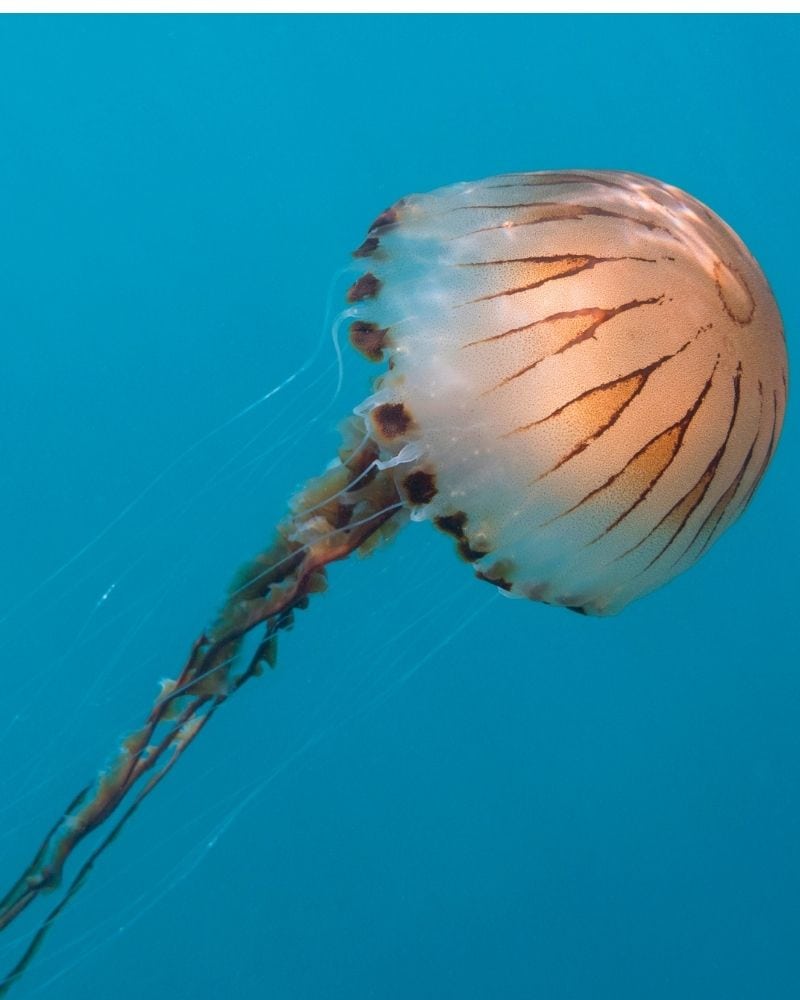
True jellyfish, called alforrecas in Portuguese, also drift onto Portugal’s beaches.
The mauve stinger jellyfish (aka purple jellyfish) and compass jellyfish (pictured above) are two of the stinging species found there 🪼
Their stings are milder than a man o’ war’s but still painful, with redness, swelling, and a rash.
A jellyfish stranded on the sand can sting for a long time, so don’t touch one or let kids poke it with their toes.
If stung, rinse with seawater, not fresh water, which can fire off the stinging cells that are left.
Lift off any tentacles with tweezers or a glove and hold a cloth-wrapped ice pack on the spot.
Portugal’s consumer group DECO advises against alcohol or vinegar for jellyfish stings.
8. Pine Processionary Caterpillars
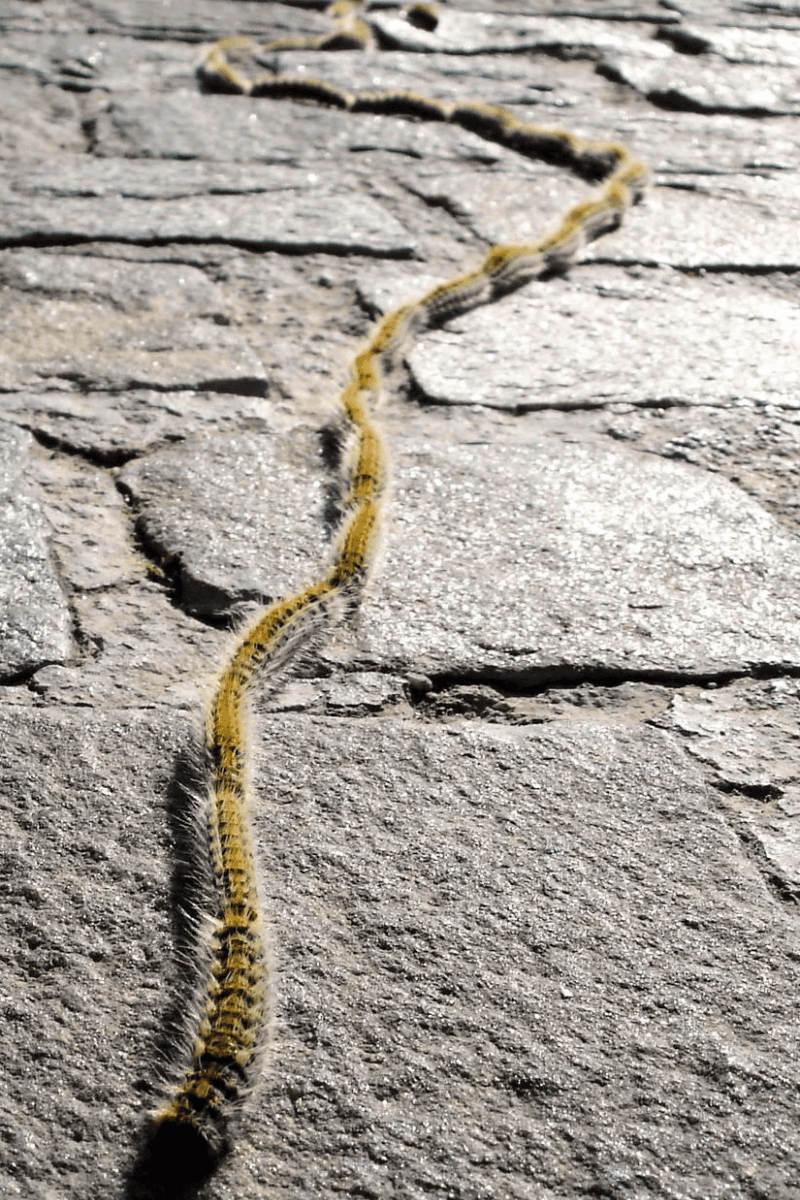
Pine processionary caterpillars live in pine trees and travel across the ground in long, single-file lines.
In Portugal, you can see these processions between January and May.
Their bodies are covered in tiny irritating hairs that come loose easily and can float on the breeze.
They cause an intensely itchy rash. Around 10% of people exposed also get eye irritation, and some allergic people have severe reactions.
Dogs face the most danger, because they get too close and can breathe in the hairs. Curious children are at risk, too.
Keep dogs leashed and children back from any line of caterpillars, and don’t touch the nests.
If exposed, take off and hot-wash your clothes, rinse your skin or eyes with cold running water, and lift stray hairs off with tape.
See a doctor for eye or breathing problems, and a vet if your dog has had contact.
9. Stingrays

Stingrays, including the common stingray (pictured above), lie flat on the sandy bottom along the Portuguese coast.
Most stings happen when someone steps on one, and the ray whips its barbed tail up into the foot or ankle.
The pain is intense and can last a long time, and sometimes comes with nausea or vomiting. Deaths are rare.
Shuffle your feet through the sand as you wade in. The vibration lets a ray know you’re coming, and it will usually swim off.
If stung, soak the wound in hot water, as hot as you can tolerate without burning, for 30 to 60 minutes.
Have a doctor check it afterward. Part of the barb can stay in the wound and cause infection.
10. Scorpions

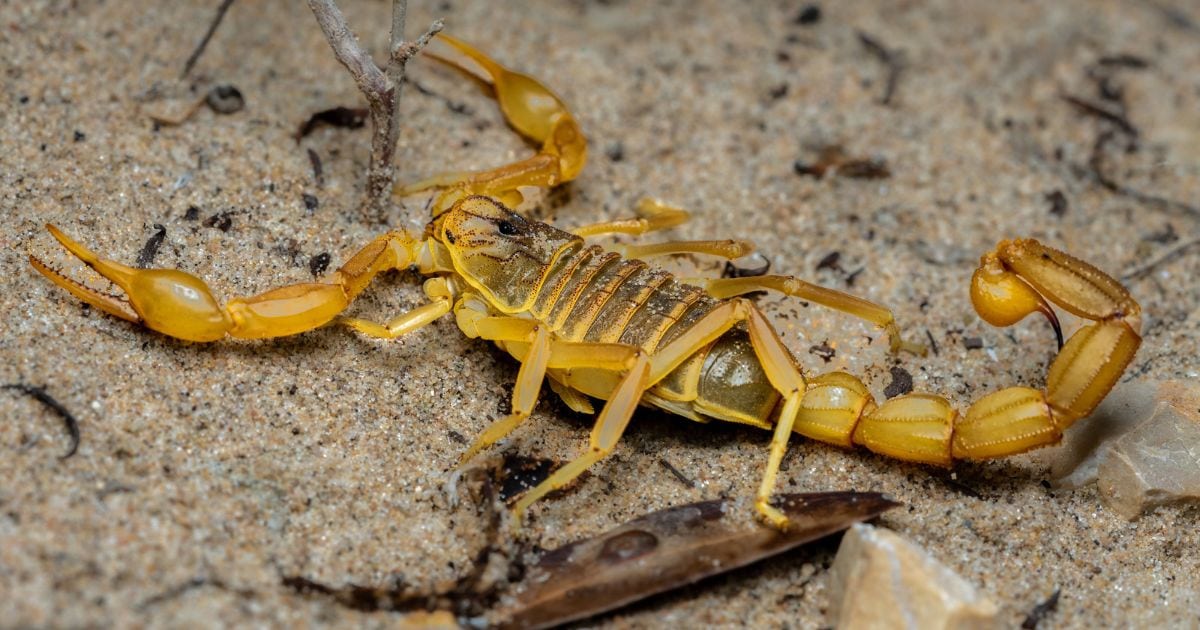
Portugal has just one scorpion species — the Yellowish Iberian scorpion (pictured above) — which locals call the lacrau.
Most stings land on the hands or feet and cause sharp local pain. In healthy adults, no severe or fatal cases have been described.
Young children, older people, and people with allergies can still get a stronger reaction.
Shake out shoes and clothes left outside, and wear gloves when moving stones or firewood.
If stung, clean the area, apply a cold pack, and raise the limb.
Get medical care for any child who’s stung, or for anyone who starts sweating heavily, vomiting, or feeling faint.
11. Sea Urchins
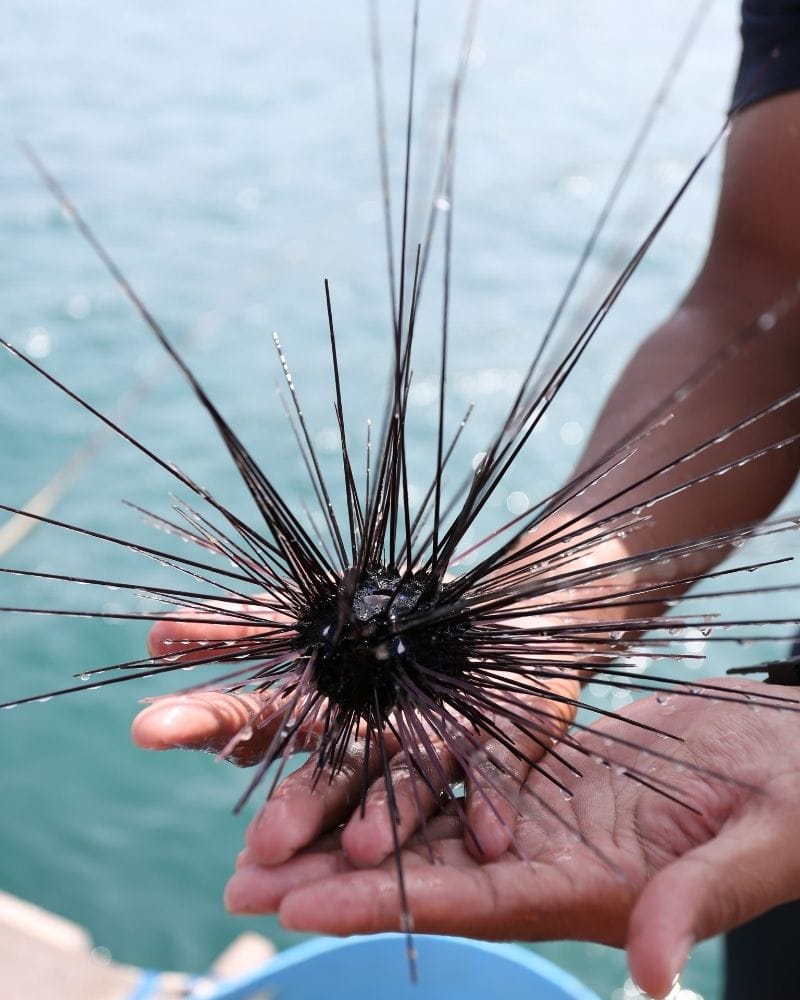
Sea urchins cling to rocks in shallow water, so you’ll find them wherever Portugal’s coast turns rocky.
Their spines are brittle and snap off in your skin when you step on or grab one.
The punctures hurt, and leftover pieces of spine can get infected.
Wear water shoes on rocky entries, and don’t steady yourself with your hands on submerged rocks.
If you step on one, remove the spines you can reach with tweezers, then wash and disinfect the wound.
See a doctor for deep spines, spines near a joint, or a wound that isn’t healing.
12. Wolves
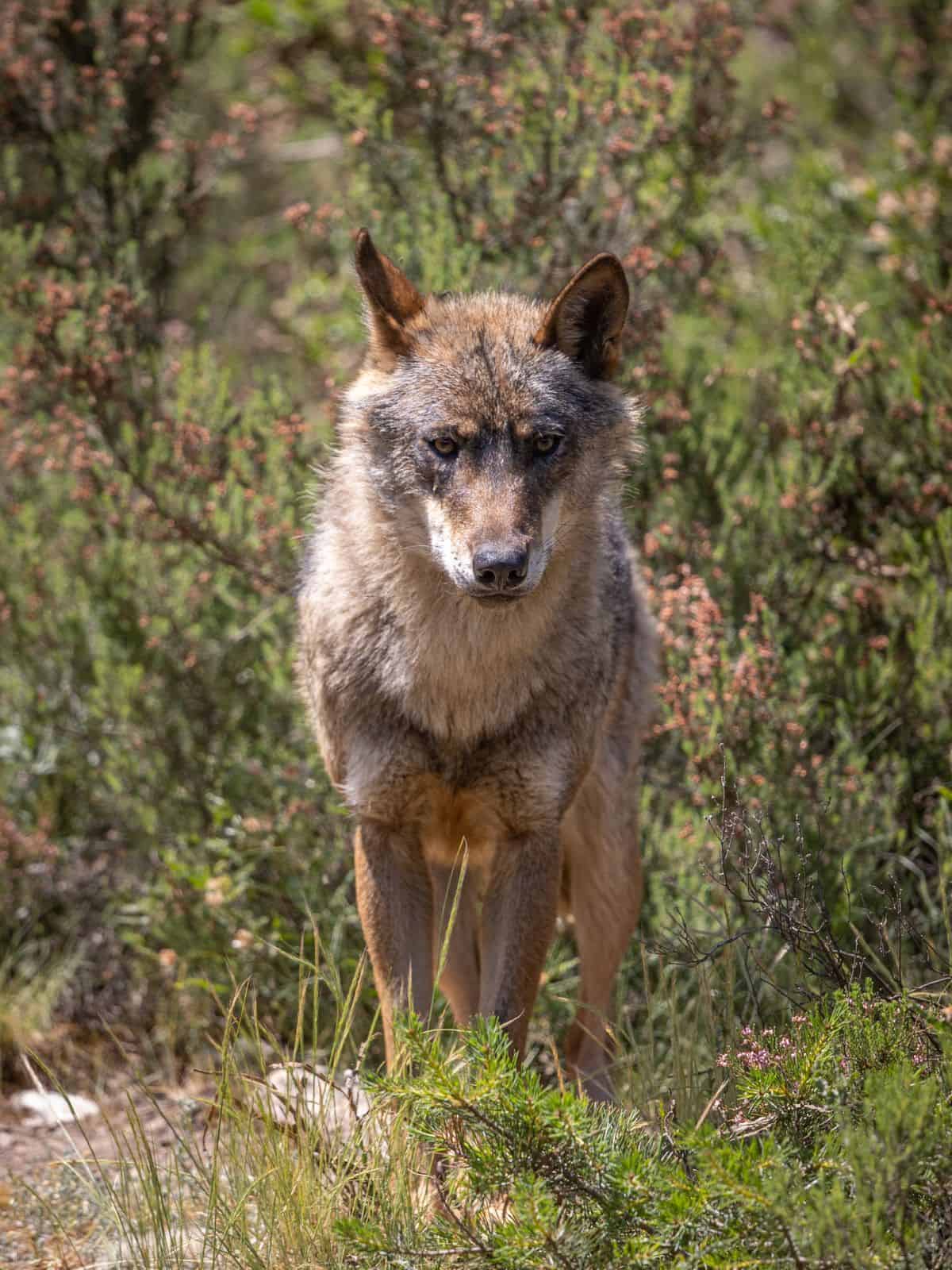
Portugal is home to a small, endangered population of roughly 250 to 300 Iberian wolves (pictured above).
The majority of the population lives north of the Douro River, particularly in and around Peneda-Gerês National Park and Montesinho Natural Park.
Peneda-Gerês, Portugal’s only national park, is a very popular destination for hikers and nature tourists.
Because the packs live in rural, mountainous areas, your risk of being bitten by a wolf in Portugal is virtually zero — but they are worth being aware of.
In fact, historical statistics show zero verified records of humans being bitten or killed by wolves in Portugal over the last century.
Research from organizations like Rewilding Portugal confirms that while wolves regularly conflict with farmers over livestock, they are inherently afraid of humans and actively avoid human contact.
In the highly improbable event that you encounter an aggressive wolf, do not run or turn your back as running can trigger their predatory chase instinct.
Instead, make yourself look larger (stand tall, raise your arms, open your jacket), and get loud (shout, clap, use any available object to make noise).
Back away slowly from the animal while maintaining eye contact and move away calmly toward a safe area or your vehicle.
If the wolf attacks, fight back aggressively using rocks, sticks, or your bare hands to target its sensitive nose and eyes.
Dangerous Animals in Portugal FAQ
What is the most dangerous animal in Portugal?
Lataste’s viper, by venom. It and Seoane’s viper are the snakes doctors in Portugal worry about most.
The animal most likely to actually hurt you is the weever fish, which stings beachgoers along the coast every summer.
Are there venomous snakes in Portugal?
Yes, two vipers. Lataste’s viper lives across much of the country, and Seoane’s viper is limited to the north.
Bites are uncommon. Portugal’s emergency service logged 75 viper bites from 2017 through 2020.
Are there wolves in Portugal?
Yes, but you’re very unlikely to see one. Portugal’s 2019–2021 wolf census counted 58 packs, mainly north of the Douro River.
That was 8% fewer than two decades earlier, though packs in the Peneda-Gerês area grew from 16 to 24.
Are there sharks in Portugal?
Yes, offshore. In the Azores, blue sharks are the only species that commercial shark-diving companies take visitors to see.
Researchers from the University of the Azores have described one blue shark attack in the islands, but they stress that these encounters are rare.
Are there venomous spiders in Portugal?
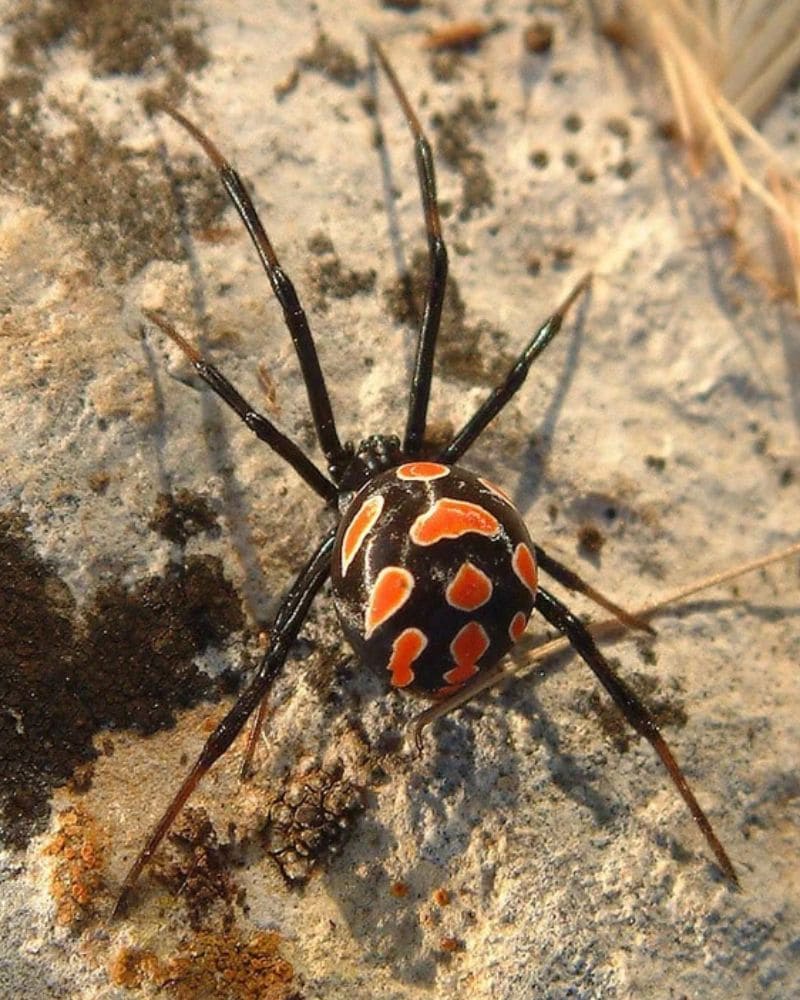
Yes, two worth knowing. The Mediterranean black widow (pictured above) and the Mediterranean recluse both live in Portugal.
A black widow bite can cause muscle spasms and sweating, and a recluse bite can leave a slow-healing sore. See a doctor for either.
Is it safe to swim in Portugal?
Yes, with a few precautions.
Swim at beaches with lifeguards, follow the flags, and keep an eye out for man o’ war warnings in the Azores and on the mainland.
Has there been dengue in Madeira?
Yes, in 2012. More than 2,000 cases were reported in Madeira’s outbreak that year.
The mosquito that spread it was first found on the island in 2005, so repellent is still a smart thing to pack.