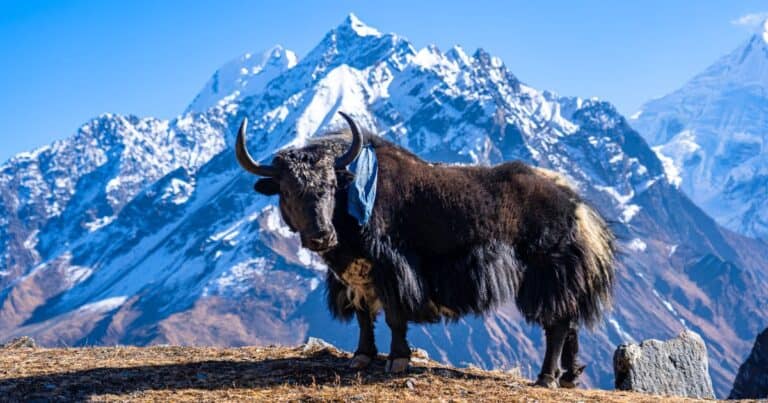
🇹🇭 9 Dangerous Animals in Thailand (and How to Stay Safe Around Them)
Between 2012 and 2024, wild elephants killed 227 people in Thailand, according to the country’s national parks department.
That number may surprise you if you picture elephants at sanctuaries, not on the road through Khao Yai.
It’s also a good reminder that the dangerous animals in Thailand aren’t always the ones you’d guess — here’s the list visitors need to know about.
1. Wild Elephants

Thailand has an estimated 4,013 to 4,422 wild elephants, and they’ve caused 227 deaths and 203 injuries since 2012.
Asian elephants (pictured above) are an endangered species, but that doesn’t make a bull (male) on a narrow road any less dangerous.
Khao Yai National Park is where most tourists meet them, as elephants often walk the park’s roads, and run-ins with cars keep making the news.
In February 2026, a wild bull elephant killed a 65-year-old man on a morning walk in Khao Yai.
The park chief said he was the third person killed by that same elephant.
Park rules make it illegal to approach wild elephants within 164 feet (50 m).
In September 2026, a driver who sped past a bull and his calf was summoned by park officials, and offenses under the National Park Act can bring up to five years in prison.
If you’re driving and an elephant appears, the park’s advice is simple:
- Keep the engine running so you can leave at any moment.
- Stay well back, and reverse slowly if the elephant walks toward you.
- Don’t honk, shout, or flash your headlights. At night, switch them off.
- Never get out of the car for a photo.
On foot, never walk toward a wild elephant. Back away calmly and follow any ranger’s instructions.
2. Box Jellyfish

Box jellies are almost invisible in the water, but beware because their tentacles carry powerful venom.
Thailand’s Department of Disease Control recorded 48 serious injuries and deaths from box jellyfish between 1999 and 2021.
A heavy sting across many tentacles can kill within 2 to 10 minutes.
Stings happen mostly in the rainy season, on both the Gulf of Thailand and Andaman coasts.
In one widely reported case, a 20-year-old German woman died after a sting at Lamai Beach on Koh Samui, the second box jellyfish death in Surat Thani province that year.
Swim at beaches with lifeguards and read any warning signs. A full-body rash guard or stinger suit cuts down on bare skin.
If stung, pour vinegar over the area for about 30 seconds and call 1669 right away.
Don’t rinse with fresh water, alcohol, or urine, and don’t rub the skin. Anyone who has trouble breathing or collapses needs CPR while help is on the way.
3. Cobra Snakes

Thailand has four cobras: the monocled cobra (pictured above), Siamese spitting cobra, Equatorial spitting cobra, and king cobra.
The monocled cobra is the one people meet most. It’s found in rice paddies, swamps, and mangroves, and even in cities like Bangkok.
Adults usually reach about 4.4 to 4.9 feet (1.35 to 1.5 m). The same source says it causes the most snakebite deaths in Thailand.
At one of Thailand’s main poison centers, cobras accounted for 26.9% of 1,006 venomous snakebites in 2016 and 2017.
Of those, six of the 12 patients who died had been bitten by a cobra.
The king cobra is much bigger. It can grow up to about 19 feet (5.85 m) and lives across the country.
Cobra venom attacks the nerves and can lead to paralysis and breathing failure, sometimes quickly.
If bitten, keep still, keep the limb at rest, and call 1669 or get to a hospital fast.
CDC first-aid guidance rules out a tourniquet, ice, cutting the wound, or sucking out venom in the event of a cobra bite.
If a spitting cobra gets venom in your eyes, flush them with plenty of water for 15 to 30 minutes, then get them checked at a hospital.
4. Malayan Pit Viper
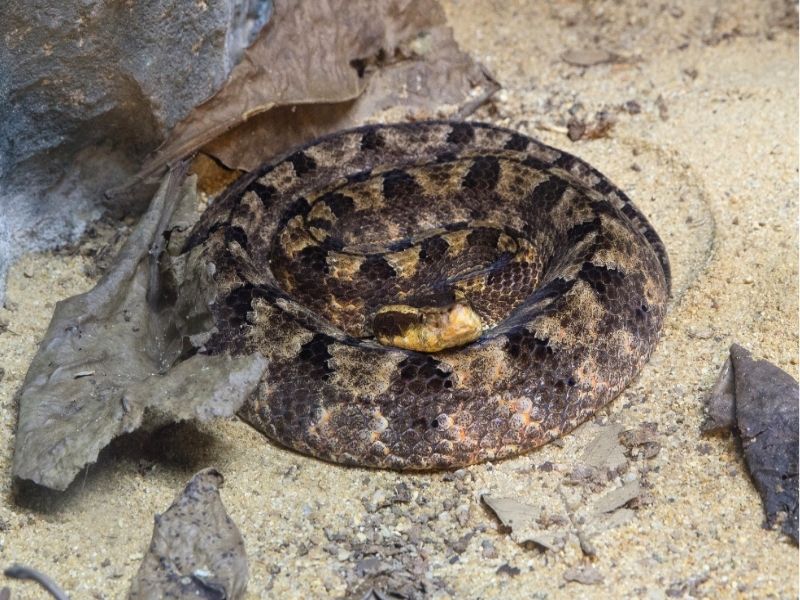
The Malayan pit viper is a short, stocky snake with a triangular head and brown markings that disappear into leaf litter 🍂
Adults average about 2.5 feet (76 cm), and it lives in plantations, orchards, bamboo thickets, overgrown farmland, and coastal forest.
It doesn’t flee when people get close.
It’s known for staying in the same spot for hours after biting someone, so it’s easy to step right next to one.
Its bite causes severe pain and swelling and can stop blood from clotting. In one Thai study, 27 of 145 patients were left with permanently swollen limbs.
Bites happen year-round, but they peak in the early monsoon months of May and June.
Wear closed shoes, use a flashlight after dark, and don’t push through undergrowth in sandals.
If bitten, take off rings and watches, keep calm and still, and get to a hospital with antivenom right away — don’t wait to see if symptoms show up first.
5. Green Pit Vipers
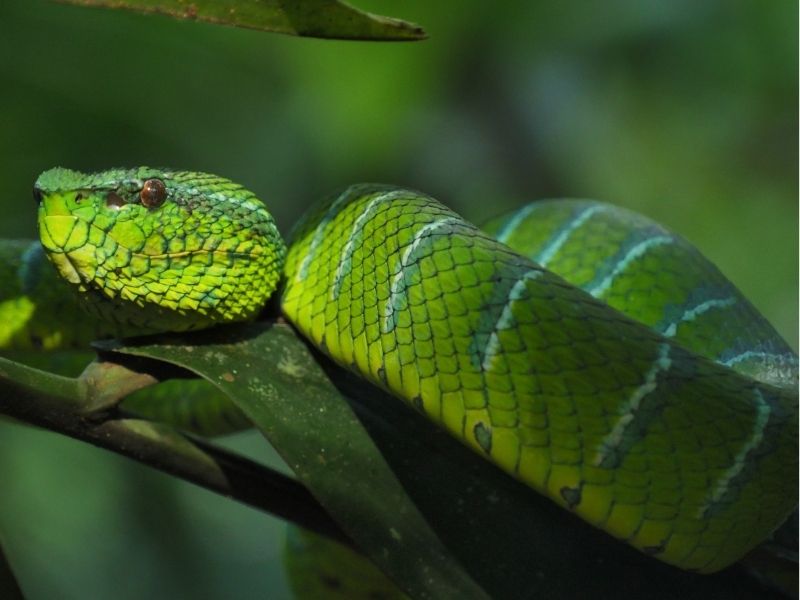
Thailand’s green pit vipers are bright green snakes that rest on branches and in shrubs, where they’re almost impossible to spot.
They’re now the most common cause of venomous snakebites in Thailand.
In the poison center study, they caused 33.4% of bites, more than cobras or Malayan pit vipers.
Their venom causes painful swelling and can interfere with blood clotting, so every bite needs hospital care.
Look before you reach into bushes or grab a branch on a trail, especially at night.
If bitten, sit or lie down with the limb resting comfortably, and head for the nearest hospital. Leave off ice and anything tied tight around the limb.
6. Mosquitoes

The mosquito is the animal most likely to make you sick in Thailand — and the main concern is dengue fever.
Thailand reported 51,795 dengue cases and 46 deaths in the first 10 months of 2025 alone.
The Aedes mosquitoes that spread it bite mostly during the day, and they live in cities as well as the countryside.
Dengue usually brings a high fever, headache, and body aches. There’s no specific medicine for it, so early care matters.
Wear repellent all day, cover up when you can, and sleep in rooms with screens or air conditioning.
Feel feverish while traveling or after you get home? See a doctor and mention Thailand.
7. Stray Dogs
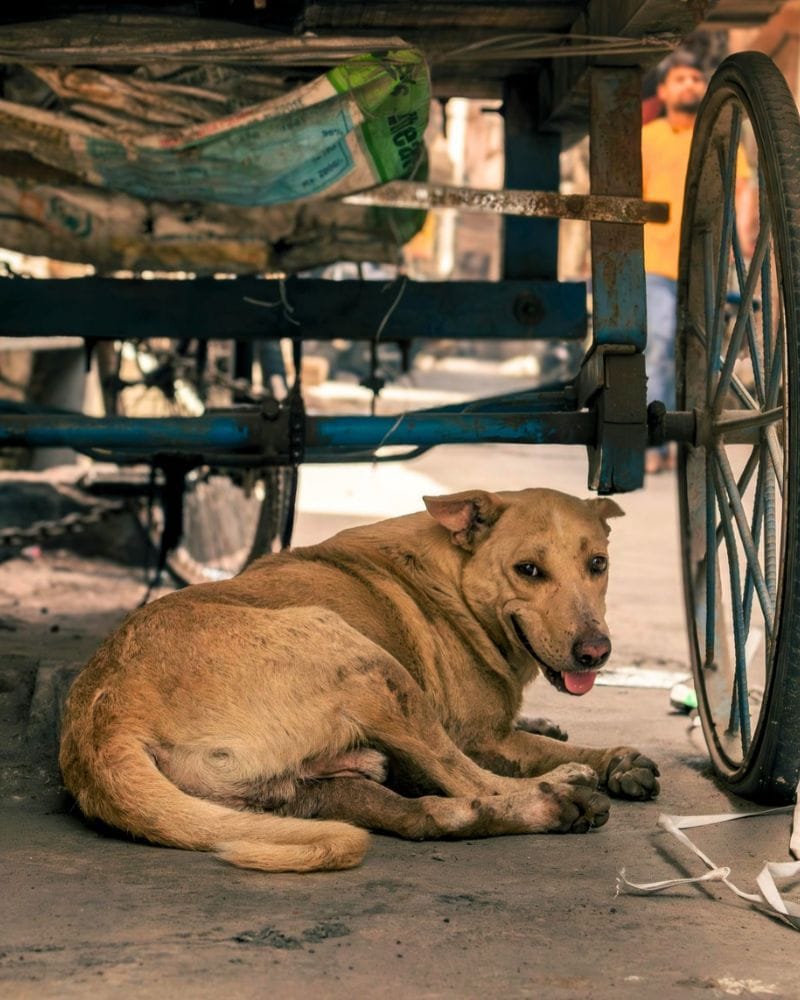
Free-roaming dogs are everywhere in Thailand, and most of them ignore tourists. The risk is rabies.
Thailand recorded seven rabies deaths in 2025, and more than half were people infected by dogs with owners, not strays.
Thailand’s first rabies death of 2026 was a man who didn’t get treatment after a puppy bit him.
Don’t pet dogs you don’t know, even puppies. Give packs a wide berth, especially at night or on beaches.
If a dog bites or scratches you, wash the wound with soap and running water, put on antiseptic, and get to a clinic the same day for rabies shots.
Finish the full course of vaccine, even if the dog looked healthy.
8. Macaques
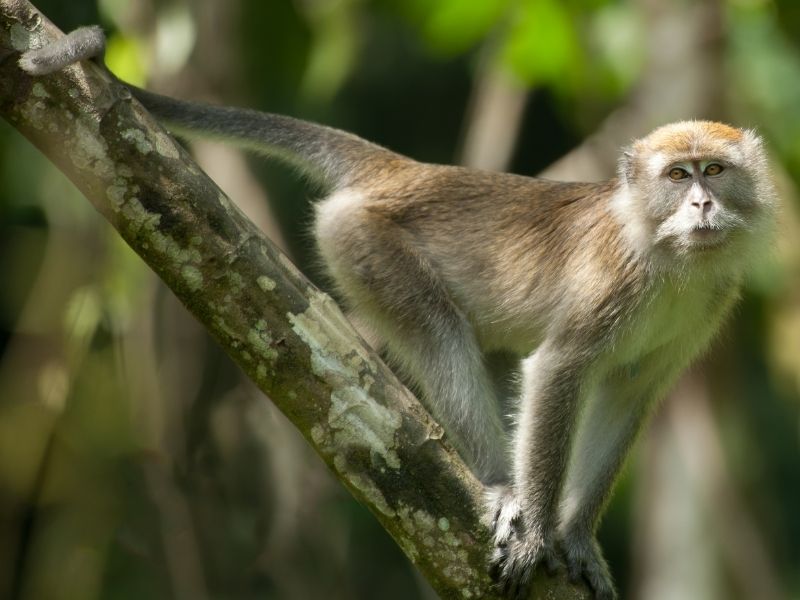
Long-tailed macaques (pictured above) live around temples, beaches, and viewpoints across Thailand, and they’ve learned that tourists carry food.
On December 30, 2024, a Swedish tourist was bitten on the neck at Phra Prang Sam Yot temple in Lopburi, a city famous for them.
That happened even after authorities had moved more than 2,000 of the town’s monkeys to a sanctuary.
Staff said the monkeys go after sunglasses, headbands, colorful bags, and food.
Monkeys can carry rabies, and macaques can also carry herpes B virus.
The CDC described an American teen bitten by a macaque in a Phuket park in 2018 and the herpes B precautions that followed.
Don’t feed them, and keep snacks, plastic bags, and sunglasses out of reach.
If a monkey bites or scratches you, scrub the wound with soap for 15 minutes, rinse it under running water, and see a doctor right away.
9. Sea Snakes
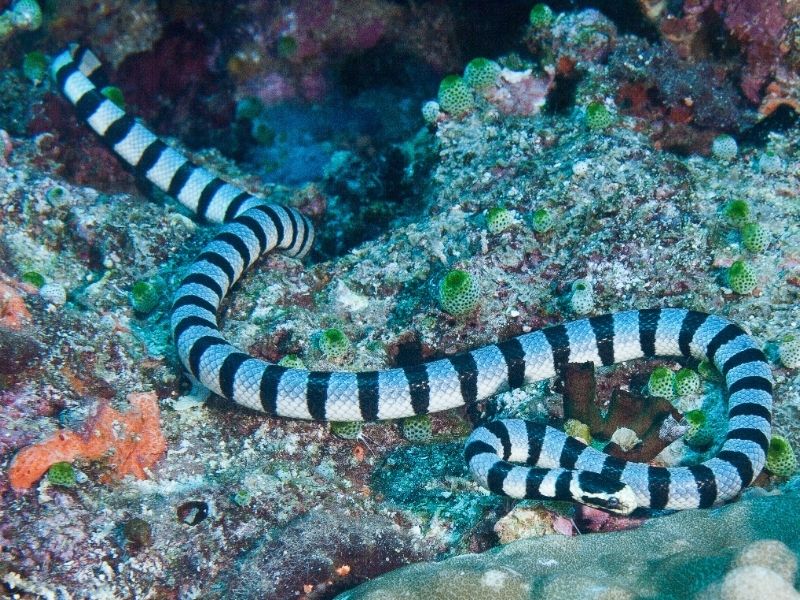
Sea snakes live in the waters off both of Thailand’s coasts, and divers and snorkelers sometimes see them on reefs.
The beaked sea snake is the one to know. It grows to about 4.3 feet (1.3 m), and it’s responsible for most sea snake bite deaths.
Its venom contains toxins that attack both nerves and muscles.
If you spot one while snorkeling or diving, enjoy the view, but never touch or corner it. Give any snake on the beach plenty of room, too.
If bitten, get out of the water, keep still, and get to a hospital right away. Don’t wait for symptoms.
Dangerous Animals in Thailand FAQ
What is the most dangerous animal in Thailand?
It depends how you measure it. Mosquitoes make the most people sick, through dengue.
For deadly encounters with tourists, wild elephants and box jellyfish are the biggest worries.
Are there box jellyfish in Thailand?
Yes.
They’ve been found on both the Gulf of Thailand and Andaman coasts, and the Department of Disease Control has recorded dozens of serious and fatal stings since 1999.
Stings are more common in the rainy season, so pay attention to warning signs then.
Are there venomous snakes in Bangkok?
Yes. Monocled cobras have been recorded in the city, including in Bang Kapi District.
They also turn up in other towns and cities across the country, so look where you step in overgrown areas.
Is it safe to swim in Thailand?
Mostly. Choose beaches with lifeguards, check the warning flags, and stay out of the water where jellyfish warnings are posted.
Box jellyfish stings are more likely in the rainy season.
Are there crocodiles in Thailand?
Rarely in the wild. Sightings near tourist beaches are big news when they happen.
In 2018, a crocodile sighting closed the water off Nai Han Beach in Phuket, and it was believed to have escaped from a crocodile farm on the island.
Do I need a rabies vaccine for Thailand?
It’s worth asking a travel doctor. Rabies is present in Thailand, and dogs spread most of it.
A vaccine before your trip makes treatment simpler if you’re bitten. You still need medical care after any bite.
Are monkeys in Thailand dangerous?
They can be. Macaques bite and scratch, often when they’re going after food or belongings.
Keep your distance and keep your bags closed because one of the main reasons monkeys will approach (and bite) people is for their food.