🦦 17 Weird Animals in California That Don’t Seem Real (#12 Scuba Dives in Its Own Air Bubble)
You’re on a southern California beach after dark, a few nights after a full moon; a wave slides back, and the wet sand is suddenly full of wriggling, silvery fish.
Those are California grunion — just one of the many weird animals in California — and they came ashore on purpose to lay their eggs.
Others include a slug whose slime numbs a predator’s mouth and a fly that dives underwater inside its own air bubble.
The state runs from foggy redwood forests and kelp beds to salty desert pools below sea level. Each of those places has its own oddballs.
The list starts in the sky, with a bald-headed scavenger that came back from just 22 wild birds.
1. Ocean Sunfish
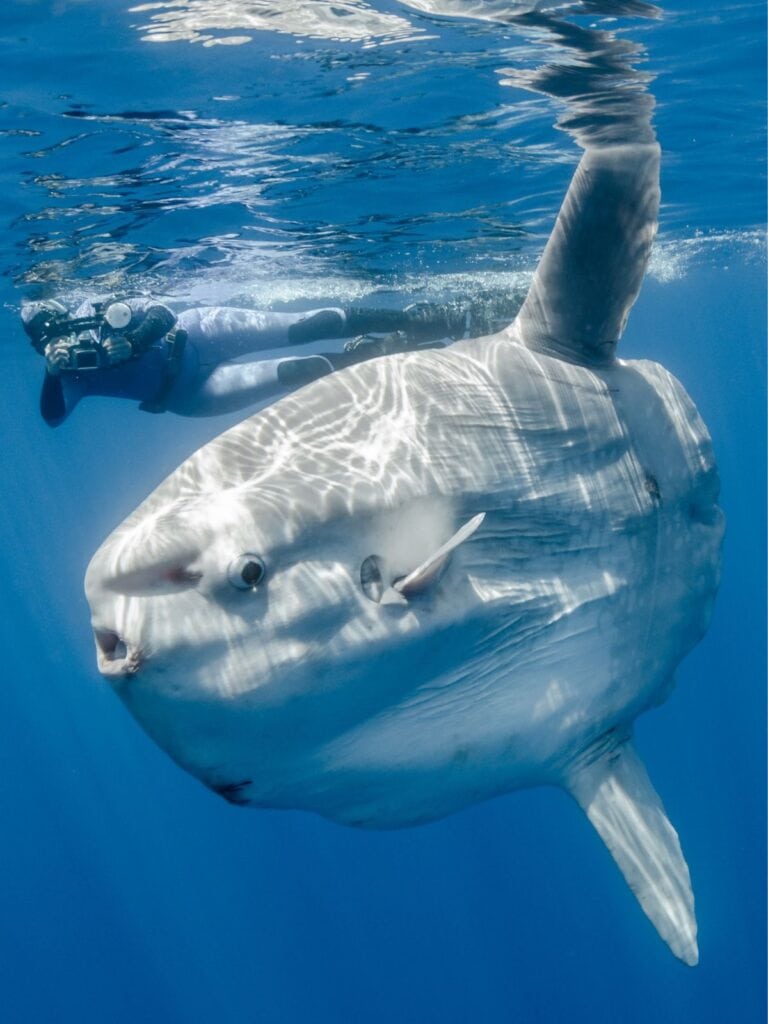
The ocean sunfish is enormous, and looks like a giant fish head that forgot to grow a body.
It doesn’t have a true tail. Instead, it steers with a stumpy, rudder-like flap called a clavus.
Ocean sunfish can reach about 10 feet (3 m) long and nearly 5,000 pounds (2,268 kg), making them some of the heaviest bony fish in the world.
They eat mostly jellyfish and other soft prey.
Sunfish often rest at the surface, where gulls and small fish pick parasites off their skin.
They’re sometimes spotted off the California coast, where basking sunfish can be mistaken for sharks.
2. California Condor

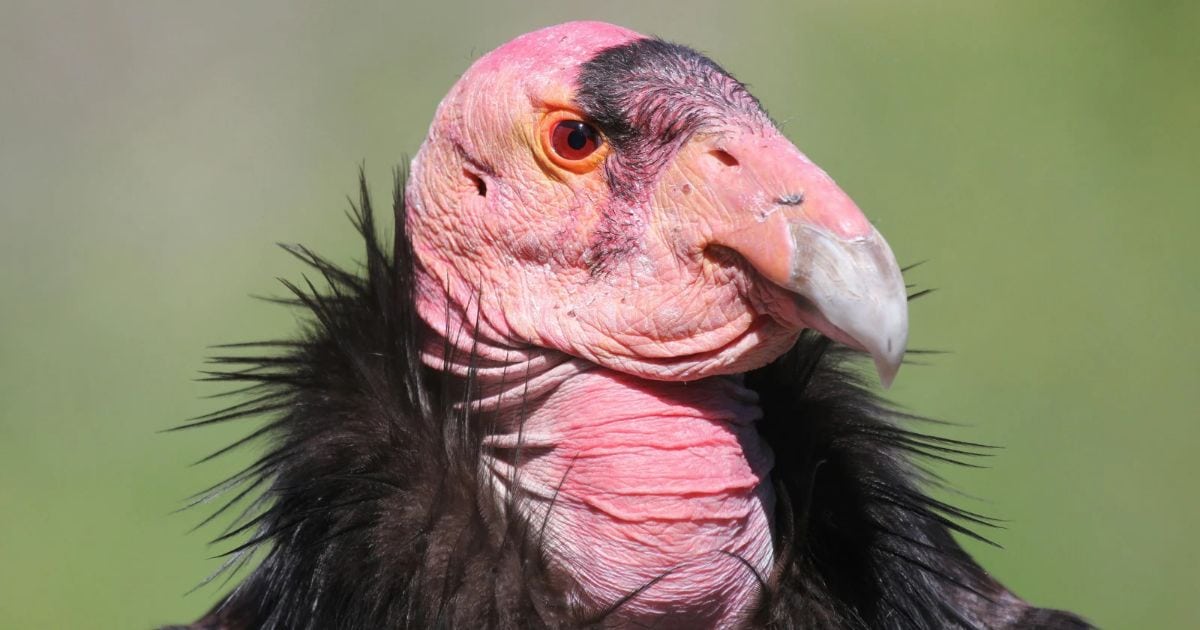
The California condor is the largest land bird in North America, and one of the scariest birds on Earth because of its massive size.
Its wings stretch about 9.5 feet (2.9 m) from tip to tip, and adults weigh 17 to 25 pounds (7.7 to 11.3 kg).
Adults also have a mostly bald head and neck, which gives them a prehistoric look.
Condors are scavengers that eat dead animals. That diet is also their biggest danger.
Lead from bullet fragments in carcasses is the number one known cause of death in California condors.
By 1982, only 22 condors were left in the wild. In 1987, biologists caught every last wild bird for a captive breeding program.
The comeback has been slow but real.
The wild population reached 392 birds at the end of 2025, and more than 600 condors now exist in total.
In California, you can look for them in the Big Sur area and the mountains north of Los Angeles.
3. Northern Elephant Seal

The male northern elephant seal (pictured above) has a floppy, inflatable nose that looks like a short elephant trunk 🐘
Adult males can grow longer than 13 feet (4 m) and weigh up to 5,000 pounds (2,268 kg).
Females are much smaller, at about 10 feet (3 m) and up to 1,700 pounds (771 kg).
Deep-diving champions, the deepest northern elephant seal dive on record went more than a mile (1.6 km) down.
They spend about 90% of their lives in the water, and can stay underwater for up to 2 hours straight.
In the 1800s, hunters killed them for their blubber, and only about 20 to 100 survived. Every elephant seal alive today descends from that tiny group.
By 2009, the population was more than 170,000 — and growing.
They breed on beaches in California and Mexico, from December through March.
One of the easiest places to see them is the Piedras Blancas Elephant Seal Rookery, 7 miles (11 km) north of San Simeon on Highway 1.
Viewing there is free and open every day of the year.
4. Pacific Hagfish

The Pacific hagfish is an eel-shaped fish with no jaws, no true eyes, and no stomach — though it does have five hearts 🫀
Its real claim to fame is slime. The hagfish releases a mixture that turns into slippery, sticky slime the moment it touches seawater.
It grows up to 25 inches (64 cm) long and lives on the seafloor, anywhere from 30 to 2,600 feet (9 to 792 m) deep.
Without eyes, it finds food by smell and touch.
It eats worms in the mud and scavenges dead or dying fish, often eating them from the inside out.
5. Fat Innkeeper Worm

In December 2019, thousands of pink, sausage-shaped worms washed up on Drakes Beach near San Francisco.
They were fat innkeeper worms, and a strong storm had likely torn open the sand where they live.
Thanks to their shape, the internet called them “penis fish.” They’re actually marine worms, usually about 10 inches (25 cm) long.
Fat innkeepers normally spend their lives hidden in burrows in the sand.
To eat, a worm releases mucus to catch plankton, then pumps water to pull the food into its tunnel.
The “innkeeper” part comes from its guests. Its pile of leftover food attracts crabs that come to feed.
6. Banana Slug

The banana slug looks exactly like its name, a bright yellow banana sliding across the forest floor 🍌
It’s among the largest slugs in North America, growing up to about 10 inches (25 cm) long. It moves at about 6.5 inches (16.5 cm) per minute.
Its slime does a lot of jobs. It can leave a predator’s mouth and tongue numb, and it helps keep the slug’s body moist.
Banana slugs can even climb trees and lower themselves down on ropes of mucus.
Each slug has both male and female reproductive parts, though most still mate with another slug.
They’re decomposers, eating dead plants and animals in redwood forests along the coast.
The banana slug is so beloved that UC Santa Cruz made it the official school mascot in 1986.
7. California Grunion

The California grunion is a fish that comes out of the water to lay its eggs.
On certain spring and summer nights, these small, silvery fish ride the waves onto Southern California beaches.
A female drills her tail into the wet sand until she’s buried up to her fins. Males curl around her, and she lays her eggs right in the sand.
The whole thing takes about 30 seconds. Then she catches the next wave back out to sea.
Grunion only spawn for 3 or 4 nights after the highest tides of each full or new moon.
The eggs sit in the sand for about 10 days until the next round of high tides washes them out.
They hatch just 2 to 3 minutes after the waves free them.
Grunion are only 5 to 6 inches (13 to 15 cm) long, and larger females can lay up to 3,000 eggs every two weeks.
Want to watch? Grunion runs happen from about March through August.
You can only catch them by hand, and you’ll need a fishing license if you’re 16 or older.
The season is closed in April, May, and June, when you can watch but not catch.
8. Giant Kangaroo Rat

The giant kangaroo rat hops around on its huge hind legs, just like a tiny kangaroo.
It’s the largest of about 20 kangaroo rat species, measuring about 13 inches (33 cm) long, including a 7-inch (18 cm) tail.
Even so, it weighs only a little over 5 ounces (142 g).
Then there’s the water trick. The giant kangaroo rat never needs to drink.
It gets all the water it needs from seeds, which soak up moisture in its underground storage rooms.
It also drums the ground with its feet to warn of danger and mark its territory.
Sadly, more than 98% of its habitat has been lost, mostly to farming.
Today, it lives only in the southwestern San Joaquin Valley and nearby areas, including the Carrizo Plain.
It’s listed as endangered under both federal and state law.
9. Garibaldi

The garibaldi is a fish so bright orange that it looks like a swimming goldfish cracker.
It’s California’s official state marine fish, and adults grow up to about 14 inches (36 cm) long. Juveniles look completely different, with sparkling electric-blue spots.
The males are dedicated gardeners.
Each spring, a male trims the algae on his rock to about an inch (2.5 cm) tall to build a nest.
He also clears out debris and removes wandering sea stars and urchins.
Females are picky. They often check out 15 or more nests before choosing where to lay their eggs.
Garibaldis live in the warm waters of Southern California and the Channel Islands, south into Baja California.
You’ll need a permit to collect one, and it’s illegal to catch them for food.
10. California Newt

One of the most dangerous California animals, this colorful critter may looks harmless, but its skin is loaded with poison ☠️
The California newt’s skin produces tetrodotoxin, a nerve toxin powerful enough to kill most vertebrates, including humans.
When it feels threatened, it arches its body to flash its bright orange belly as a warning.
Adults grow 5 to 8 inches (13 to 20 cm) long and live only in California, in the coastal counties and parts of the Sierra Nevada.
When the rains come, newts migrate to ponds and streams to breed, from about December to early May.
Some garter snakes have evolved resistance to the toxin. That’s pushed the newts to make even more of it.
Don’t pick one up, and wash your hands if you touch one. It’s a salamander, just like the axolotl, but far more toxic.
11. Island Fox
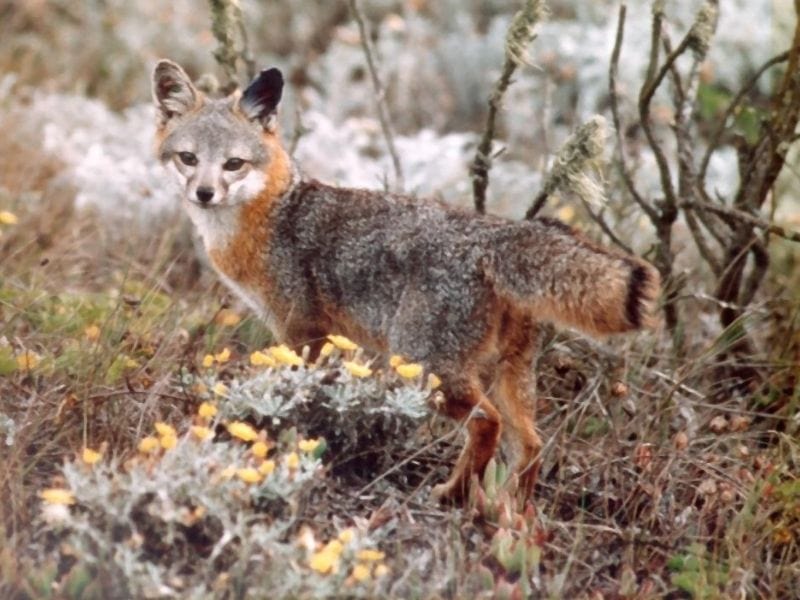
The island fox is a full-grown fox about the size of a house cat.
It stands only about 12 to 13 inches (30 to 33 cm) tall and weighs just 4 to 5 pounds (1.8 to 2.3 kg).
It’s about one-third smaller than its ancestor, the mainland gray fox.
Island foxes live on six of the eight Channel Islands off Southern California.
In the 1990s, golden eagles began hunting the little foxes.
By 2000, fewer than 80 were left on Santa Cruz Island, and the San Miguel and Santa Rosa populations had dropped even lower.
Captive breeding, moving golden eagles off the islands, and bringing back bald eagles helped the foxes recover in Channel Islands National Park.
12. Alkali Fly

Fun fact: The tiny alkali fly goes scuba diving in its own air bubble 🫧
It lives at Mono Lake, east of Yosemite, where the water is three times saltier than the ocean and slippery with natural chemicals like borax.
No fish live in the lake, but it’s full of algae and bacteria, and the flies crawl underwater to get at them.
How? The fly is extra hairy, and its body is coated in wax.
When it crawls underwater, water can’t stick to it, so an air bubble forms around its body. Big claws help it grip underwater rocks.
Mark Twain noticed this back in the 1800s. He wrote that the flies popped back up “as dry as a patent office report.”
13. Salt Creek Pupfish (Death Valley Pupfish)

The Salt Creek pupfish lives in one of the last places you’d expect to find a fish — Death Valley, California — the hottest place in the world 🌡️
A tiny fish found only in Death Valley National Park, it averages about 1.5 inches (3.7 cm) long.
It can handles water from 32°F (0°C) up to 116°F (47°C), and can live in water several times saltier than seawater.
Its ancestors swam in a huge lake that filled Death Valley during the last ice age. When the lake dried up, the pupfish were stranded.
Pupfish live only about 10 to 12 months, so each year’s spawning season is critical.
You can watch them from the Salt Creek boardwalk, a 0.5-mile (0.8 km) loop. Go in the cooler months, when the creek is flowing.
14. Mojave Fringe-Toed Lizard

The Mojave fringe-toed lizard swims through sand thanks to rows of scales along the sides of its toes work like snowshoes.
It can run across loose dunes without sinking, so when danger shows up, it can dash off and vanish into the sand.
It’s built to keep sand out, too. Its nostrils work like valves, its eyelids overlap, and flaps cover its ears.
Its body grows about 2.75 to 4.2 inches (7 to 10.7 cm) long, plus a tail about as long as its body.
It lives on sand dunes in the Mojave Desert, from the southern end of Death Valley south to the Colorado River near Blythe.
15. Desert Tortoise
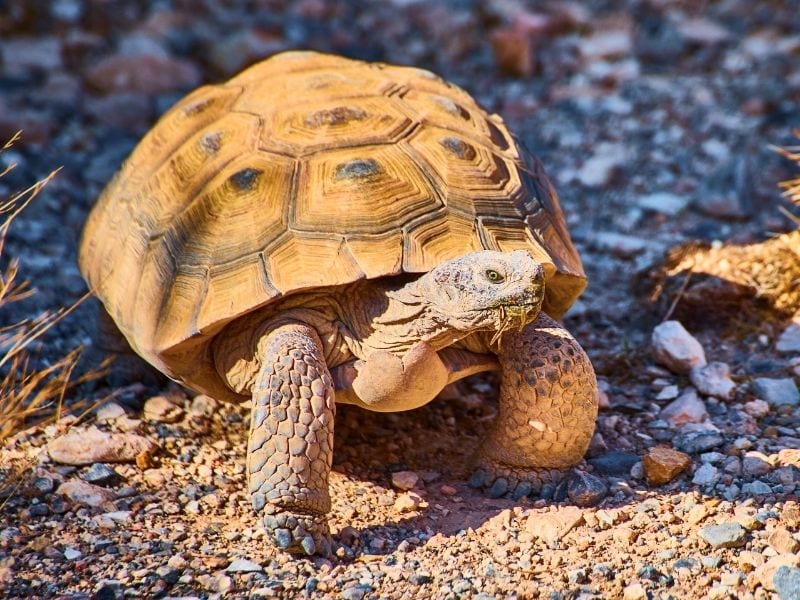
Completely suites to its environment, the desert tortoise carries its own water tank.
It can store up to 40% of its body weight in water in its bladder and can go up to a year without fresh water.
It also spends about 95% of its life underground in burrows, out of the desert heat.
It’s California’s official state reptile, and it’s federally listed as threatened.
Never pick one up. A frightened tortoise often empties its bladder when lifted, which can cost it the water it needs to survive.
16. By-the-Wind Sailor
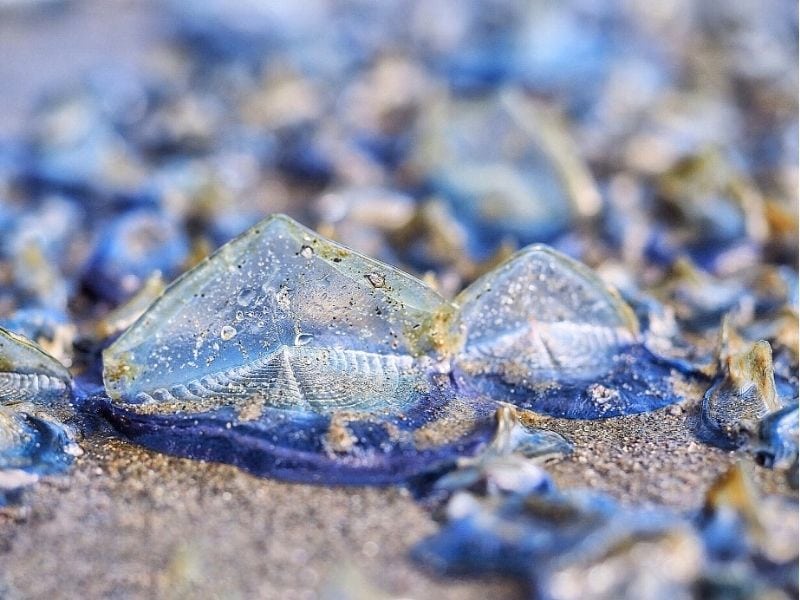
During springtime some years, California beaches turn blue with thousands of strange sea creatures called called by-the-wind sailors.
Each one is a colony of tiny animals, with some members in charge of feeding, some of reproduction, and some of forming the sail.
They’re related to jellyfish but can’t swim or steer themselves in the water.
Instead, they just float on the ocean surface with a clear, triangular sail and go wherever the wind blows them.
When spring winds shift, the wind pushes them onto the shore by the thousands.
They grow up to 4 inches (10 cm) long and range from bright blue to deep purple.
Their stinging cells are generally harmless to people, though they can irritate your skin. Don’t touch your face or eyes after handling them.
People often confuse them with the Portuguese man o’ war, which packs a much nastier sting.
17. Sea Otter

The sea otter floats on its back and uses its belly as a dinner table.
It may even set a rock on its chest and smash crabs or clams against it to crack them open.
Sea otters have incredibly thick fur. It has more than a million hairs per square inch (6.5 cm²) at its thickest.
Your whole head has about 100,000 hairs or fewer.
Staying warm takes a lot of fuel. A sea otter eats about a quarter of its body weight every day.
Southern sea otters grow up to 4 feet (1.2 m) long.
About 3,000 live along California’s central coast, mostly from San Mateo County south to near Santa Barbara. Monterey Bay is a good place to start looking.
Weird Animals in California FAQ
What is the weirdest animal in California?
We’d pick the alkali fly. It crawls underwater in Mono Lake wrapped in its own air bubble, then pops back up completely dry.
Where can you see elephant seals in California?
The Piedras Blancas Elephant Seal Rookery is one of the easiest spots.
It’s 7 miles (11 km) north of San Simeon on Highway 1, and viewing is free every day of the year.
Seals have used the beach since 1990, and December through March is the busiest season.
Are California newts poisonous?
Yes. As their skin contains tetrodotoxin, a powerful nerve toxin, don’t handle them, and wash your hands if you touch one.
Are by-the-wind sailors dangerous?
Not really. Their stinging cells are generally harmless to people, though they can irritate your skin.
If you handle one, keep your hands away from your face and eyes afterward.
When can you see a grunion run in California?
From about March through August, on the 3 or 4 nights after the highest tides of each full or new moon.
The fish usually start arriving 30 to 60 minutes after high tide. You can watch any time, but catching them is off-limits in April, May, and June.
Are there condors in California?
Yes. Every wild condor was taken into captivity in 1987, but released birds now fly over Big Sur and the mountains north of Los Angeles.
There were 392 condors in the wild at the end of 2025.
Which weird animals are California state symbols?
At least two. The garibaldi is California’s official state marine fish, and the desert tortoise is the official state reptile.