10+ Fun Facts About Aye-Ayes (And Answers to the Most Common Aye-Aye FAQs)

Aye-ayes have captured the fascination of animal lovers worldwide with their bizarre appearance and otherworldly behaviors.
These peculiar primates from Madagascar display remarkable adaptations that continue to intrigue both scientists and wildlife enthusiasts.
Whether you’re curious about these unusual lemurs or simply drawn to nature’s oddities, understanding these incredible creatures deepens your appreciation for Earth’s biodiversity.
Let’s explore 10 fascinating facts about aye-ayes before diving into the most frequently asked questions about their nature.
1. Aye-Ayes are the World’s Largest Nocturnal Primate
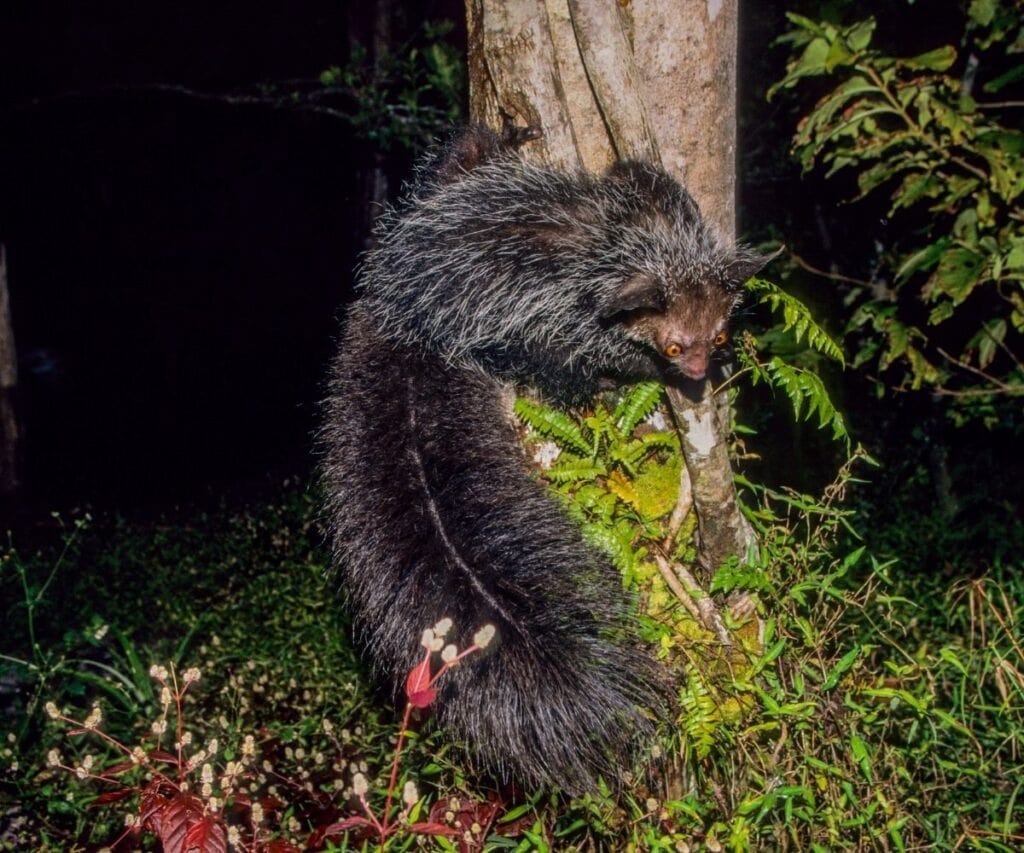
The aye-aye holds the title of world’s largest nocturnal primate. Adults measure 14-17 inches (36-43 cm) in body length with tails reaching 22-24 inches (56-61 cm).
Weighing around 4-6 pounds (2-2.7 kg), they’re about the size of a house cat. Their large, yellow-orange eyes with dark rings provide excellent night vision for navigating the forest canopy after dark.
2. Aye-Ayes Have Rodent-Like Teeth That Never Stop Growing
Aye-ayes possess continuously growing incisors, a trait unique among primates but common in rodents. These chisel-like front teeth grow throughout their entire lives and must be constantly worn down through use.
Early European naturalists mistakenly classified aye-ayes as squirrels because of these rodent-like teeth. The aye-aye uses its powerful incisors to gnaw through tough tree bark to reach insect larvae hiding beneath.
3. Their Skeletal Middle Finger is Their Superpower

The aye-aye’s most distinctive feature is its incredibly thin, bony middle finger that can reach 3-inches-long (8 cm). This skeletal digit serves as their primary tool for finding and extracting food from trees.
They tap this finger on tree trunks and branches up to eight times per second, listening for the echo that indicates hollow spaces. Once they locate prey, they use the same finger to hook grubs and larvae from inside the wood.
4. Aye-Ayes Use Echolocation Like Bats

Aye-ayes are the only primates known to use echolocation for hunting. They tap on trees with their specialized middle finger and listen for subtle changes in sound that reveal hollow cavities where insects hide.
Their enormous, bat-like ears have complex ridges that focus sounds during percussive foraging. This remarkable adaptation allows them to detect prey moving beneath tree bark in complete darkness.
5. Aye-Ayes Fill the Ecological Role of Woodpeckers
Madagascar has no woodpeckers, so aye-ayes evolved to fill that ecological niche. They detect wood-boring insect larvae, gnaw holes through bark with their teeth, and extract grubs with their specialized fingers.
This percussive foraging method takes up 5-40% of their foraging time. By controlling tree-boring insect populations, aye-ayes help maintain forest health and protect trees from pest damage.
6. Aye-Ayes Pick Their Noses (But For Good Reason)
Researchers have captured aye-ayes on video using their elongated middle finger to pick their noses. That 3-inch finger (7.6 cm) goes so deep it actually reaches their throat.
They then eat the mucus they extract, joining at least 11 other primate species observed engaging in this behavior, including humans. While it seems gross, this behavior may help boost their immune system.
7. Aye-Ayes Build Elaborate Ball-Shaped Nests

Aye-ayes construct spherical nests from leaves, branches, and vines in tree forks. These elaborate nests can take up to 24 hours to build and provide shelter during daylight hours.
They may use the same nest for multiple days or abandon it to build new ones elsewhere. Males sometimes share nests with other males, though not at the same time, demonstrating surprising tolerance.
8. Aye-Ayes are Considered Bad Luck in Madagascar
Many Malagasy people consider aye-ayes harbingers of death and evil omens. Local folklore claims that if an aye-aye points its skeletal middle finger at you, you’ve been marked for death ☠️
This superstition has led to aye-ayes being killed on sight in some regions. The bodies are sometimes hung along roads so travelers can carry away the evil spirits.
9. Aye-Ayes Can Travel 2.5 Miles in a Single Night

Aye-ayes spend up to 80% of the night foraging for food in the forest canopy. During these nocturnal hunting sessions, they can cover up to 2.5 miles (4 km).
They climb trees by making successive vertical leaps much like squirrels. While they move easily vertically, horizontal movement between trees proves more difficult, so they rarely descend to the ground.
10. Baby Aye-Ayes Learn by Mimicking Mom

Young aye-ayes spend most of their time observing and mimicking their mothers. They must learn the specialized echolocation hunting technique, which takes considerable time to master.
Baby aye-ayes get their adult teeth at four months old and wean about a month later. However, they stick close to their mothers for protection until around nine months when they can travel independently.
Answers to the Most Common Aye-Aye FAQs
Are aye-ayes endangered?
Yes, aye-ayes are currently classified as Endangered by the IUCN Red List. Their populations have declined due to habitat loss from deforestation and being killed by locals who consider them evil omens.
The exact number of wild aye-ayes remains unknown, but conservation efforts focus on protecting their rainforest habitats. A second aye-aye species, Daubentonia robusta, became extinct within the last 1,000 years.
Where do aye-ayes live?
Aye-ayes are found only on the island of Madagascar off the coast of Mozambique in East Africa. They inhabit rainforests and deciduous forests, primarily in the eastern and northeastern parts of the island.

Some aye-ayes have adapted to cultivated regions resulting from deforestation. They spend most of their lives high in trees, rarely descending to the forest floor, preferring areas at least 230-feet (70 m) above ground.
What do aye-ayes eat?
Aye-ayes are omnivores that primarily eat wood-boring insect larvae, especially cerambycid beetle larvae. They also consume fruits, nuts, seeds, nectar, fungi, and honey.

They can scoop flesh from coconuts and other fruits using their skeletal fingers. Some researchers believe their specialized incisors evolved for cracking hard nuts rather than just accessing insects.
Why do aye-ayes have long fingers?
The aye-aye’s extraordinarily long middle finger evolved specifically for percussive foraging. This skeletal digit allows them to tap on trees to locate hollow cavities and hook out hidden grubs.
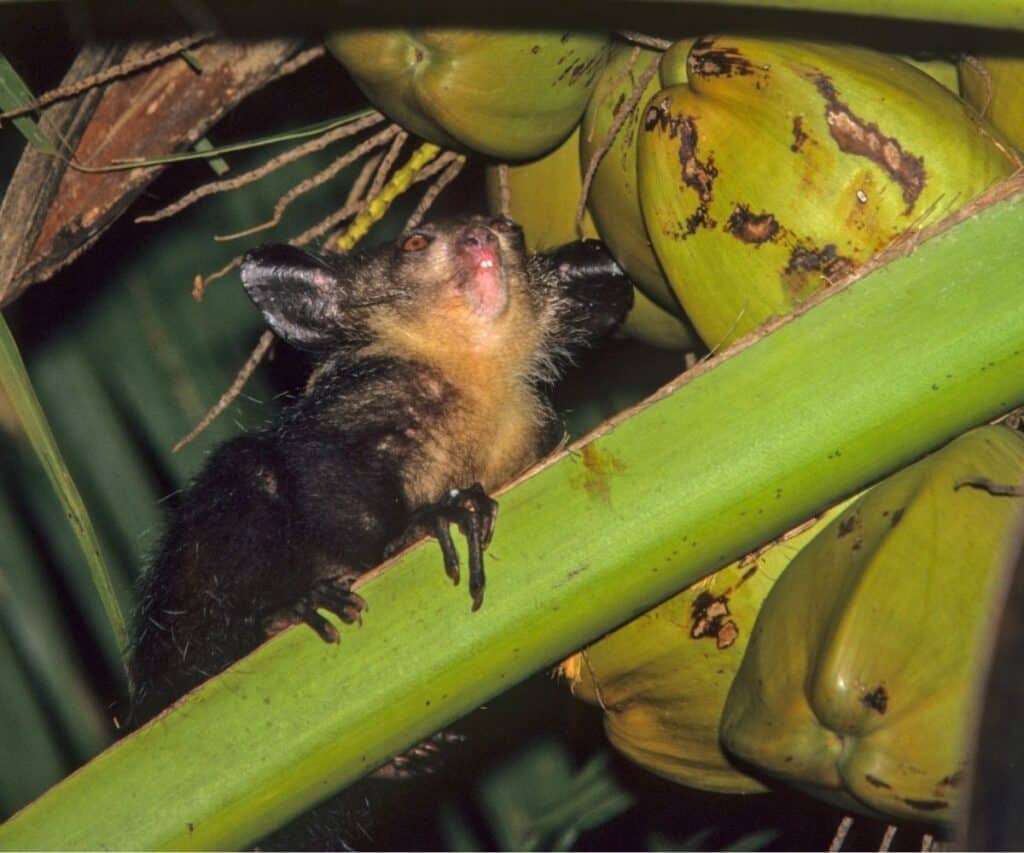
Their third finger is thin for tapping, while their fourth finger is longest with a specialized hooked nail for scooping. Without these adapted fingers, aye-ayes couldn’t access their primary food source.
How do aye-ayes hunt for food?
Aye-ayes use a unique hunting method called percussive foraging. They tap their middle finger on tree bark up to eight times per second while listening for echoes with their large, sensitive ears.
Once they detect hollow spaces containing prey, they gnaw holes with their rodent-like teeth. They then insert their thin middle finger to hook and extract insect larvae from deep within the wood.
Are aye-ayes related to monkeys?
Yes, aye-ayes are primates, the same order that includes monkeys, apes, and humans. Specifically, they’re lemurs, a type of primate found only on Madagascar.

Despite their rat-like appearance and rodent teeth, genetic studies confirm aye-ayes belong to the primate order. They’re considered the most basally diverging branch of all lemurs.
Do aye-ayes live in groups?
No, aye-ayes are mostly solitary animals that spend most of their lives alone. Adult aye-ayes only interact during courtship and when females raise dependent young.

They mark territories with urine and scent glands on their cheeks, necks, and rumps. Male territories often overlap, and males tolerate sharing space with other males, even occasionally sharing nests.
Can you have an aye-aye as a pet?
No, aye-ayes cannot and should not be kept as pets. They’re endangered species protected by international law, making ownership illegal almost everywhere.
They require specialized care including access to live trees for foraging, specific dietary needs, and nocturnal schedules. Their conservation status and unique requirements make them unsuitable for captivity outside accredited zoos.
How long do aye-ayes live?
Aye-ayes can live more than 20 years in captivity with proper care. Wild lifespan is likely shorter due to predation, disease, habitat loss, and human persecution.

Their longevity in protected environments demonstrates their hardiness when threats are removed. Captive breeding programs at facilities like the Duke Lemur Center help ensure the species’ survival.
What sounds do aye-ayes make?
Aye-ayes are quite vocal, producing various sounds including grunts, screeches, and alarm calls. They use different vocalizations to communicate warnings about predators and coordinate with other aye-ayes.
Males may vocalize during territorial disputes or courtship. Their complex communication system helps them navigate social interactions despite their primarily solitary lifestyle.
Why are aye-ayes considered ugly?
Aye-ayes are often called “ugly” due to their unusual combination of features: skeletal fingers, enormous eyes, bat-like ears, rat-like teeth, and scraggly fur. Their appearance seems cobbled together from different animals.

However, beauty is subjective, and many people find aye-ayes fascinating rather than ugly. Their bizarre appearance represents millions of years of specialized evolution perfectly adapted to their ecological niche.
How big are aye-aye territories?
The exact size of territories varies based on food availability, though specific measurements remain limited due to their elusive nature.
They mark their ranges using scent glands and urine, so it’s difficult to know exactly where the territory begins and ends.
Female aye-ayes maintain smaller territories that often overlap with several male territories. Males generally tolerate sharing territories with other males, showing surprising flexibility in spatial arrangements.
Here are a Few More Interesting Facts About Aye-Ayes Before You Go…

Beyond the 10 fun facts listed above, aye-ayes exhibit many other fascinating behaviors that make them so unique. I wanted to share them here before you go!
🥺 Aye-ayes were once thought extinct in the 1930s until a small population was rediscovered. Conservation efforts have since helped stabilize their numbers, though they remain endangered.
👩🔬 The aye-aye’s scientific name is Daubentonia madagascariensis, named after French naturalist Louis-Jean-Marie Daubenton. The genus Daubentonia and family Daubentoniidae contain only this single living species.
⏳ Mating sessions can last up to an hour with males physically locked to females during copulation. Females sometimes compete with each other for mates, unusual behavior among primates.
🤔 Early naturalists were completely confused about how to classify aye-ayes. They’ve been considered rodents, felines, and various types of primates before genetic testing confirmed their lemur identity.
🤷♀️ The name “aye-aye” may come from the Malagasy exclamation “heh heh” meaning “I don’t know,” possibly reflecting people’s reluctance to name this feared creature. Alternatively, it might derive from the Malagasy words “hai hai” or “ahay.”