🇲🇽 45 Animals in Mexico You Might See in This Biodiverse Country (#34 is So Weird!)

One of the most biodiverse countries on Earth, Mexico’s mind-blowing native wildlife can be found everywhere from deserts and oceans to rainforests and grasslands.
This country packs more reptile species than anywhere else on Earth, plus unique mammals, beautiful birds, incredible marine life, and more.
Whether you’re planning Mexican wildlife tours or just curious about what animals live south of the border, this guide covers 45 amazing animals in Mexico that showcase why this nation is basically nature’s treasure chest.
🦅 1. Golden Eagle

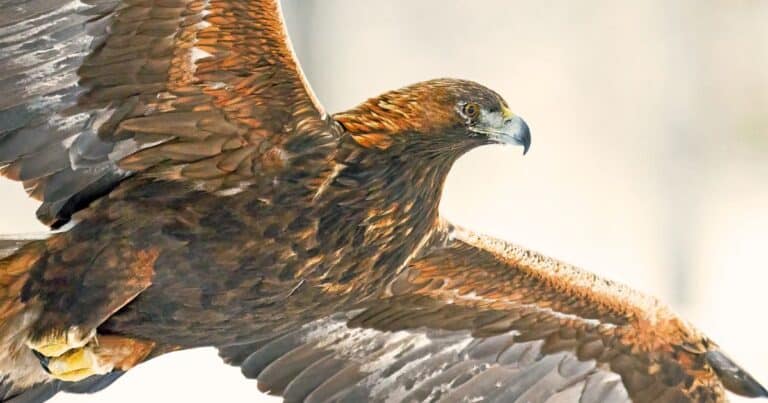
Wondering, What’s Mexico’s national animal? It’s the golden eagle, or “águila real” (pronounced ah-gee-lah rey-al) in Spanish.
This Mexican bird lives in grasslands and forests throughout the country, but only in the Mexican states of Jalisco, Zacatecas and Tamaulipas.
One of the largest eagles in North America, this majestic bird of prey is known for its impressive wingspan, which can reach up to 7-5.feet (2.3 meters).
Golden eagles are apex predators that feed on rabbits, ground squirrels, and even larger mammals like deer.
They’re known for their hunting skills, and often dive at speeds of more than 150 miles per hour (240 km/h) to catch their prey.
Seen on the Mexican flag 🇲🇽 in the Coat of Arms, the golden eagle is important in Mexican culture, symbolizing strength and independence.
While not endangered worldwide, their numbers in Mexico are affected by losing their homes and poisoning.
Conservation efforts are in place to protect this iconic species and its habitat.
🐆 2. Jaguar
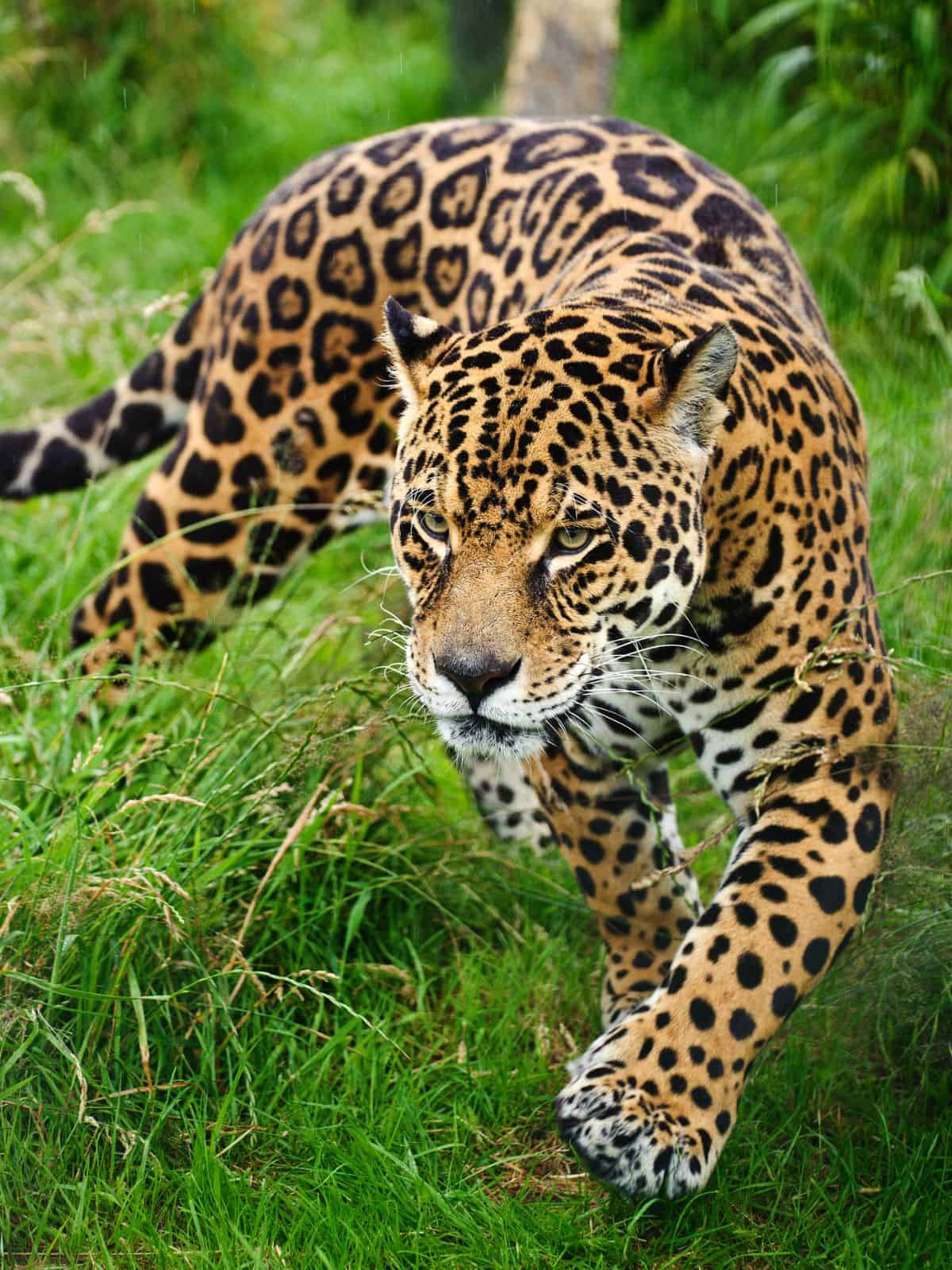
The jaguar is one of the most iconic animals in Mexico’s tropical forests and grasslands of the Yucatan Peninsula.
North America’s largest wildcat, it also holds special ties to various Mayan deities like Ixchel, Chaac, Balam and Awilix.
With its powerful build and striking patterned coat, the jaguar is the largest cat in the Americas, and the third-largest cat in the world.
Jaguars are solitary animals that hunt primarily at night. For this reason, seeing a jaguar in Mexico is incredibly rare.
Their diet includes deer, peccaries (wild pigs), and even caimans (a type of small alligator 🐊).
Their strong jaws and sharp teeth allow them to pierce the skulls of their prey, showcasing their incredible strength.
Jaguars hold a significant place in Mexican folklore and superstitions as symbols of power and ferocity.
You’ll also find a few jaguar gods and goddesses in the Aztec religion, including Tezcatlipoca (Tepeyollotl), which is a central Aztec deity.
Despite their revered status, jaguars face threats from habitat destruction and poaching, leading to a decline in their population in certain areas.
🐒 3. Mexican Spider Monkey

Mexican spider monkeys are known for their long limbs and prehensile tail, which they uses with remarkable agility to swing through the trees.
This species is highly social, living in large groups and communicating through a complex system of sounds and gestures.
They live in tropical forests and their diet mainly consists of fruits, nuts, seeds, and leaves 🍃
Mexican spider monkeys play a crucial role in their ecosystem by dispersing seeds and supporting forest regeneration.
Sadly, their population is declining due to deforestation and hunting, which has endangered them.
🐬 4. Vaquita Porpoise

The vaquita marina (vaquita porpoise in English) is the world’s most endangered marine mammal.
They’re found exclusively in the Gulf of California (aka Sea of Cortez), which is located off the coast of Mexico’s Baja California Peninsula.
This small porpoise is recognized by its dark rings around the eyes and mouth and a light gray body.
The vaquita (which translates to “little cow”) is a shy and elusive animal, making it difficult to spot in the wild.
Currently listed as Critically Endangered by the IUCN Red List, the vaquita is on the brink of extinction.
There’s an estimated population of fewer than 10 vaquita left in the wild 🥺
They’re often caught and drowned in illegal gillnets intended for another species, the totoaba fish, which has a bladder that’s highly valued in Asia.
Today, intense conservation efforts are underway for the vaquita to remove gillnets, and protect their remaining habitat so we don’t lose this species forever.
🐺 5. Mexican Gray Wolf

The Mexican gray wolf is a subspecies of the gray wolf native to the southwestern United States and Mexico.
This Mexican wolf is the rarest and most genetically-distinct subspecies of the North American gray wolf.
Today, it’s common to spot them in Northern Mexico near the U.S.-Mexico border with Arizona, New Mexico and Texas.
Historically, they were also found a bit further south in the Sierra Madre Occidental region in Mexico.
The smallest gray wolf subspecies, they have a distinct light gray and brown coat. Like most wolves, this highly social animal lives in packs.
Once on the verge of extinction, conservation programs have helped increase their numbers through captive breeding and reintroduction into the wild.
Despite these efforts, the Mexican gray wolf remains one of the most endangered wolves in the world.
They have a unique place in the local food-chain, and are essential for maintaining healthy ecosystems by controlling prey populations of elk and deer.
🐋 6. Whale Shark

While whale sharks are sharks, but they’re known as the one of the most docile sharks — like a nurse shark, but MUCH bigger.
How big are whale sharks, you ask?!
The largest fish in the sea, male whale sharks average 26-30 feet (8-9 m) in lenght, and females average 45-49 feet (14-15 m).
The largest whale shark measured was an astounding 61.7-feet-long (18.8 meters) 😳 which is roughly the size of a large city bus.
Despite their massive size, whale sharks are often referred to as “gentle giants” that have small teeth and feed primarily on microscopic plankton.
You can see and swim in whale sharks in Mexico off the coast of La Paz in Baja Mexico on the West Coast, and also in the Caribbean.
There is one whale shark zone in the Mexican Caribbean that’s located a few miles off the coast of the Yucatan Peninsula.
This area is accessible only via boat tours that depart from several places, including Cancun, Isla Mujeres, Tulum, and Isla Holbox.
Want to swim with whale sharks in Mexico? Make sure you book whale shark tours like these that are ethical and highly-regulated.
🪱 7. Axolotl
How do you pronounce axolotl?
Let’s quickly clear up this common question before we proceed.
The axolotl pronunciation in Mexico is either ah-ho-low-tull or ah-sho-low-tah (both pronunciations are used), and axe-uh-lah-tull in English.
What is an axolotl?
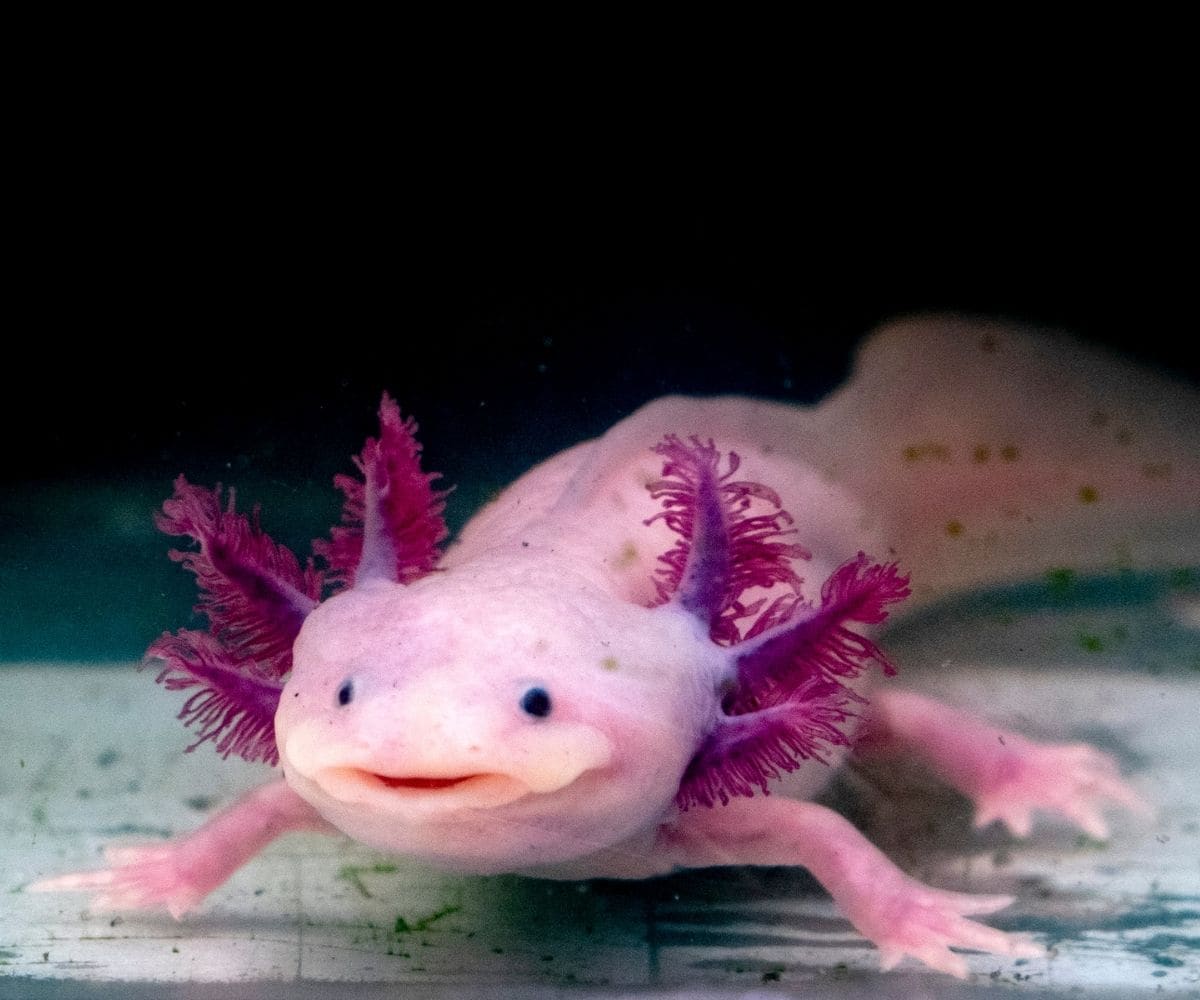
The axolotl is a unique type of salamander that’s native to the freshwater lakes and canals of Xochimilco in Mexico City.
Unlike most salamanders, axolotls do not undergo metamorphosis and remain aquatic (and remain juveniles) their entire lives.
These fascinating Mexico City animals can regenerate lost body parts, damaged organs, and even regrow their brain 🧠 (well, parts of their brain).
They have a distinctive appearance, with feathery external gills, and axolotls come in two colors.
These include the wild-type axolotl, which is dark with greenish mottling, and the albino axolotl, which is pale pink with red eyes.
Due to urbanization and pollution, axolotls are critically endangered in the wild.
Internet sensations much like the capybara, axolotls are now prolifically bred in captivity for research and kept as pets.
🦋 8. Monarch Butterfly

The monarch butterfly’s annual migration is one of nature’s most incredible phenomena — and scientists still don’t fully understand it.
Each year, millions of monarch butterflies travel thousands of miles from Canada and the northeastern U.S. and to Central Mexico’s Oyamel fir tree forests.
They then fly back a few months later, meaning the monarchs travel about 4,500 miles round-trip (7,242 km) each year.
This makes the annual Mexico monarch butterfly migration one of the longest insect migrations on Earth.
The Oyamel forests are located in the Monarch Butterfly Biosphere Reserve which spans two states: Michoacán and Estado de México.
This massive area spans 180,000 acres (560 km²), and is a Mexico UNESCO World Heritage Site.
Each year like clockwork, the butterflies begin to arrive in late-October, and stay until early-March.
Entomologists have no idea how they know to return to the same forests year after year, and stay only during those same months 🤷♀️
They do know this Mexican forest provides the perfect microclimate for the butterflies to survive the winter.
When it gets cold in the forest, they will cluster in massive groups on tree branches in the sun in order to stay warm.
This migration offers a breathtaking natural spectacle and plays a crucial role in pollination across North America.
Efforts to protect their migratory path and wintering grounds are essential for continuing this extraordinary journey.
Wondering about the best way to experience this incredible sight? I recommend booking a monarch butterfly tour in Mexico (like I did 🦋).
These tours run from November to March, though January and February are known as the best months to see butterflies in Mexico.
🐆 9. Ocelot

The Ocelot is a small wild cat that roams the dense forests and brushlands of Mexico.
With its beautiful spotted coat, the ocelot is an expert at climbing and swimming.
It’s a nocturnal hunter, preying on small mammals, birds, and fish.
Ocelots have a broad range, but are most commonly found in the tropical forests of Southeast Mexico, particularly Chiapas state.
🦌 10. Yucatan Brown Brocket

Rounding out the list of the Top 10 Mexican animals is the Yucatan brown brocket.
This small deer species is native to the Yucatan Peninsula and surrounding areas.
This elusive animal prefers dense forests where it can find cover, so they’re rarely seen in the wild.
The Yucatan brown brocket deer’s primary food sources include leaves, fruits and flowers 🌸
They’re distinguished by a reddish-brown fur color, and are smaller in size compared to other deer species.
While not as well-known as other Mexican wildlife, this deer plays a vital role in its ecosystem.
🦝 11. Cozumel Raccoon

The Cozumel raccoon (aka pygmy raccoon or dwarf raccoon) is a unique species found only on Cozumel Island.
This popular destination is located off the eastern coast of Mexico’s Yucatán Peninsula, not far from Playa del Carmen.
This raccoon is smaller and has more distinct features than its mainland cousins, with a diet heavily relying on the island’s specific fruits, crabs, and small animals.
Its adaptation to the island environment is a remarkable example of species evolution in isolated habitats.
The Cozumel raccoon faces critical threats from habitat loss due to tourism development and competition for food with non-native species.
🕷️ 12. Mexican Redknee Tarantula
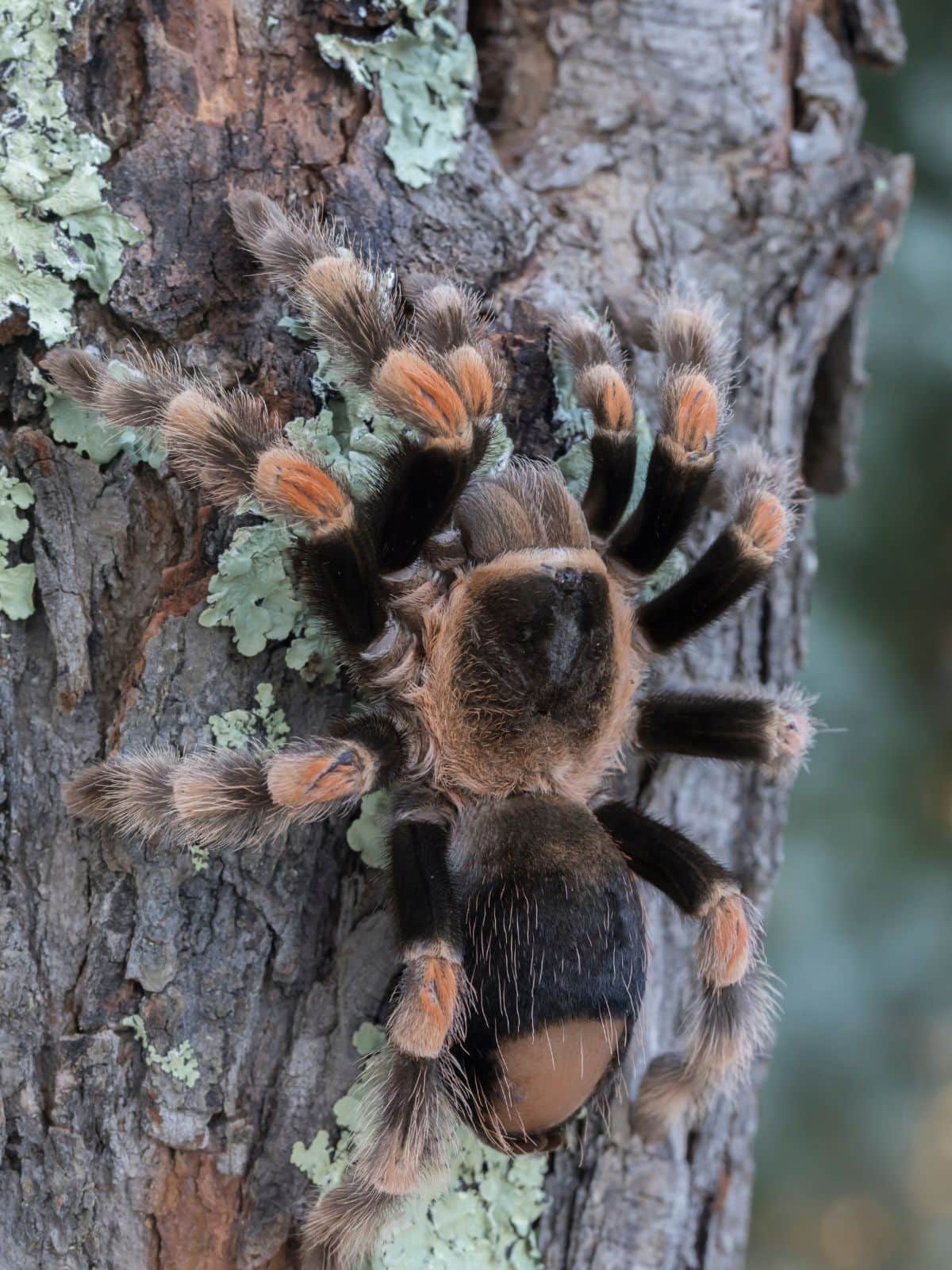
Recognizable by its bright red knees and black body, the Mexican redknee tarantula is a notable spider from Mexico’s Pacific Coast forests.
The spider lives in burrows under the ground and hunts for insects, small frogs, and sometimes mice.
In the wild, it helps control insect populations in its natural habitat.
Known for its docile temperament, this Mexican spider has gained popularity in the pet trade, and is admired for its distinctive coloring and manageable nature.
🦍 13. Yucatan Black Howler Monkey

The Yucatan black howler monkey is found in Mexico’s Yucatan Peninsula rainforests.
They are important for the forest because they help spread the seeds of the fruits they eat.
This monkey is known for its loud howls, which can be heard up to three-miles away (5 km).
These allow them to communicate with other monkeys, with different howls used to establish territory, maintain group cohesion, and communicate threats.
Social animals, Yucatan howler monkeys live in groups called troops that can have up to 16 individuals (though 5-10 is more common).
The Yucatan howler monkey has a black coat and a strong tail it uses to hang from branches. It eats mostly leaves, fruits and flowers.
🦜 14. Resplendent Quetzal
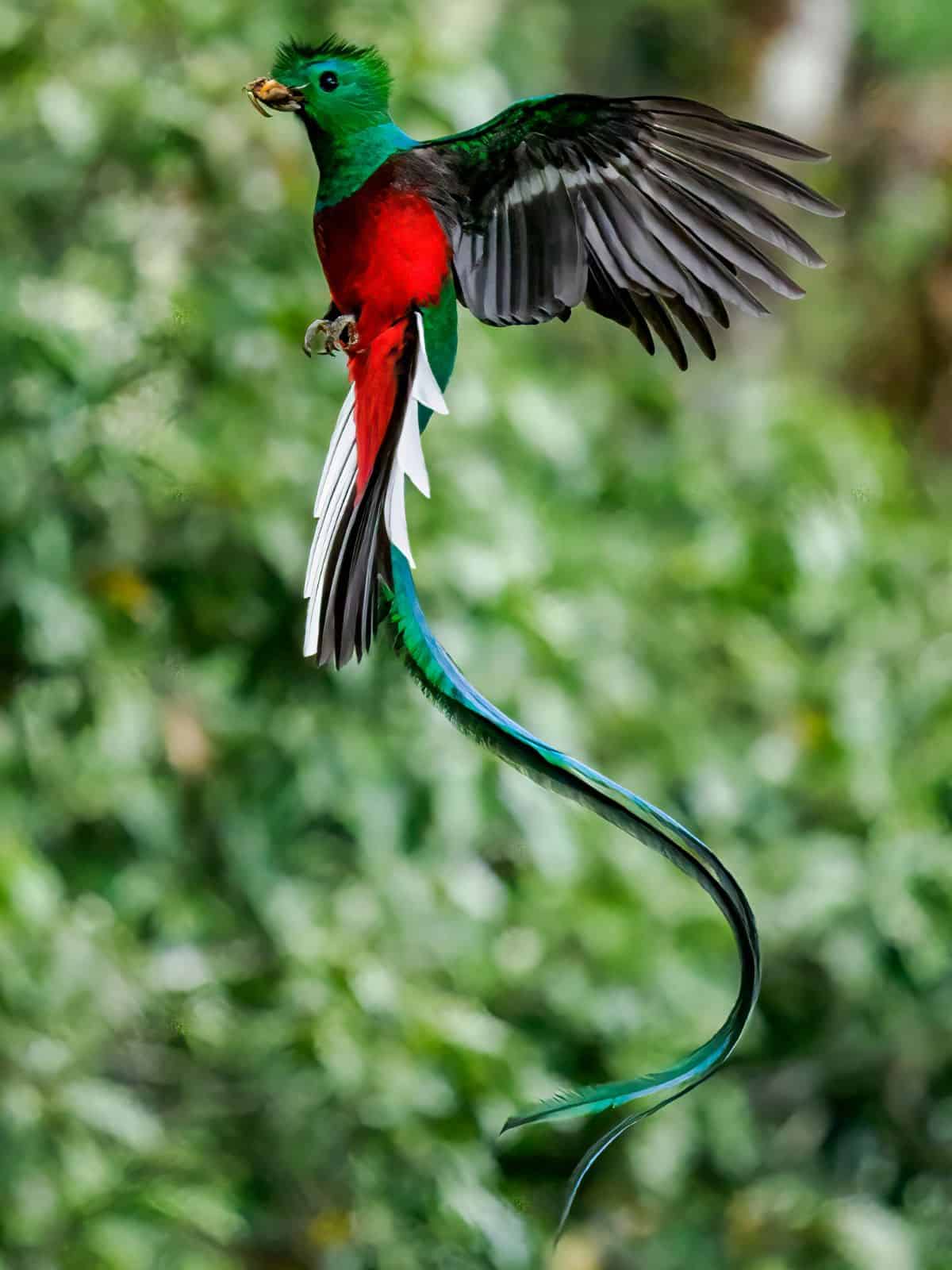
One of the most beautiful birds in the world, the quetzal has distinct bright green and red feathers and feeds on fruits, insects, and small creatures.
They live in some parts of Southern Mexico near the border with Guatemala, as well as Central America’s cloud forests.
Known for their feathers, the males grow brilliant green plumage during mating season as part of their courtship ritual to attract a mate.
These green tail feathers can grow up to 3-feet-long (0.9 m), which has made them highly prized since ancient times.
For centuries, the bird’s feathers have been in ceremonial attire within pre-hispanic civilizations like the Maya.
For some, these birds and their feathers are considered more valuable than gold — and fun fact: Guatemala’s currency is called the quetzal 🤑
It’s known for being hard to spot, because their characteristic feathers blend seamlessly into the green leaves of their forest home.
However, with the right guide, the resplendent quetzal is one of the species you can spot on a Mexico birding tour.
🐆 15. Margay
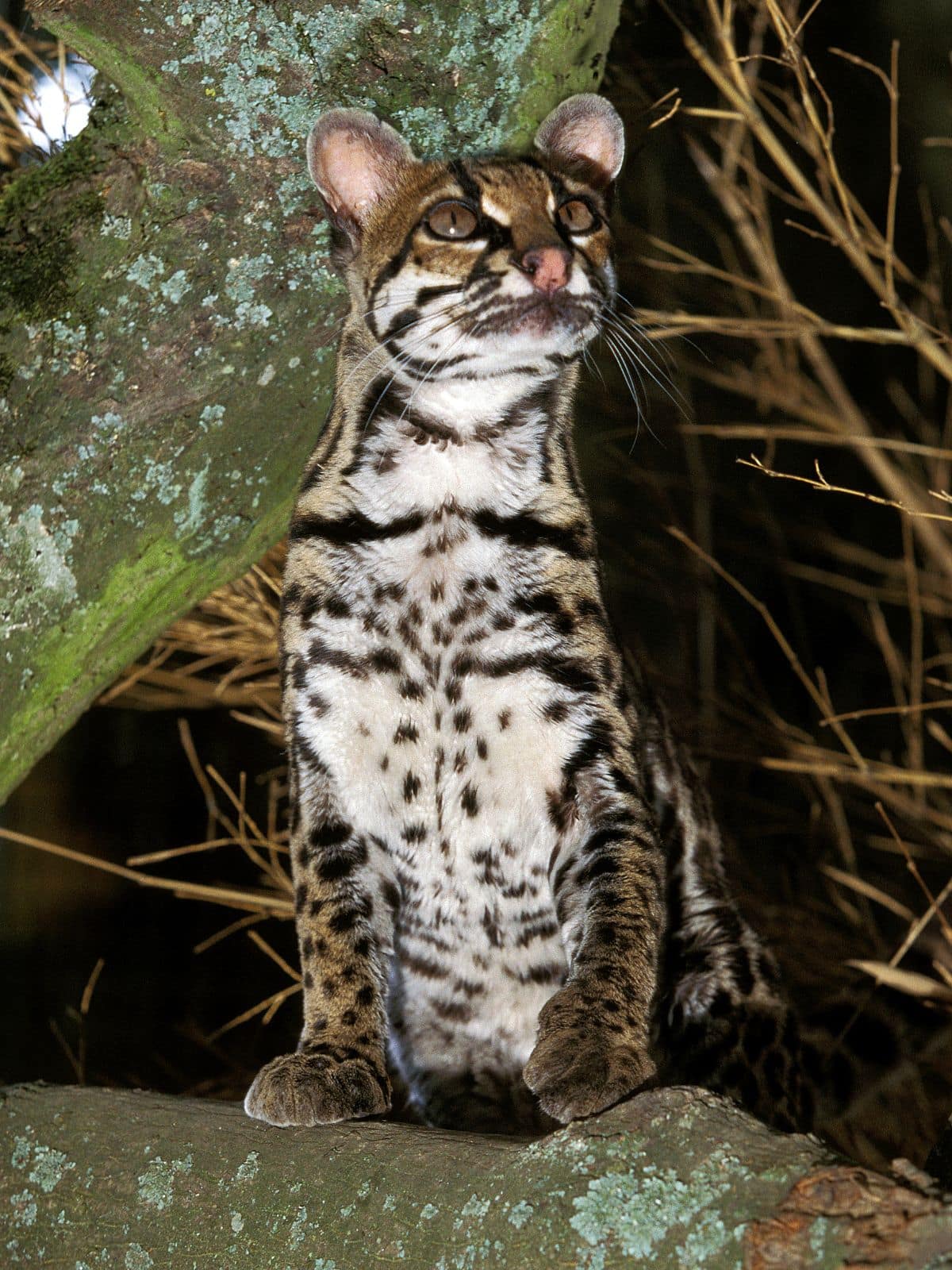
The margay, a small wild cat that lives in Mexico’s tropical forests, spends most of its life in trees, and is really good at climbing them.
The margay’s appearance often leads to confusion with the ocelot, another wild cat species, though they are different.
Also similar in appearance to a jaguar (but much smaller), it has a coat with many spots and stripes, which helps hide in the tree leaves.
Its flexible ankles can rotate 180°, allowing margays to climb down trees head-first and leap between branches with agility.
The margay hunts for birds, monkeys, and other tree-dwelling animals at night.
🦇 16. Mexican Free-Tailed Bat

This widespread Mexican bat species is found in mostly caves, especially the Cueva de los Murcielagos (aka Cueva de la Boca), a famous cave near Monterrey.
One of the fastest mammals in the world💨 Mexican free-tailed bats can reach incredible flight speeds of up to 100 miles per hour (160 km/h).
They play a vital role in the ecosystem by consuming vast amounts of insects, including agricultural pests, each night.
This bat’s social behavior and mass migrations are subjects of fascination and study, contributing significantly to local biodiversity and natural pest control.
🐈 17. Ringtail Cat
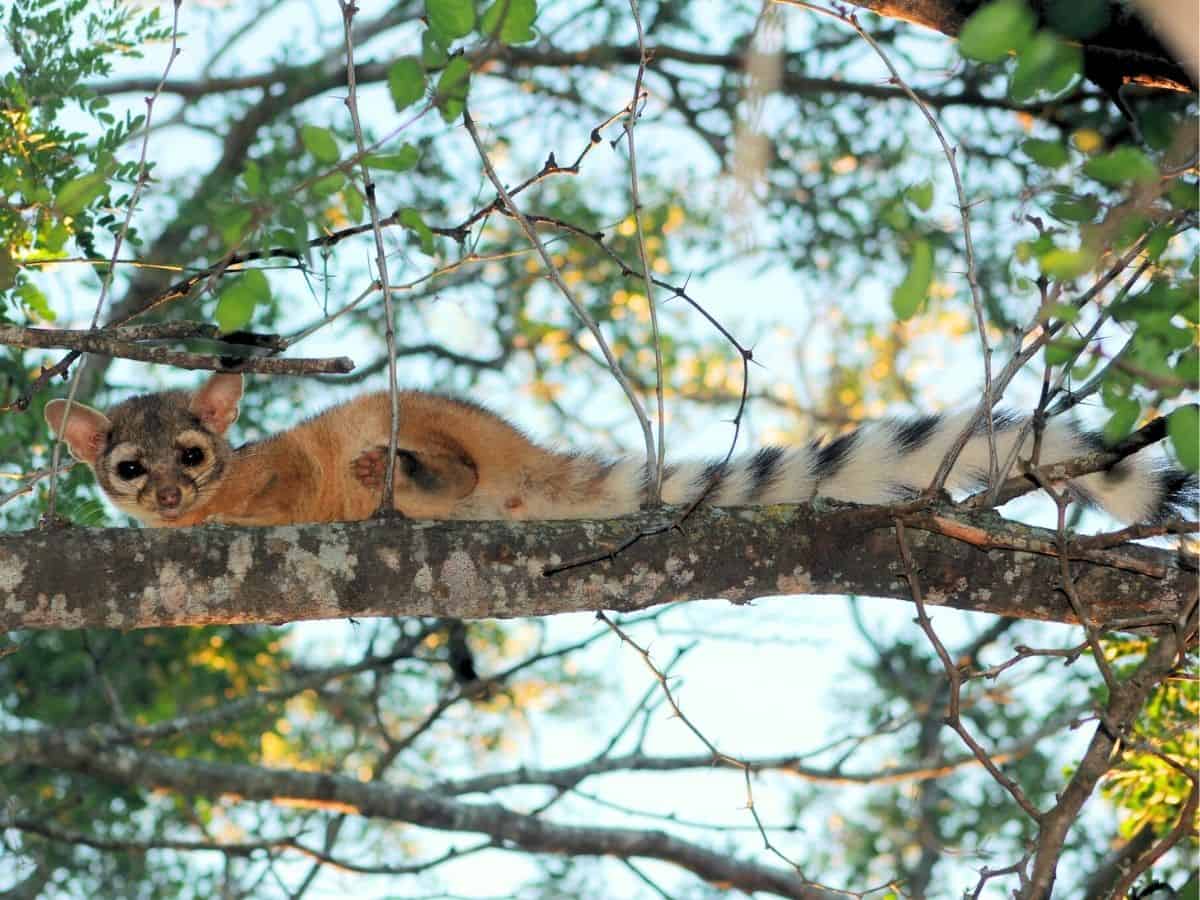
Despite its name, the ringtail cat is not a cat — it’s actually a member of the raccoon family found in arid regions of Mexico.
With a long, black and white striped tail and agile climbing skills, this animal is easy to identify.
A nocturnal creature, they’re omnivorous and eating fruits, insects, and small animals that they would hunt during the night.
The ring-tailed cat is known for its curious and playful nature, often using its tail for balance and communication.
Its adaptability allows it to thrive in diverse habitats, from dense forests to rocky cliffs.
🦝 18. White-Nosed Coati

The white-nosed coati (aka coatimundi) is a member of the raccoon family found throughout Mexico, Central America, and parts of South America.
This mammal is distinguished by the distinctive white mask around their nose, from which it gets its name, and long snout used for foraging.
Coatis have been observed using their keen sense of smell to locate food buried several centimeters beneath the soil.
The coati’s tail is another notable feature, often held erect while they move about. It serves as a signaling mechanism within their social groups.
Highly social wild animals, they form bands of females and juveniles that roam forests in search of food sources like fruit, insects, and small vertebrates.
The males are solitary, or form smaller groups, and only join the bands during the breeding season.
They spend much of their time on the ground, although they’re excellent climbers and can escape predators or rest by climbing in trees.
Their habitat ranges from tropical rainforests to more arid regions, showcasing their adaptability to different environments.
🐢 19. Olive Ridley Sea Turtle
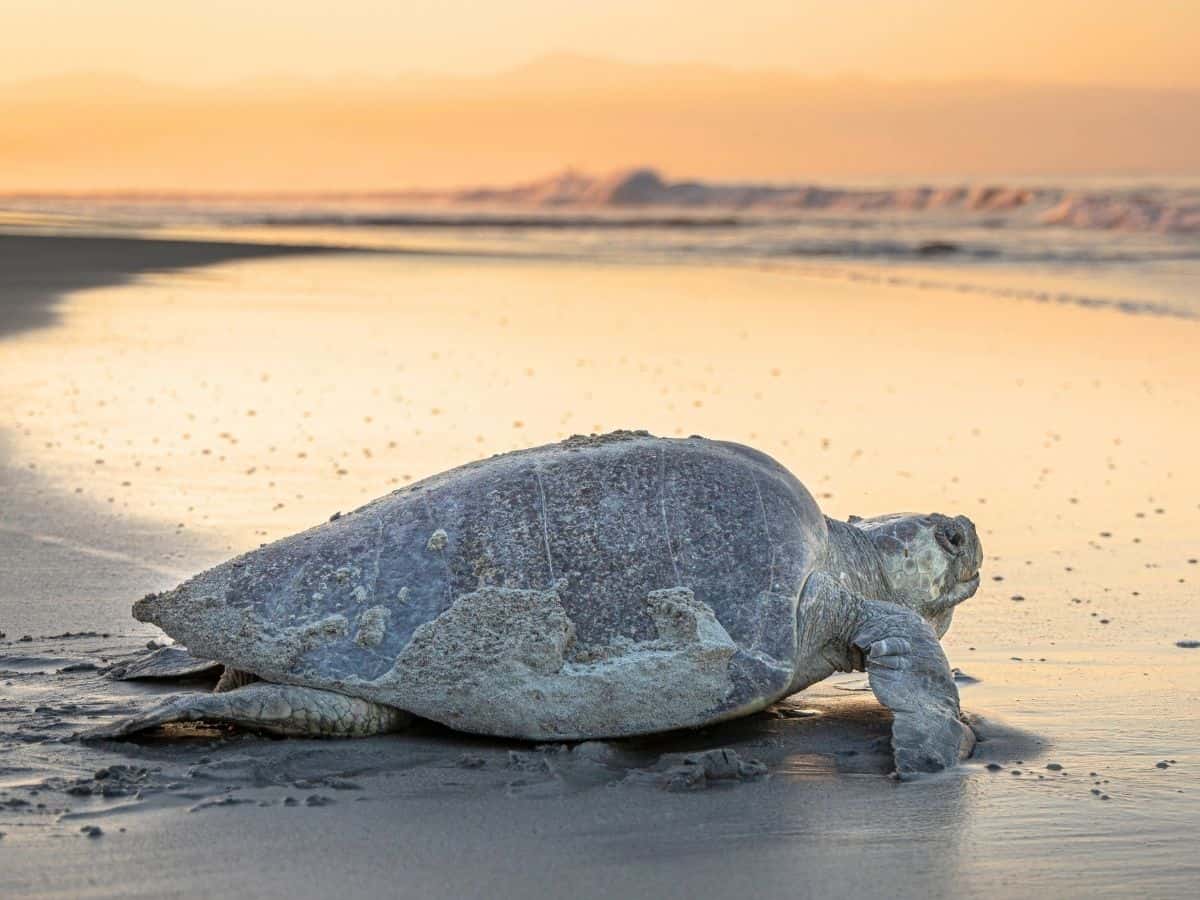
One of several species of turtles in Mexico, the Olive Ridley is known for their mass nesting events called arribadas (meaning “arrivals” in English).
The largest of these events is called La Gran Arribada (The Grand Arrival), which you can see at Playa la Escobilla, one of the best beaches in Oaxaca.
These small turtles are critical to marine ecosystems, contributing to the health of seagrass beds and coral reefs.
Despite being the most abundant sea turtle species, their populations are threatened by egg harvesting, fishing bycatch, and habitat loss.
Conservation efforts in Mexico focus on protecting nesting beaches and ensuring the survival of this species, which is integral to marine biodiversity.
🐊 20. Morelet’s Crocodile
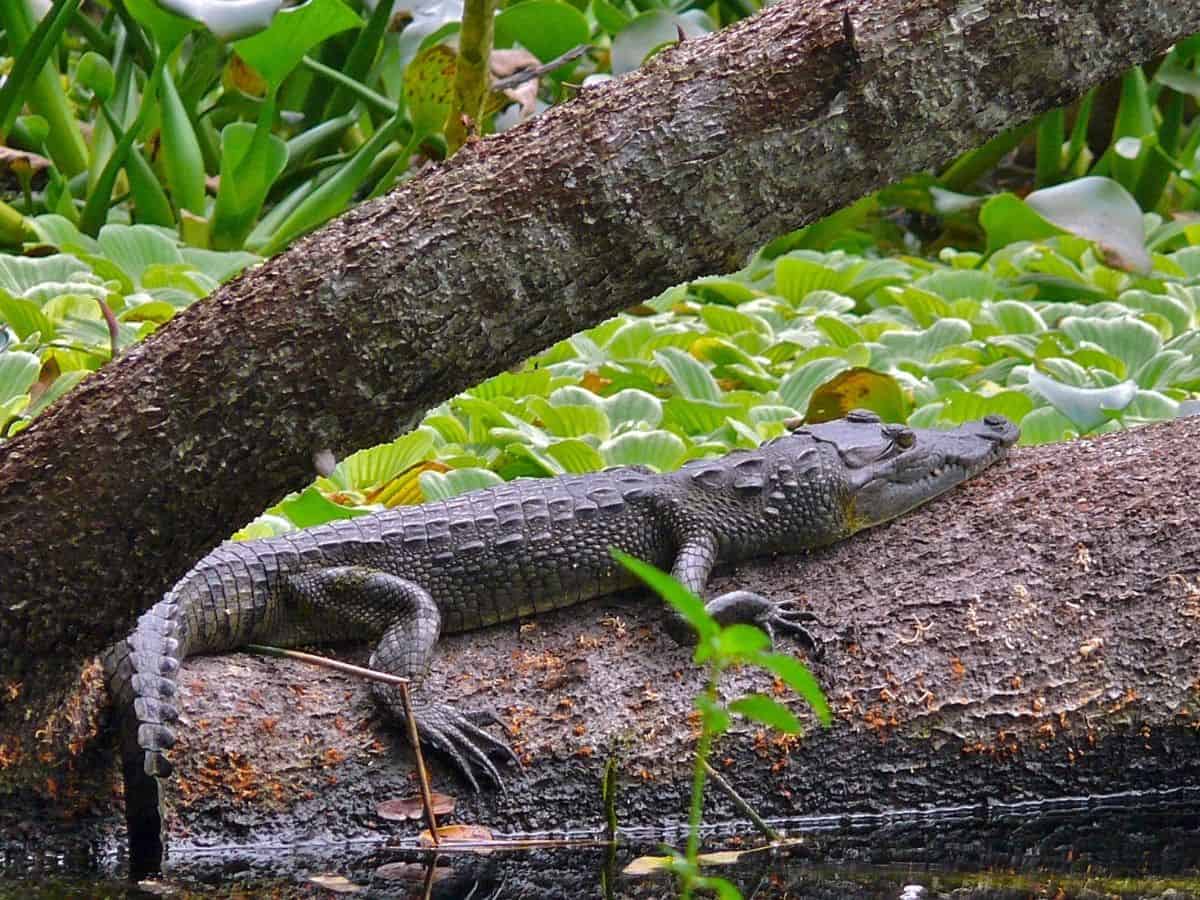
The Morelet’s crocodile (aka Mexican crocodile) is found in freshwaters of the Yucatan Peninsula northern Guatemala and Belize.
This species is medium-sized, with adults typically reaching about 12-feet-long (3 m).
Morelet’s crocodile plays a crucial role in maintaining the balance within their aquatic ecosystems, feeding primarily on fish, birds, and small mammals.
Historically threatened by habitat loss and hunting for their skin, conservation efforts have helped stabilize their populations.
Pancho the Tulum Cenote Crocodile in Mexico
This species is known to be quite passive, and there’s even a famous one that’s known to swim with tourists in the Tulum cenotes.
His name is Pancho (or Panchito) 🐊 and he lives in Casa Cenote. He has been living in the cenote for decades, peacefully co-existing with visitors.
He usually keeps to himself in an area towards the back of this cenote, but gets in the water to swim when he feels like it.
🦃 21. Crested Guan
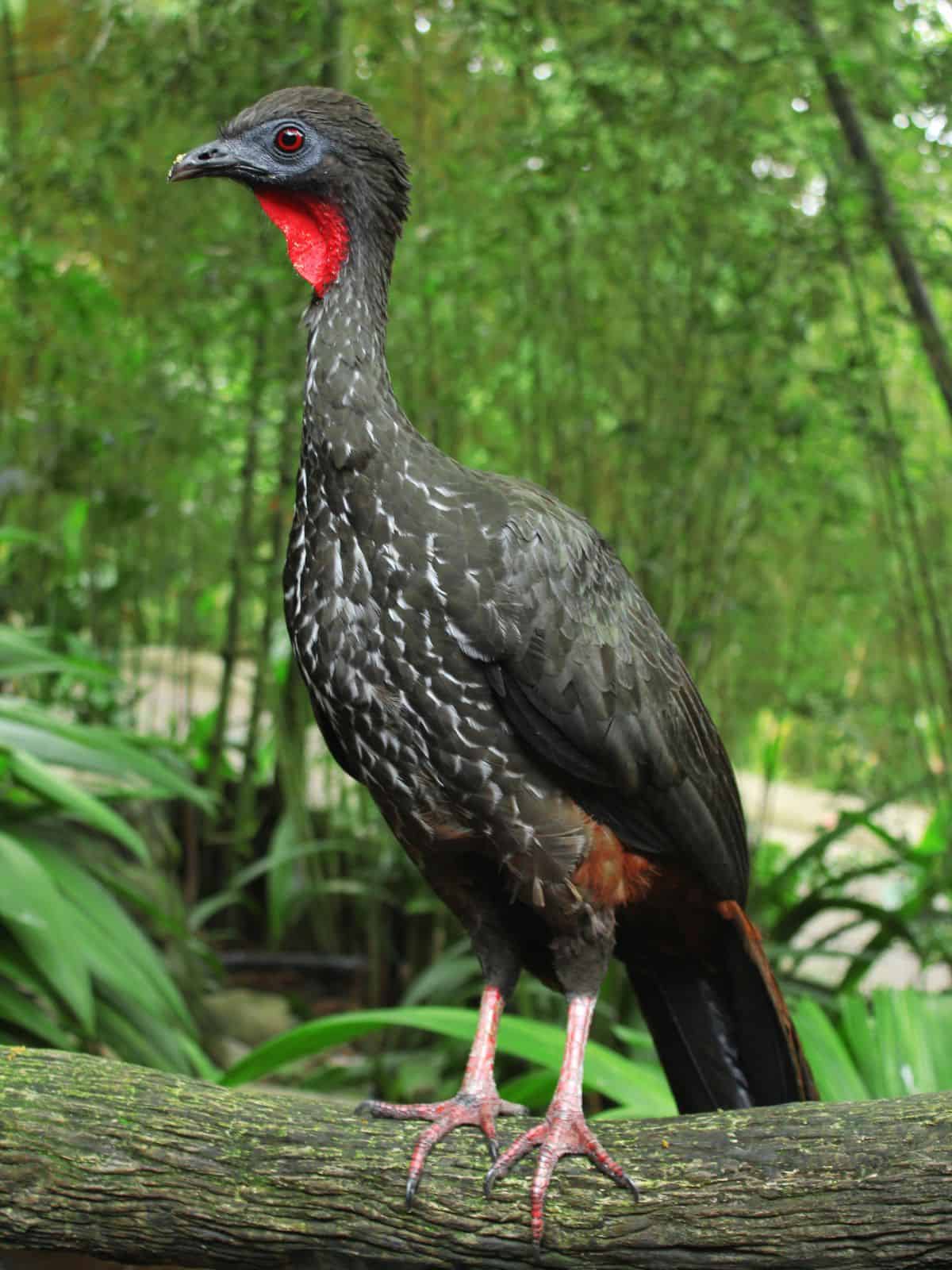
The crested guan is a large, pheasant-like bird that inhabits the tropical forests of Mexico and Central America.
Despite its size and awkward flight, they’re adept at moving through dense foliage so it spotting one is a rare treat for birdwatchers in Mexico.
Recognizable by its glossy black body and distinctive red throat pouch, it spends most of its time in the treetops.
The crested guan bird’s diet consists of fruits, seeds, and occasionally small animals.
It plays an important role in seed dispersal, contributing to the forest’s diversity and health.
🐶 22. Xoloitzcuintli (Mexican Hairless Dog)

How do you pronounce xoloitzcuintli?
The xoloitzcuintli pronunciation is show-low-squink-lay. However, most people call them xolos for short (show-lows).
What is a xoloitzcuintli?
The xolo is the national dog of Mexico, and the famous Mexican hairless dog.
Known for its striking hairless appearance, hairless xolos come in three sizes — small, medium and large.
There is also a type of xolo dog that has hair, and this coated variety is popular as a pet.
One of the most ancient and unique dog breeds, it’s been revered by prehispanic cultures in Mexico for thousands of years.
The xolo was considered sacred by the Aztecs, and believed to guide the deceased through the underworld.
🎥 You can see this in the Day of the Dead movie, Coco, with Dante the xolo dog serving a spirit guide for Miguel.
Today, xoloitzcuintlis are cherished as a national treasure, symbolizing deep cultural heritage and continuity from ancient civilizations.
Beyond its cultural significance, the xolo is valued for its intelligence, loyalty, and hypoallergenic qualities.
They tend to bond fiercely with their owners, though they’re social with others when they feel like it.
🦎 23. Mexican Plateau Horned Lizard
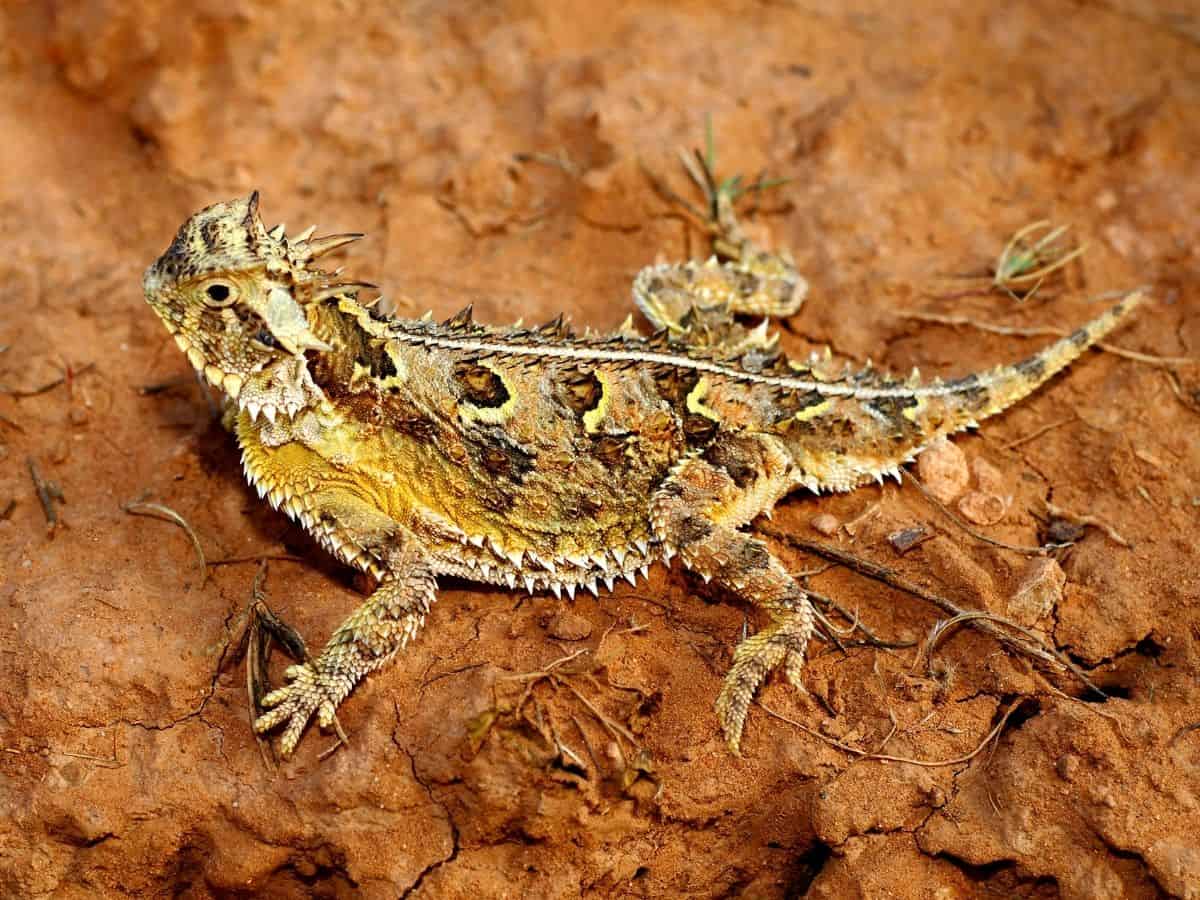
One of the world’s most bizarre animals, the Mexican plateau horned lizard is native to the arid regions of Central and Northern Mexico.
Known for its distinctive horned appearance, the horns actually help it blend into its surroundings, and are a defense against predators.
This lizard’s diet consists almost exclusively of ants 🐜 making it a specialized feeder.
One of its most remarkable survival strategies is its ability to squirt blood from its eyes as a defense mechanism against predators.
🦜 24. Military Macaw

The military macaw got its name from their green plumage which is reminiscent of the green coats worn by soldiers in historical military uniforms.
One of the most beautiful birds in Mexico, this large, green parrot with a distinctive red forehead can be found in Mexico’s tropical forests.
Sadly their beauty has made them coveted as pets, and the illegal pet trade has led to a decline in the number of wild military macaws in recent decades.
Also, deforestation continues threaten the military macaw’s habitat like so many animals on the IUCN Red List of threatened and endangered species.
These wild animals of Mexico feed on seeds, fruits, and nuts, and are vital in seed dispersal which supports the entire forest ecosystem.
In the wild, these birds are highly social and live in large flocks, with loud calls that can be heard up to a half-mile away (1.25 km).
🐸 25. Tarahumara Frog
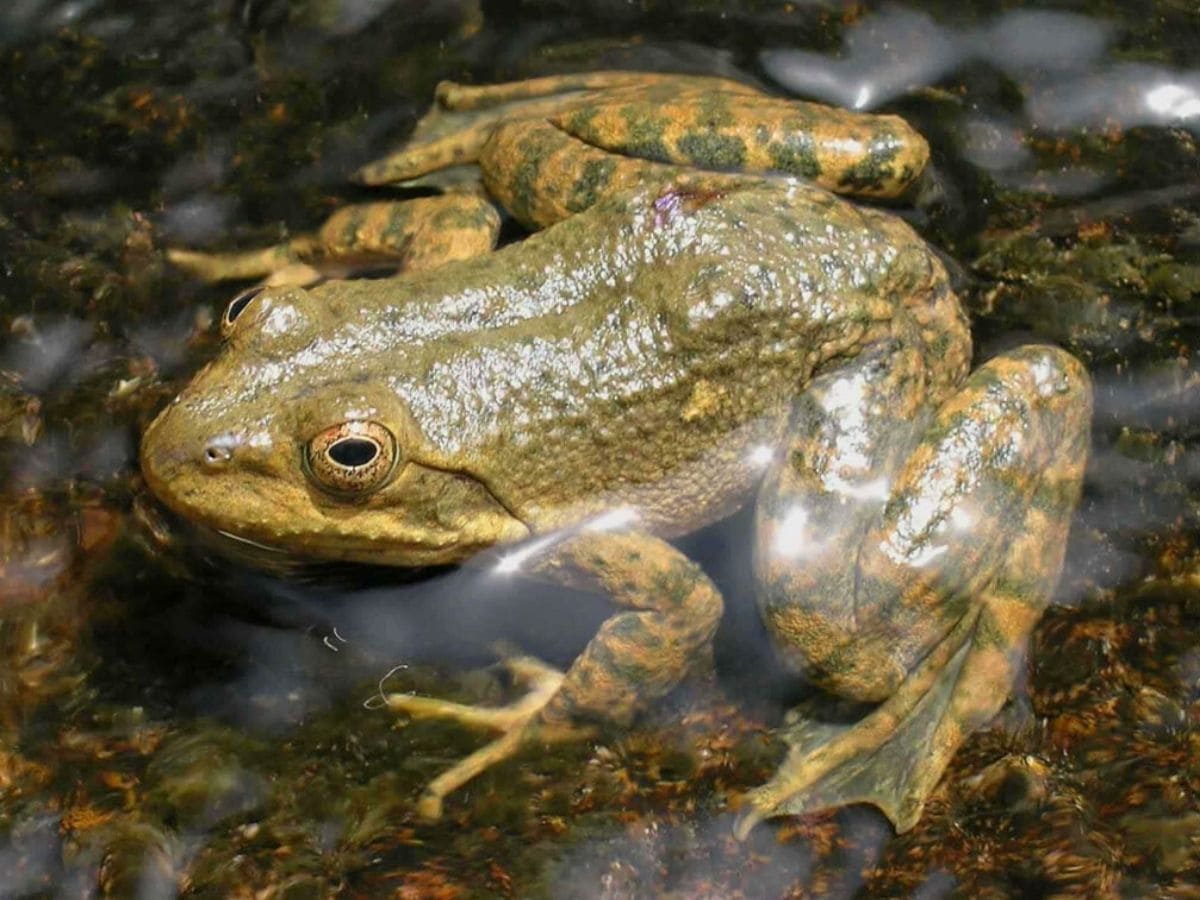
This frog, indigenous to the northwestern region of Mexico, was named after the Tarahumara people.
The Tarahumara or Rarámuri are well-known as the famous Mexico barefoot runners, and can be seen in several documentary films like Goshen.
The Tarahumara frog is native to the Sierra Madre Occidental in Chihuahua and Sinaloa states, but are also in parts of the Southwestern U.S.
They’re notable for remarkable adaptability and the ability to survive in both aquatic and semi-arid environments.
Efforts have been made to reintroduce this species to areas where it had disappeared, focusing on conservation and habitat restoration to ensure its survival.
The Tarahumara frog is a crucial part of local ecosystems, contributing to the control of insect populations.
🐇 26. Zacatuche (Volcano Rabbit)
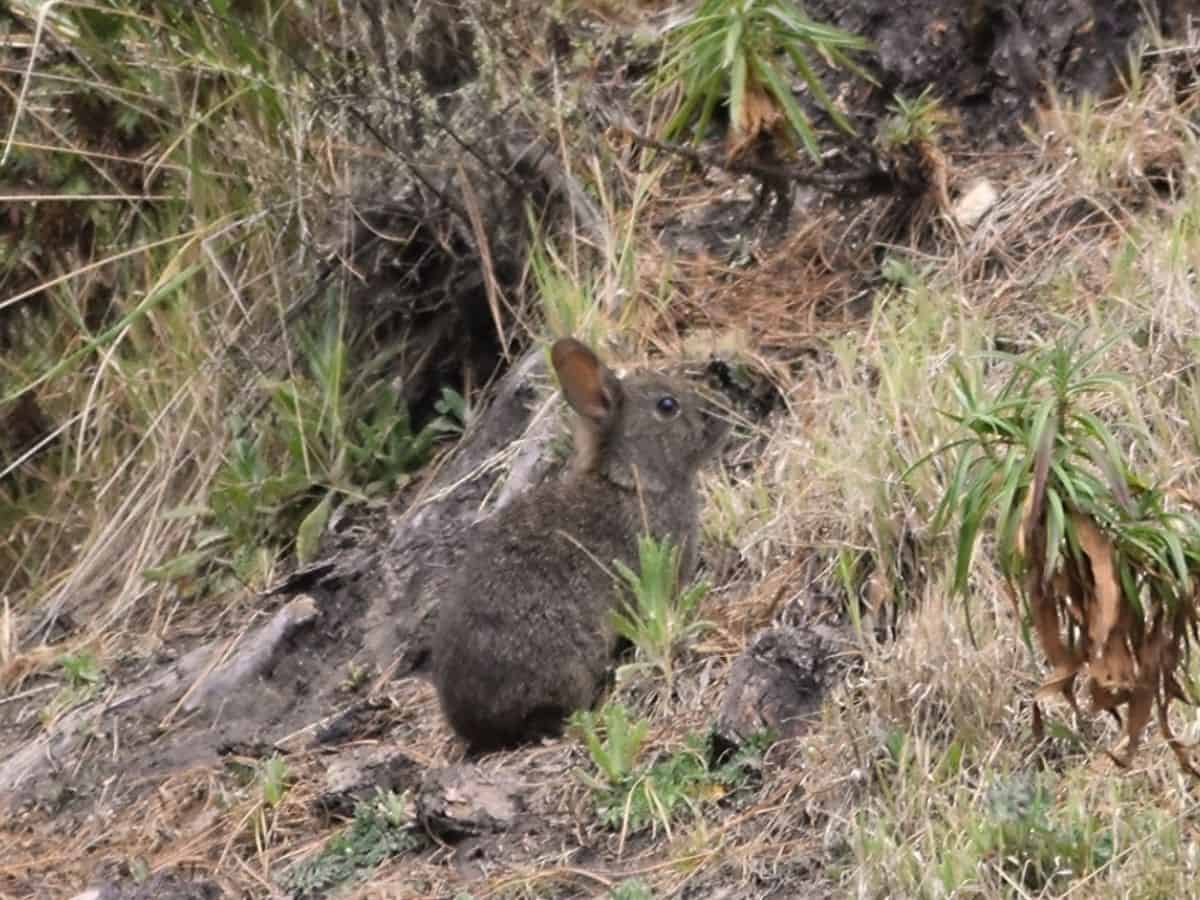
The zacatuche volcano rabbit has earned its name because of the unique habitat preferences the animal has.
Also the world’s second smallest rabbit species after the pygmy rabbit, zacatuches are found exclusively on the slopes of four volcanoes near Mexico City.
These are El Pelado Volcano, Tláloc Volcano, Popocatépetl Volcano, and Iztaccíhuatl Volcano.
It inhabits only high-altitude pine and alpine meadows called “zacatonal,” located at elevations between 9,000- to 13,500-feet above sea level (2,800-4,200 m).
The volcano rabbit’s habitat is characterized by dense, tussock grasses that provide food and cover, making volcanic slopes an essential part of their survival.
This specialized habitat and their limited range contribute to their status as one of the world’s most endangered rabbits.
🪱 27. Mexican Mole Lizard

The Mexican mole lizard is an unusual reptile with a pink, worm-like body and two tiny front limbs.
Found primarily in Baja California on the West Coast of Mexico, this lizard spends most of its life underground, surfacing mainly at night or after it rains.
It is perfectly adapted to a subterranean lifestyle, feeding on ants, termites, and small insects.
Despite a lizard classification, its appearance and behavior are quite distinct, making it a fascinating subject of study in adaptation and evolutionary biology.
🐍 28. Rattlesnakes
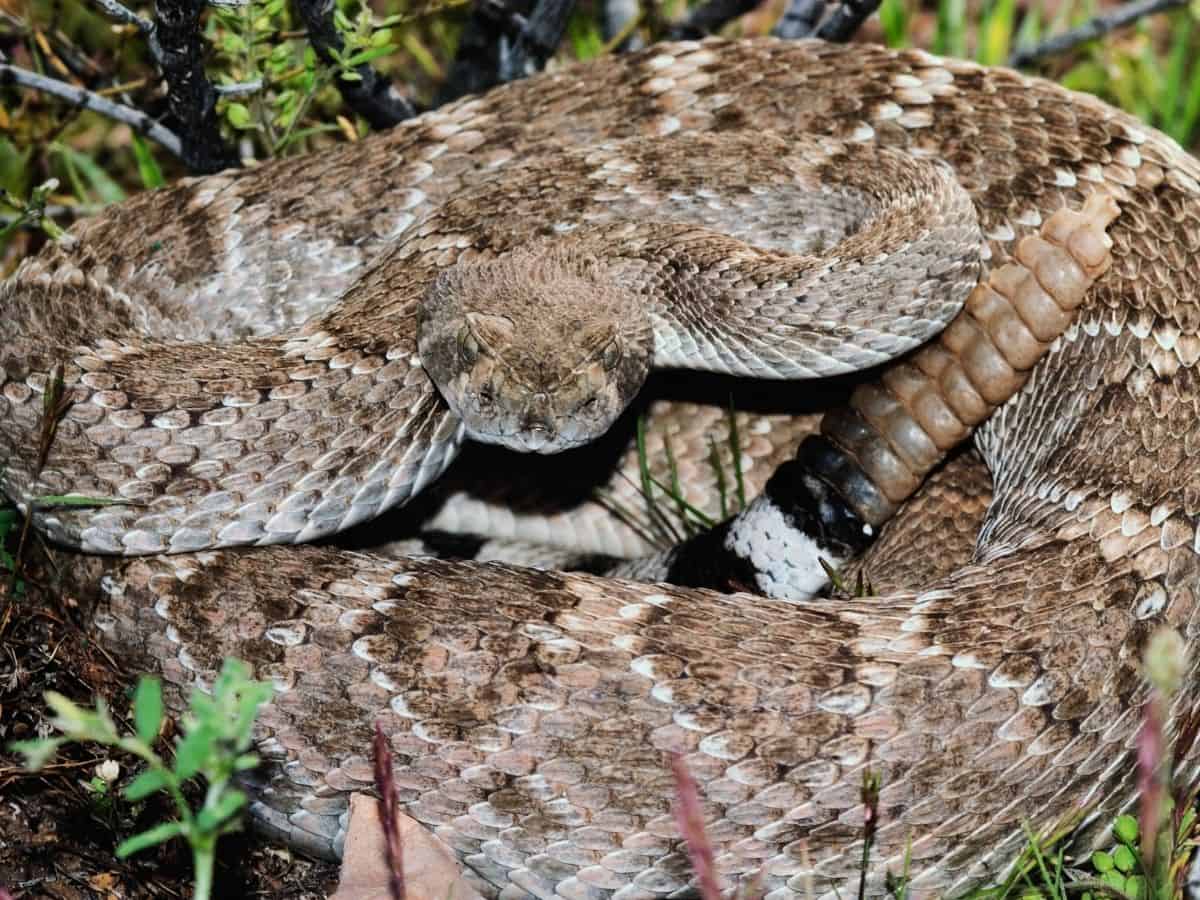
Mexico is home to various rattlesnake species — including the five listed below.
The western diamondback (seen in the image above) is widespread in northern and central Mexico, inhabiting deserts to rocky hillsides.
The eastern diamondback, the largest species, extends into northeastern Mexico, favoring dry forests and coastal areas.
The mojave rattlesnake, known for its potent venom, resides in Central Mexico’s deserts.
In the southeastern lowlands, the neotropical rattlesnake dominates dry forests and grasslands.
The smaller tiger rattlesnake is found in the northwestern rocky regions.
Each rattlesnake species plays a vital role in their ecosystems, helping control rodent populations and contributing to the balance of their respective environments.
🦌 29. Pronghorn
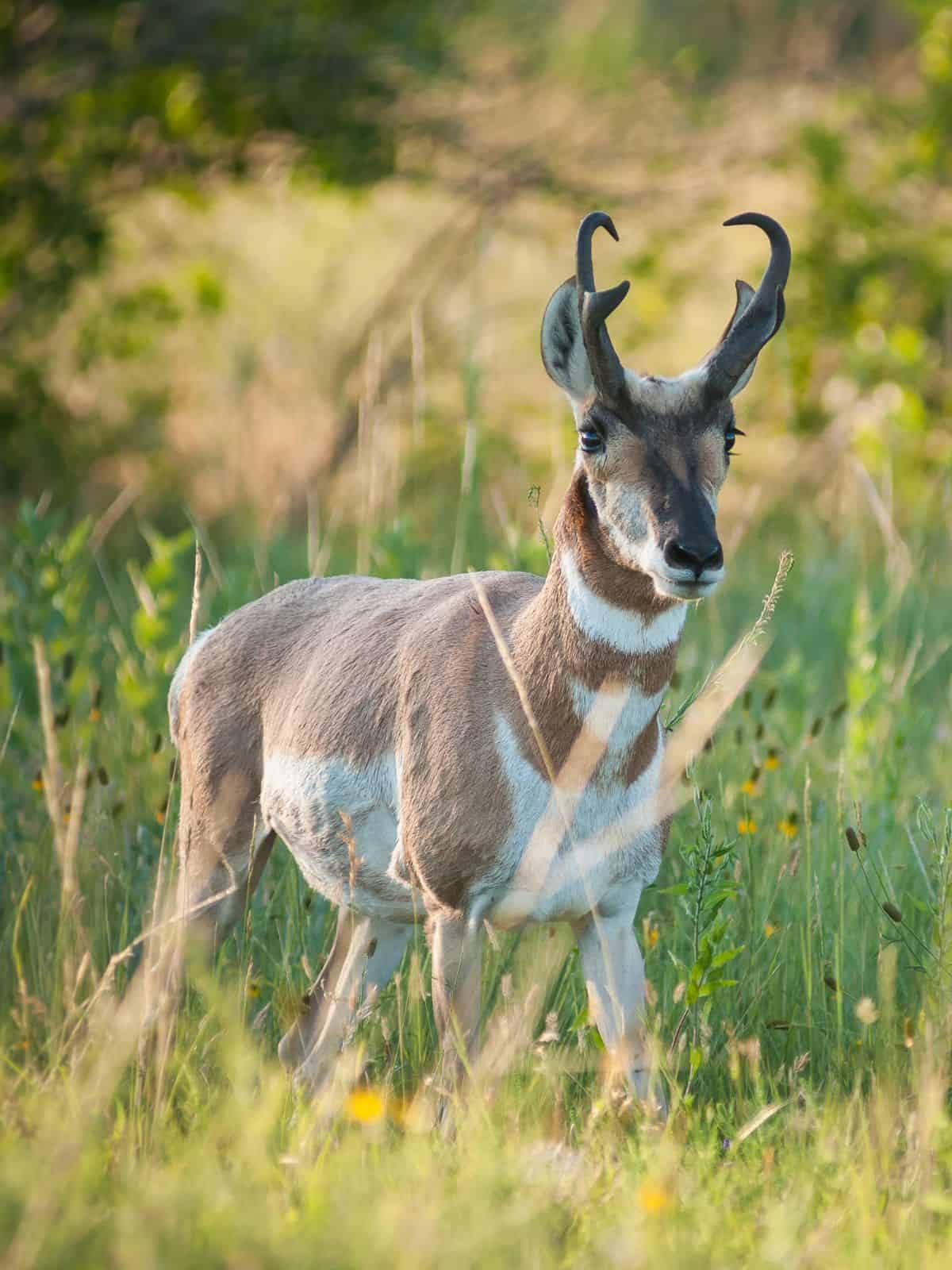
The pronghorn, although more commonly associated with the United States, also roams the northern desert regions of Mexico.
The second fastest land mammal in the world, pronghorns can reach speeds up to 60 miles per hour (96.5 km/h).
Pronghorns are not only remarkable for their speed, but also for their migration patterns.
They can comfortably cover long distances to find food and water in their arid habitats.
They have a deer-like body and weigh about 90 to 120 pounds (40-54 kg).
Pronghorns have unique hollow hair and a large windpipe, heart, and lungs, which support their fast-paced lifestyle.
🐻 30. East Mexican Black Bear

The Mexican black bear is a subspecies of the American black bear, primarily found in Mexico’s northern forests and mountains.
With a body similar to its northern relatives, it has a slightly smaller size, weighing up to 550 pounds (250 kg).
These wild animals in Mexico are adaptable, living in both desert areas and dense forests.
They can also be seen in Big Bend National Park, a U.S. national park in West Texas that borders Mexico.
East Mexican black bears are omnivores though they eat a diet primarily of plants and fruits. Occasionally, they may eat small animals.
🦎 31. Green Iguana
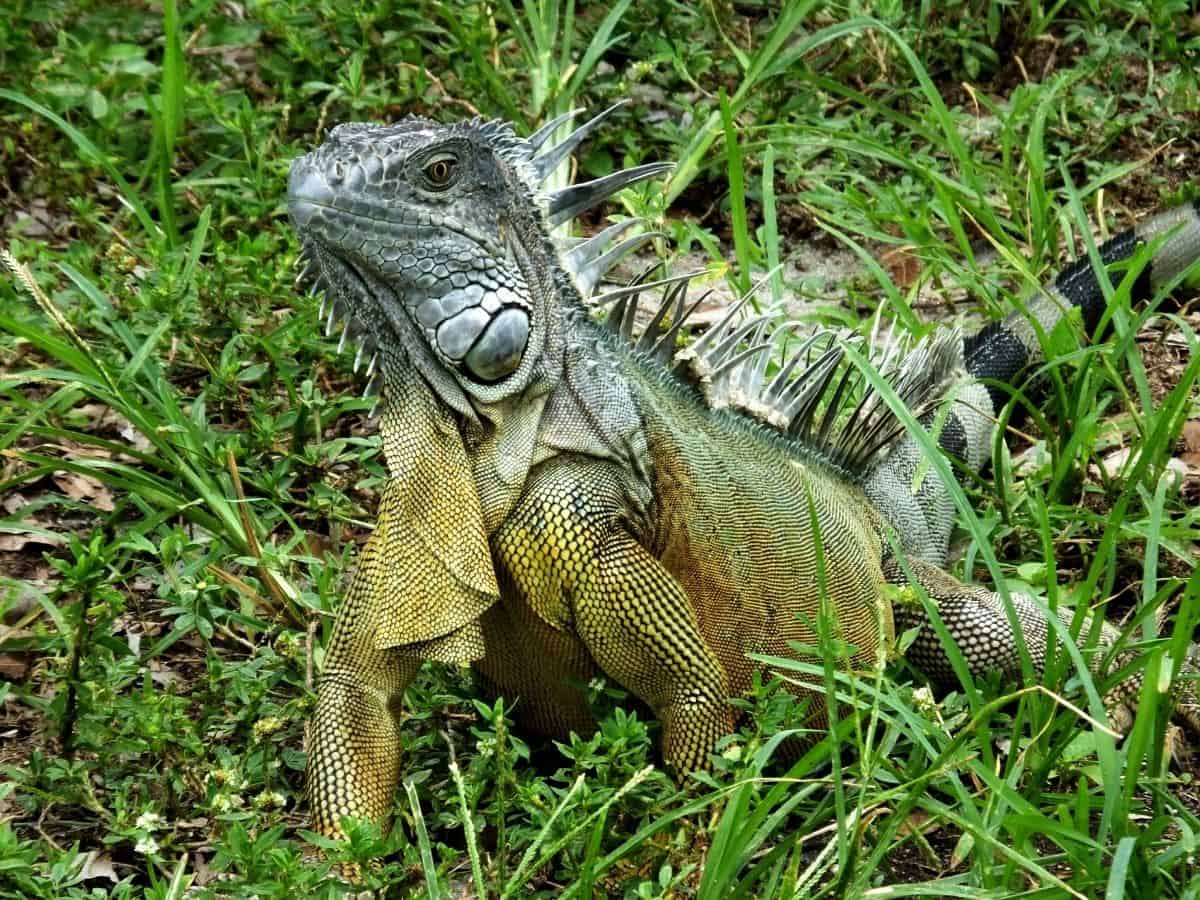
The green iguana is a striking lizard native to Mexico’s tropical and subtropical forests.
Green iguanas have a unique ability to communicate with each other through various body movements.
Recognizable by its vibrant green color, lengthy tail, and a row of spines along its back, it spends much of its time in trees.
Green iguanas are herbivores, feeding on leaves, flowers, and fruits. They are excellent climbers and swimmers.
🦦 32. Neotropical Otter

The neotropical otter, found in the rivers and streams of Mexico, is a skilled swimmer and diver, using its webbed feet to navigate the water.
This otter has a sleek body and can grow up to 2.5 feet long (0.75 m), excluding its tail, and feed primarily on fish, crustaceans, and small mammals.
Neotropical otters are solitary animals with a territory that can stretch several miles or kilometers of waterways.
🦭 33. Guadalupe Fur Seal
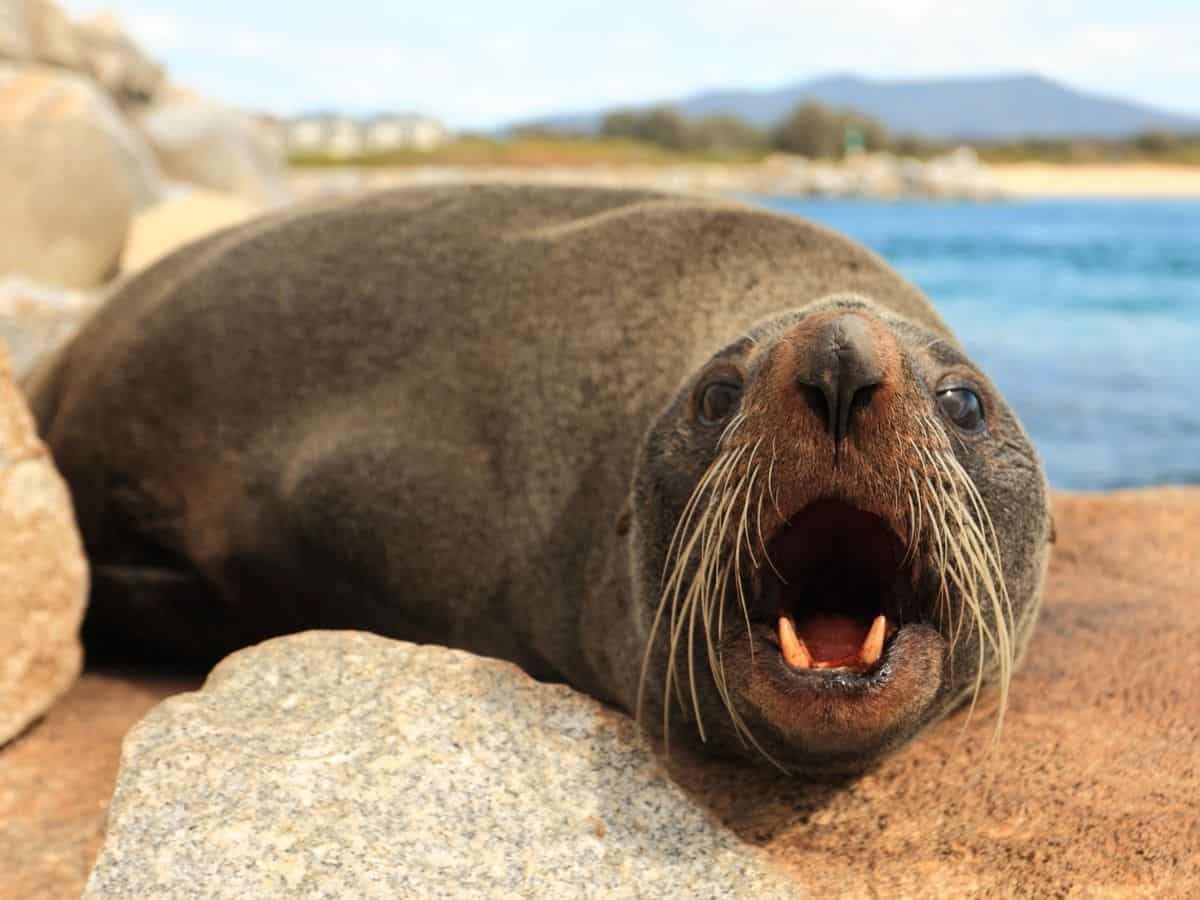
The Guadalupe fur seal primarily resides on Guadalupe Island, off Mexico’s Pacific coast.
Nearly extinct due to hunting in the 19th Century, they have made some recovery but are still listed as a threatened under the Endangered Species Act.
These native Mexican animals are known for their thick fur, which was highly sought after.
They feed on fish and squid 🦑 often diving deep into the ocean to hunt for their food, which is unique for seals.
They spend considerable time on land, particularly during the breeding season, showcasing their strong social structures and maternal care.
🐗 34. Baird’s Tapir

The Baird’s tapir is the largest land mammal in Central America, but can also be found in the tropical forests of southeastern Mexico.
This nocturnal herbivore has a distinctive prehensile snout that’s used to grab leaves and fruit.
Baird’s tapirs are crucial for seed dispersal in their habitats, but they face habitat destruction and poaching threats.
Their presence is a key indicator of the health of the ecosystem.
🦇 35. Mexican Pipistrelle

The Mexican pipistrelle (aka canyon bat or western pipistrelle) is a small bat species common throughout Mexico.
Known for its fast and agile flight, they feed on insects and play a vital role in controlling pest populations.
These bats prefer roosting in caves, under bridges, and in buildings in both urban and rural areas.
The Mexican pipistrelle’s adaptability to different environments makes it a widespread species throughout the country.
🐕 36. Mexican Prairie Dog

The adorable Mexican prairie dog is found in the northern Mexican grasslands.
Known for its complex social systems and extensive burrows, this rodent plays a key role in its ecosystem.
Mexican prairie dogs live in large underground burrow systems where they breed and raise their young.
Their burrowing activity helps improve soil fertility and provides homes for other species while maintaining the grasslands’ health.
🐿️ 37. Mexican Gray Squirrel
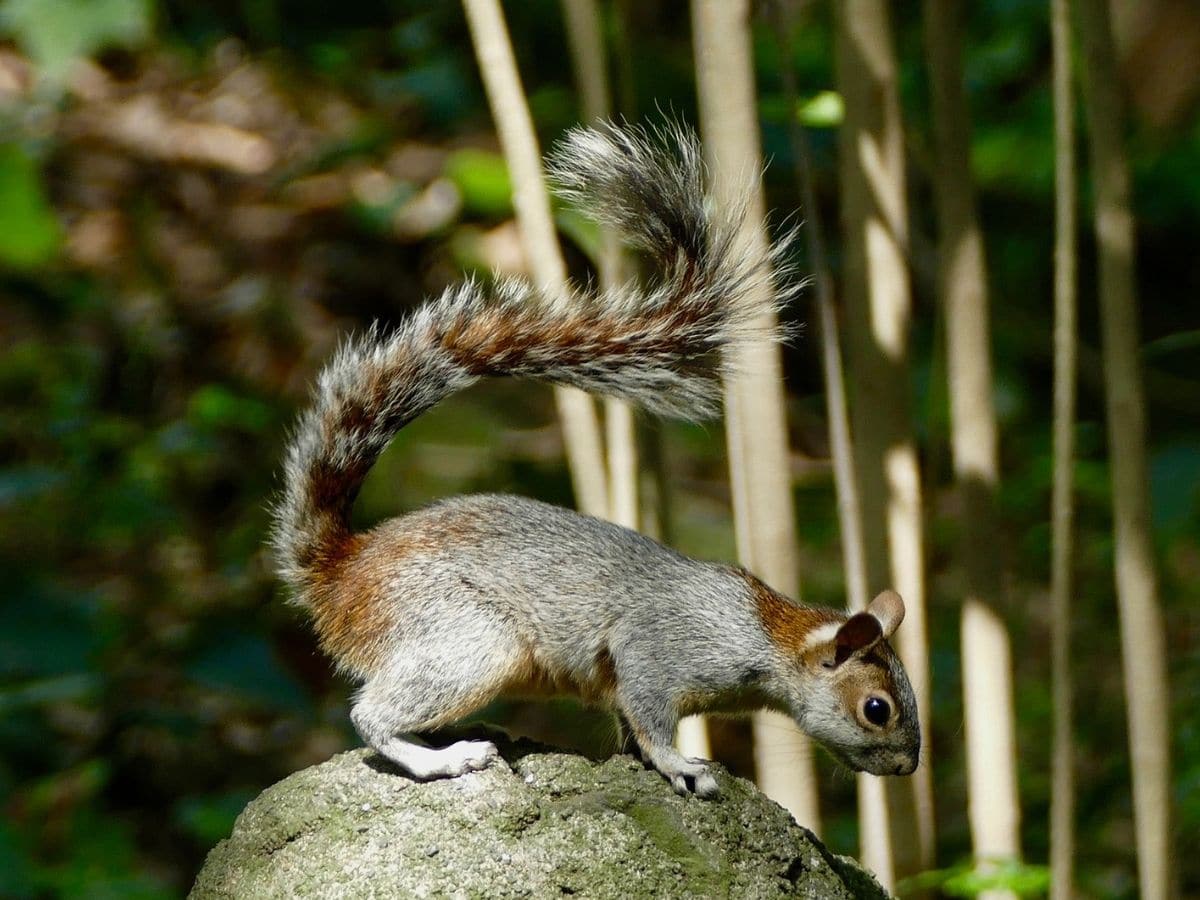
Mexican gray squirrels inhabit the forests of Eastern and Southern Mexico. Like their name says, they have a gray coat and a bushy tail.
Their diet consists of fruits, nuts, and seeds, aiding forest regeneration through seed dispersal.
This squirrel, noted for its calm demeanor, can be found in both wild and urban settings, contributing to the biodiversity of its environment.
🦉 38. Mexican Spotted Owl

Mexican spotted owls, found in the forests of Mexico and the Southwestern U.S., are characterized by dark brown feathers with white spots.
They prefer old-growth forests and canyonlands, where they nest in tree cavities or on cliff ledges.
The Mexican spotted owl holds a special place in traditional Mexican folklore and indigenous beliefs, though specific details can vary by region and community.
For some prehispanic groups and within some Mexican superstitions, owls are considered to be omens and bearers of messages.
They can be seen as harbingers of change or indicators of forthcoming events, both positive and negative (but often negative).
🐟 39. Tequila Splitfin Fish
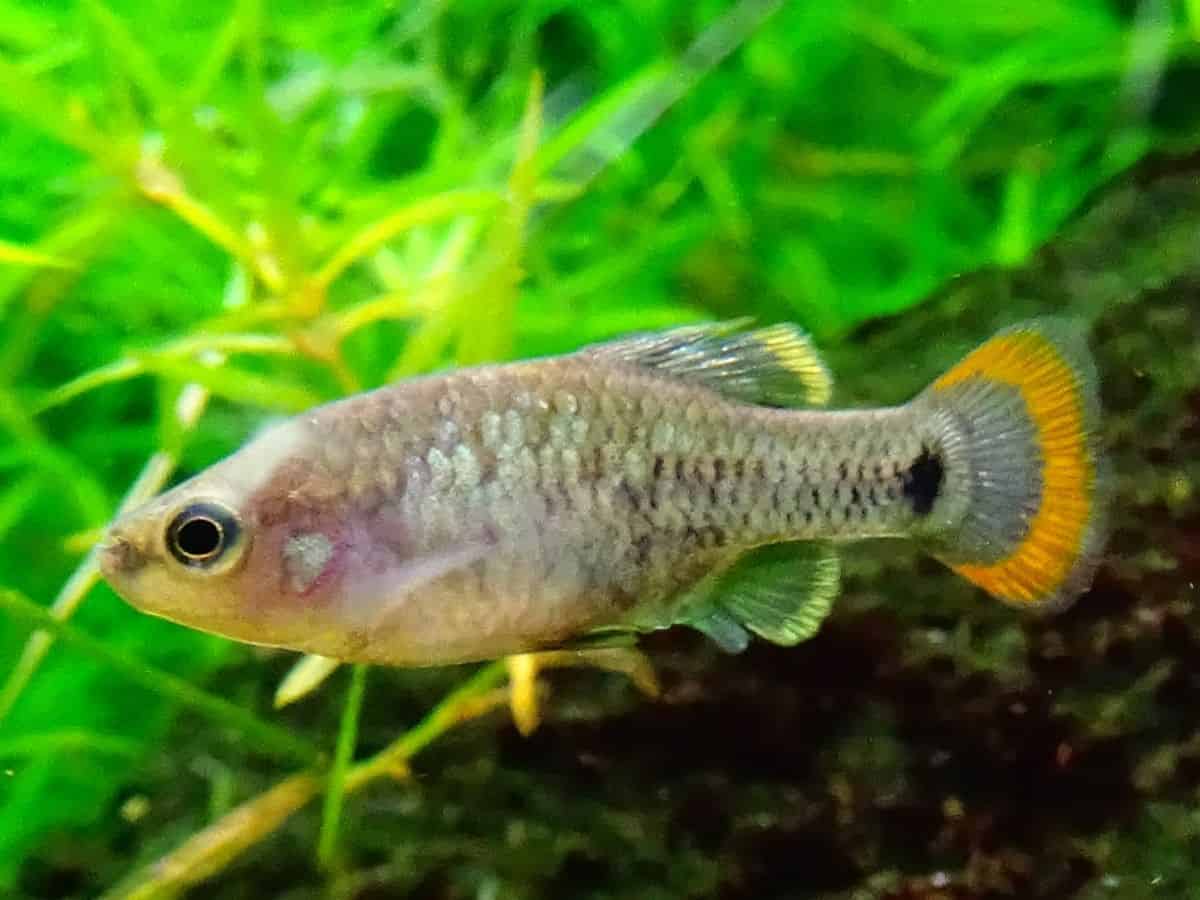
The tequila splitfin fish (aka tequila fish) is a small, colorful freshwater fish.
They’re native exclusively to the Teuchitlán River system in Jalisco state, which is not far from the pueblo magico (magic town) or Tequila, Mexico 🥃
This species is distinguished by its vibrant colors, with males displaying a striking combination of red, silver, and black during breeding seasons, making them highly sought after in the aquarium trade.
Their natural habitat consists of shallow, clear waters with abundant vegetation, providing both food and protection from predators.
Historically, the tequila splitfin fish has faced near-extinction due to a combination of factors.
These include habitat loss, water pollution from agricultural runoff, and the introduction of invasive species to their native waters.
The invasive species would compete for food, or directly prey on the splitfin.
🐈⬛ 40. Jaguarundi

The jaguarundi is a small wild cat native to parts of Mexico, Central America and South America.
Unlike the larger and more vibrantly colored cats of its region, the jaguarundi has a more uniform coat. It can be gray, black, brownish-gray, or reddish-brown.
It has a slender body, short legs, and an elongated tail, resembling more of an otter or weasel in shape than the typical big cats.
Jaguarundis are versatile, adapting to various habitats from arid shrublands to dense tropical rainforests, making it distinct among the wildlife of Mexico
These Mexico jungle animals are elusive and not often seen, contributing to their mysterious reputation among the animals native to Mexico.
🦜 41. Scarlet Macaw
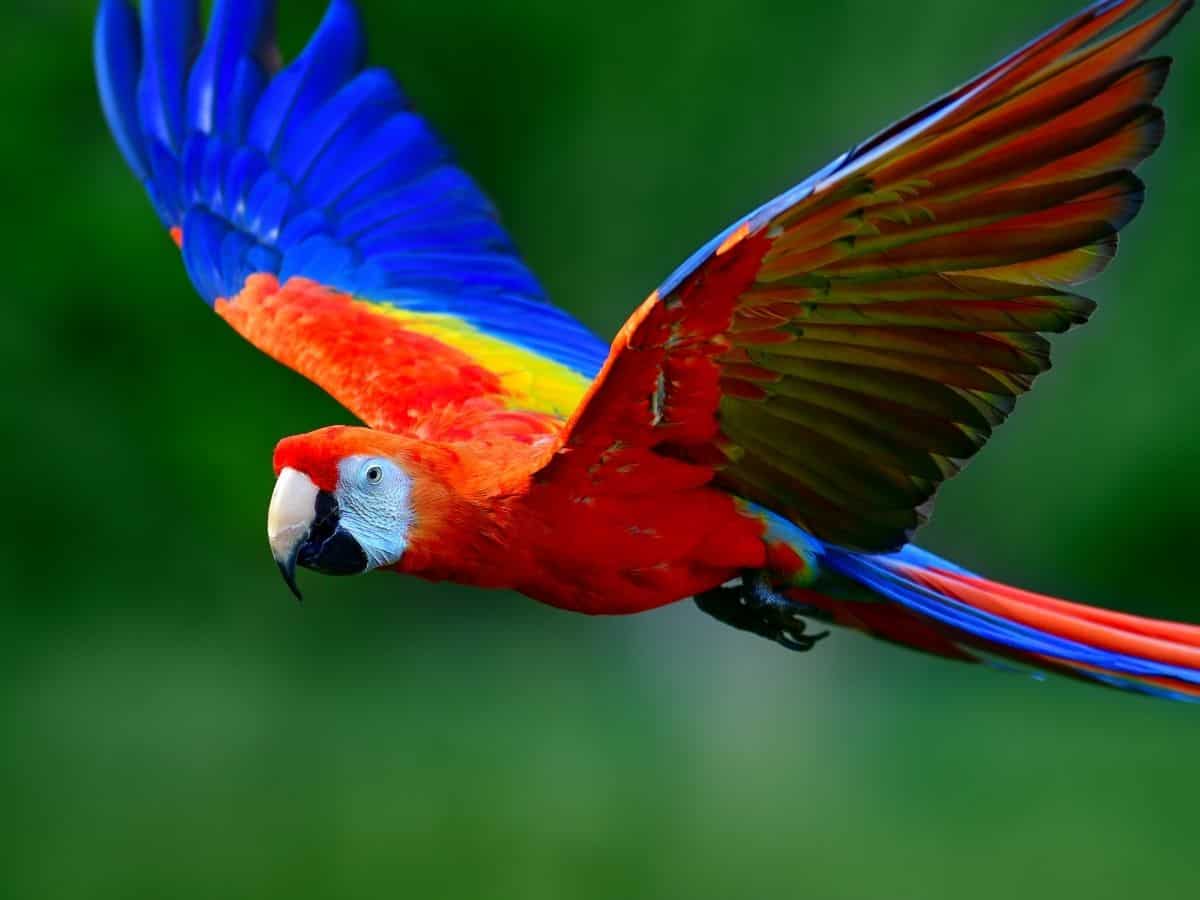
The scarlet macaw, with its vibrant red, yellow, and blue feathers, inhabits the tropical rainforests of southeastern Mexico.
Often seen in pairs or family groups, scarlet macaws (aka red parrots or red macaws) are large parrots known for their strong social bonds and intelligence.
They’re adept at using their powerful beaks, not only to feed but also to manipulate objects, which showcases their problem-solving abilities.
🐳 42. Whales

Whales off the coast of Mexico provide some of the world’s most spectacular wildlife viewing opportunities.
You can see them in many places throughout the country, including Puerto Vallarta, Puerto Escondido, Zihuatanejo, Huatulco, and more.
The Baja Mexico Peninsula, bordering the Pacific Ocean and Sea of Cortez, is particularly famous for Mexico whale watching.
You can see many species here, including orca whales, minke whales, fin whales, sperm whales, Bryde’s whales, and sei whales.
🐋 Humpback Whales in Mexico
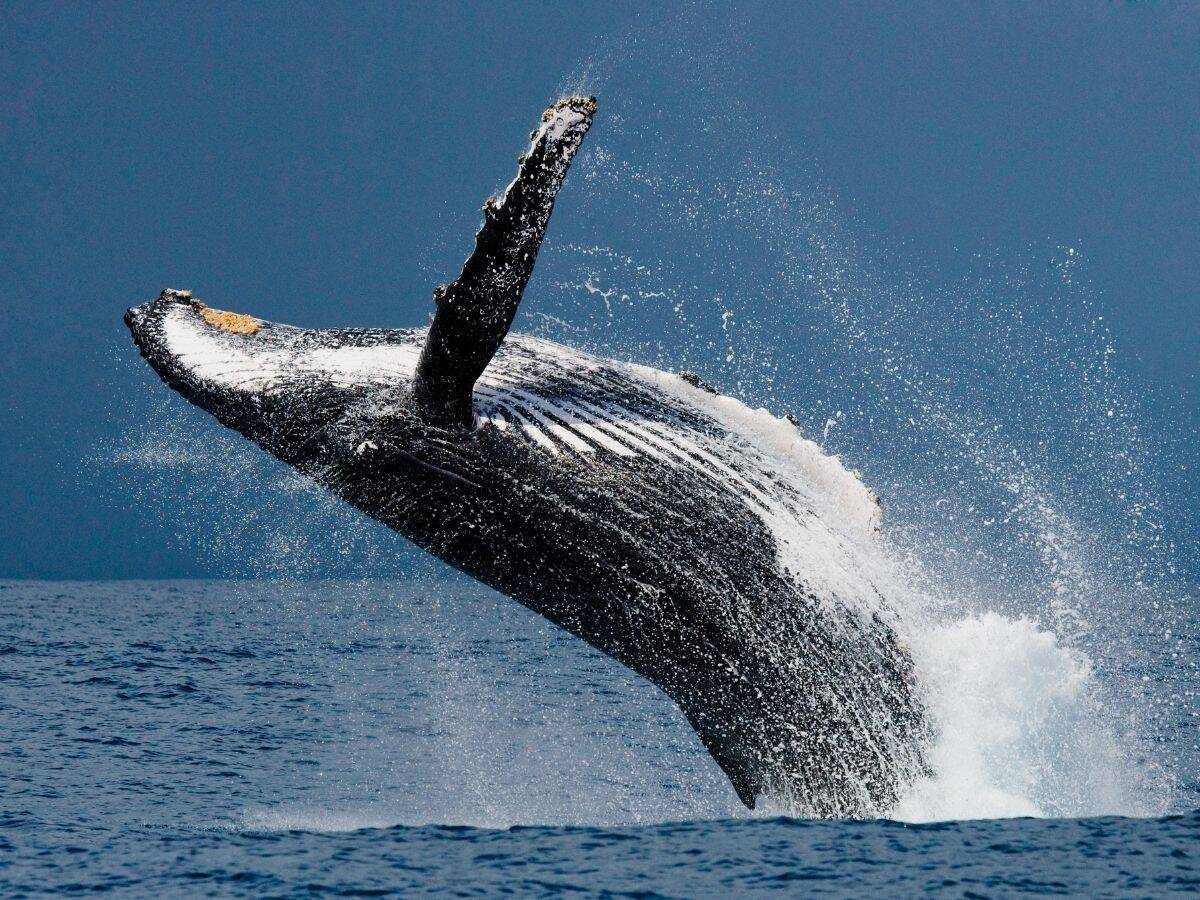
Humpback whales are common visitors to the Pacific Coast of Mexico during their migration from December through March.
The best place to see humpback whales in Mexico is off the coast of Cabo San Lucas and/or San Jose del Cabo (collectively known as Los Cabos).
🐳 Blue Whales in Mexico
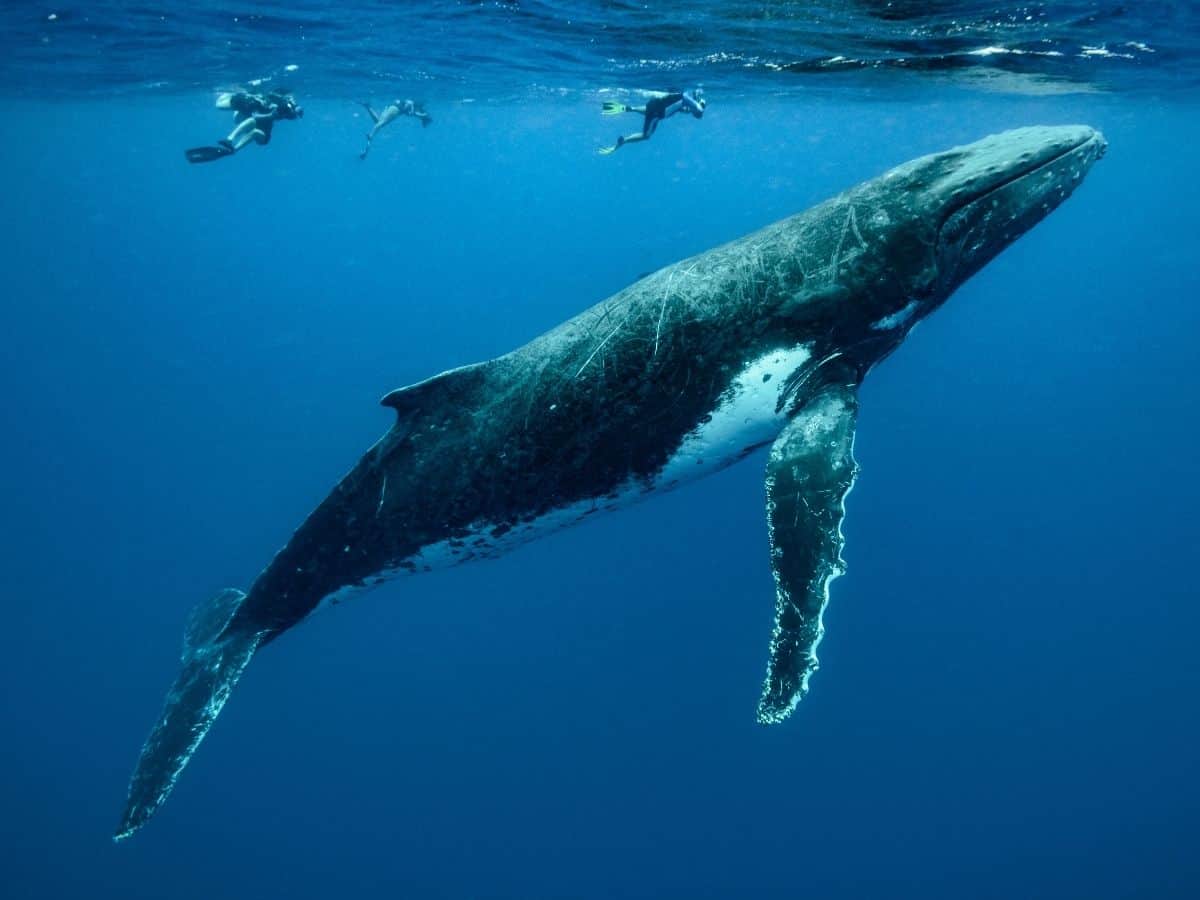
The largest animal on Earth, blue whales frequent the Sea of Cortez on Mexico’s West Coast from about January to March.
The best place to see blue whales in Mexico is off the coast of Loreto, which is an up-and-coming travel destination.
🐳 Grey Whales in Mexico
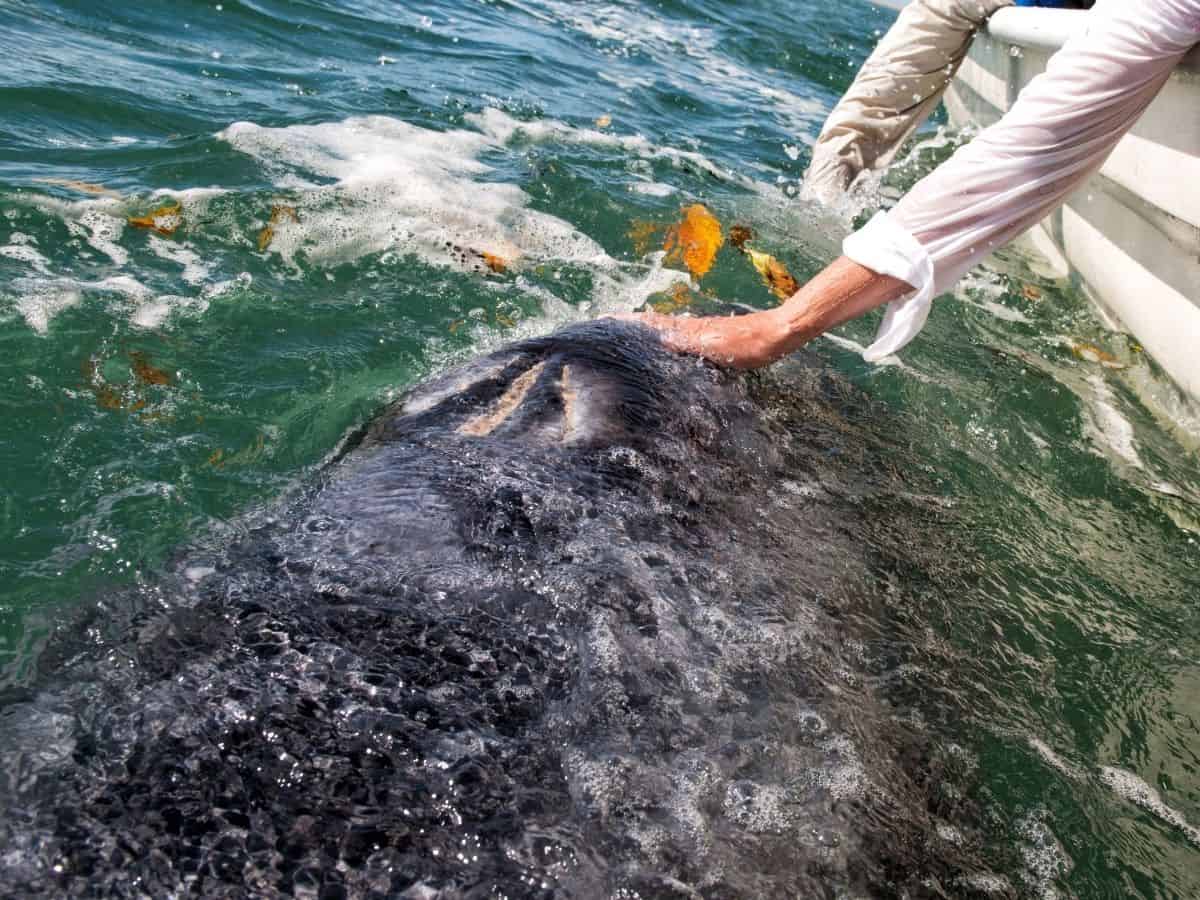
From December to April, gray whales migrate from their feeding grounds in the Arctic to the warm waters of Mexico’s Baja Peninsula.
They visit the same shallow lagoons each year to breed and give birth.
You can see gray whales in a few places along the coast, like Guerrero Negro, San Ignacio Lagoon and Magdalena Bay.
If you want to see (and pet!) the grey whales in Mexico, I recommend booking this 2 Day Whale Watching Experience in Magdalena Bay.
🐿️ 43. Southern Flying Squirrel

The southern flying squirrel is one of just three species of flying squirrel found in North America — and in case you weren’t sure, Mexico is a part of North America.
Native to the Nearctic Realm, they live in the Highlands of Mexico, Southeastern Canada, Eastern U.S., and Central America countries like Costa Rica and Honduras.
Though their name has the word “flying” in it, they can’t actually fly. However, they can glide through the air thanks to their patagium.
This is a furry membrane that extends all the way between their front legs and back legs, and acts as a parachute 🪂
Besides their characteristic patagium parachute that’s used to “fly,” they have large dark eyes and flattened tails.
In total, and including their tail, these agile critters average 8 to 10 inches in length (21-26 cm).
🦎 44. Gila Monster
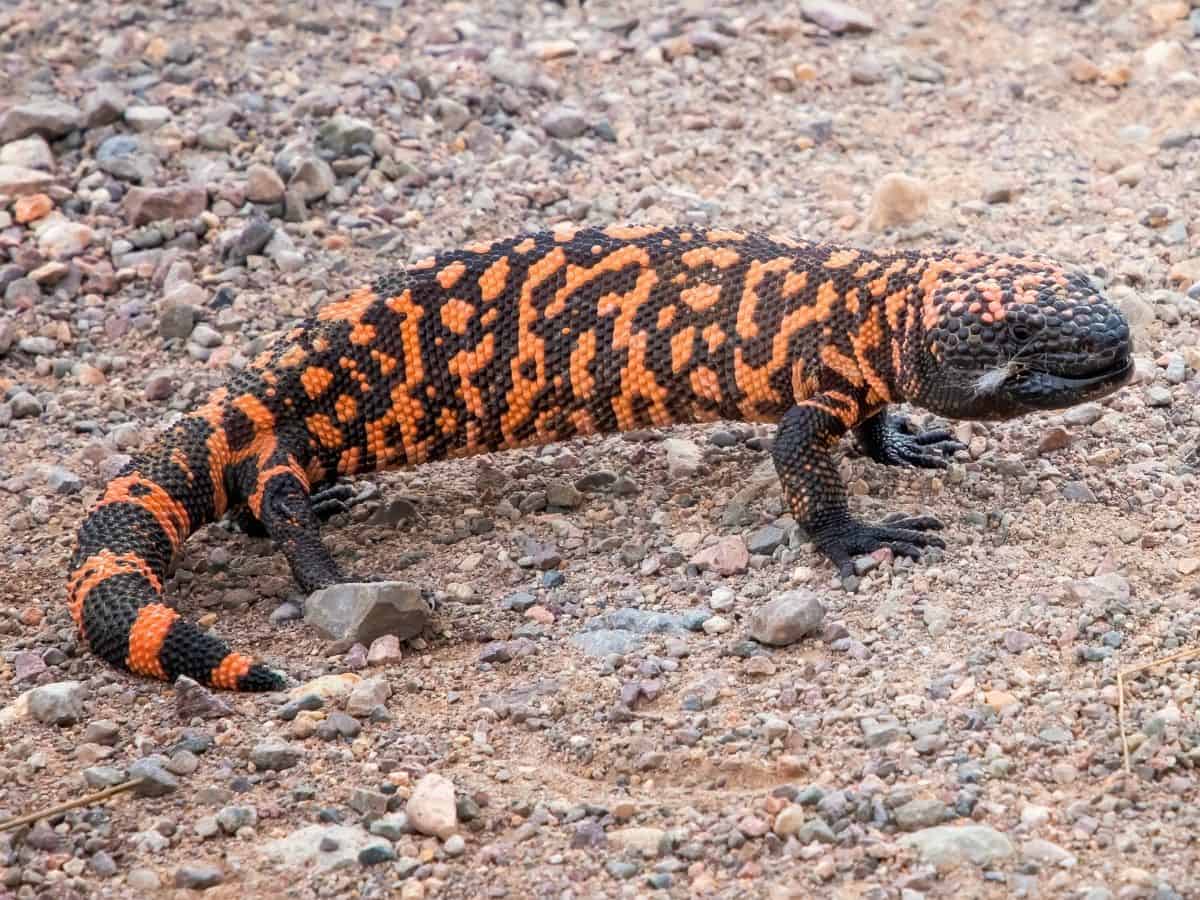
The famous Mexican gila monster (pronounced hee-la, not gee-la or gill-ah) is one of only two venomous lizards in the world.
They inhabit the deserts of northwestern Mexican, reaching lengths of 22 inches (56 cm) and weighing up to 5 pounds (2.3 kg).
Their distinctive black and orange or pink beaded patterns warn potential predators to not mess with them.
The gila monster’s poisonous venom contains compounds now used in diabetes medication, showcasing wildlife’s medical importance.
The good news is that they’re generally slow-moving and docile, and only bite when threatened.
Gila monster’s spend up to 95% of time underground, emerging mostly during the desert’s cool periods.
🦝 45. Cacomistle

Cacomistles (also spelled cacomiztles or cacomixtles) are adorable nocturnal creatures that look like a long-tailed cousin of the raccoon with their huge dark eyes.
Also called ringtail cats — even though they’re not cats at all 🤷♀️ — cacomistle have spectacular bushy tails with black and white rings.
Their tails are actually longer than their bodies, measuring up to 17 inches (43 cm), while the bodies are only about 12 to 17 inches (30-43 cm).
Cacomistles are incredible climbers that can rotate their hind feet 180°, letting them scurry down trees headfirst like squirrels.
They’re super agile and can squeeze through tiny spaces thanks to flexible spines and semi-retractable claws.
Found in rocky areas, forests, and even abandoned buildings throughout Mexico, they’re surprisingly adaptable creatures.
Old West miners kept them as pets because they hunted rats and mice in mining camps; their huge eyes helping them see perfectly in the dark to hunt at night.
Incredibly shy and totally nocturnal, most people will (sadly) never see a cacomistle in the wild.
Our Final Thoughts on Animals in Mexico You Can See in This Biodiverse Country

Mexico’s geographic position in the middle of North and South America creates absolutely mind-blowing biodiversity found nowhere else on our planet.
From desperately endangered vaquitas to thriving monarch butterfly migrations, Mexican fauna faces both heartbreaking challenges and inspiring conservation victories.
The animals in Mexico prove that megadiverse countries carry enormous responsibility for protecting global wildlife heritage, and Mexico is stepping up with dedicated conservation programs, protected areas, and community involvement.
Whether you’re planning wildlife tours in Mexico, hoping to swim with whale sharks, or just curious about Mexican biodiversity, this country offers some of the world’s most incredible animal encounters.
Remember that responsible wildlife tourism supports conservation efforts and local communities while giving you unforgettable experiences with these amazing creatures.