🦬 9 Dangerous Animals in Yellowstone National Park You Need to Know About
Many visitors arrive to Yellowstone nervous about seeing a grizzly bear. Yet the animal that has injured more people here than any other is the American bison.
That’s the catch with Yellowstone’s dangerous animals; the bison, elk, and bears that people pull over to photograph are the same ones that can hurt you.
Bear attacks, however, are rare. A 2025 study of 45 years of park data found grizzlies injure about 1 person per 3.6 million visits.
(Truthfully, the park’s biggest hazard isn’t an animal at all. Traffic accidents cause the most injuries and deaths.)
However, on the animal front, bison lead this list of the most dangerous animals in Yellowstone National Park, so let’s start with them.
1. American Bison

Forget bears; the animal most likely to hurt you in Yellowstone is the bison 🦬 According to the National Park Service, bison have injured more people in Yellowstone than any other animal.
They look slow and calm, but bulls can weigh up to 2,000 pounds (900 kg).
Bison can run as fast as 35 mph (56 km/h), which is about three times faster than you.
This popular U.S. national park had nearly 5,300 bison in 2025, and you’ll see them year-round in Hayden and Lamar valleys.
They also wander through campgrounds, along roads, and around the geyser basins near Old Faithful.
The park reported one bison injury in 2023, two in 2024, and two in 2025. In both 2025 incidents, the visitors had gotten too close to the bison.
2026 Bison Attacks in Yellowstone National Park
In June 2026, a bison injured a 12-year-old near Mud Volcano, just north of Fishing Bridge.
Shortly after, in July 2026, a bull bison charged and tossed 65-year-old Carl Isom-McDaniel 8 feet (2.4 m) into the air at Yellowstone.
It was caught on video.
If you see a bison in the park, watch the tail.
A loose, swaying tail usually means a relaxed bison, but a tail standing straight up can mean it’s about to charge.
They are also more aggressive during the bison rut (annual mating season), from late July through August.
Your best bet is to follow park rules: stay at least 25 yards (23 m) away from bison, and run if one charges.
2. Grizzly Bear

All of Yellowstone is grizzly and black bear country 🐻 and about 150 to 200 grizzlies have home ranges partly or fully inside the park.
The Greater Yellowstone area has an estimated 1,030 grizzlies, with males weighing 200 to 700 pounds (91 to 318 kg).
You’re most likely to spot them at dawn and dusk in Hayden and Lamar valleys, on Mount Washburn, and between Fishing Bridge and the East Entrance.
Attacks are rare; a 2025 study of 45 years of park data found grizzlies injure about 1 person per 3.6 million visits.
However, the risk climbs fast once you head into the backcountry.
In September 2025, a grizzly likely injured a man hiking alone on the Turbid Lake Trail in Pelican Valley.
In May 2026, two hikers were seriously injured by a bear near the Mystic Falls trail, close to Old Faithful.
Group size matters. Since 1970, 91% of people injured by bears in Yellowstone were hiking alone or with just one partner.
Here’s how the park says to stay safe in bear country:
- Hike in groups of three or more people.
- Make noise as you hike.
- Stay on maintained trails, since people are more likely to be attacked off-trail.
- Avoid hiking at dawn, at dusk, or at night.
- Never run from a bear. Bears can run up to 40 feet (12 m) per second.
- Stay at least 100 yards (91 m) away from any bear.
- Carry bear spray in a quick-draw holster, not inside your pack.
Start spraying when a charging bear is 30 to 60 feet (9 to 18 m) away, aiming slightly down so the bear runs into the cloud.
Bear spray can’t go on airplanes, so plan to buy or rent it once you arrive.
Don’t leave it in a hot car, either. The park warns that bear spray can explode at 120°F (49°C).
If a grizzly attacks, keep your pack on and play dead by lying flat on your stomach with your hands clasped behind your neck.
If it doesn’t stop, switch to fighting back as hard as you can.
3. Black Bear
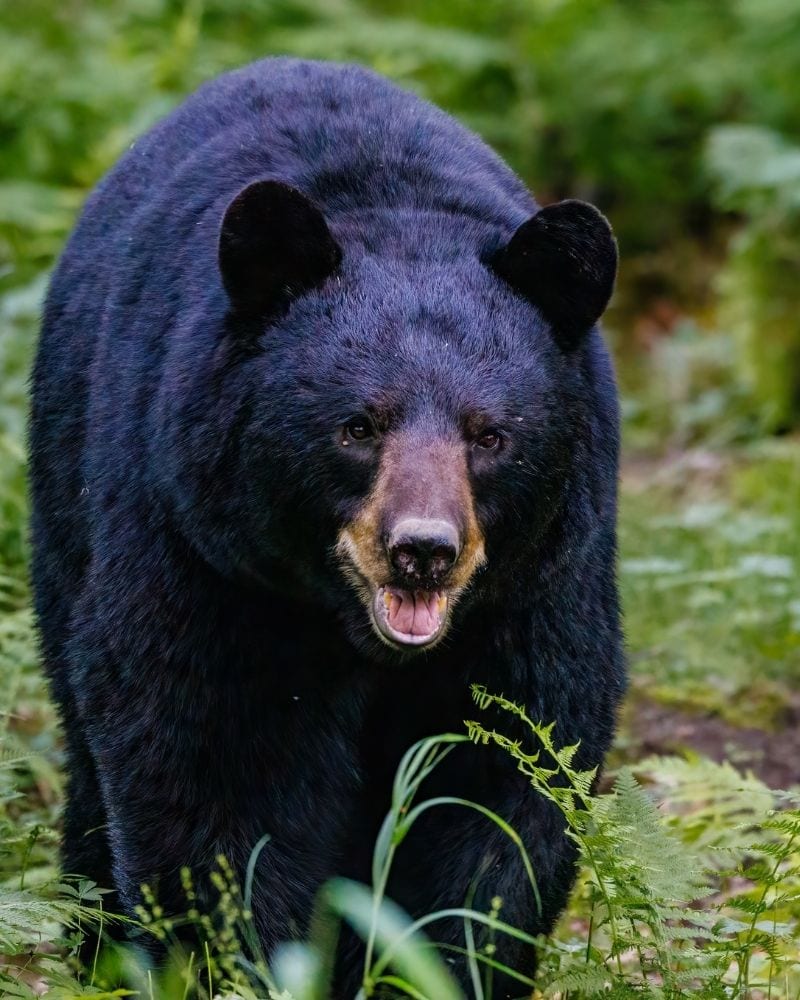
Don’t let the name fool you; only about half of Yellowstone’s black bears are black, and the rest are brown, blond, or cinnamon-colored.
It makes color useless for telling black bears from grizzlies. Instead, look for the grizzly’s large shoulder hump and dish-shaped face.
Black bears don’t have the hump. They’re also smaller, with males weighing 210 to 315 pounds (95 to 143 kg).
Common only in the Tower and Mammoth areas and the Bechler region, black bears cause about 1 injury per 23.2 million visits — far fewer than grizzlies.
To lower your chances of attack, never leave snacks, coolers, or trash unattended, never feed a bear, obey the 100-yard (91 m) rule, and use bear spray.
If a black bear attacks, do NOT play dead. Get to a car or building if you can.
If you can’t, fight back and aim your blows at its face and muzzle.
4. Elk
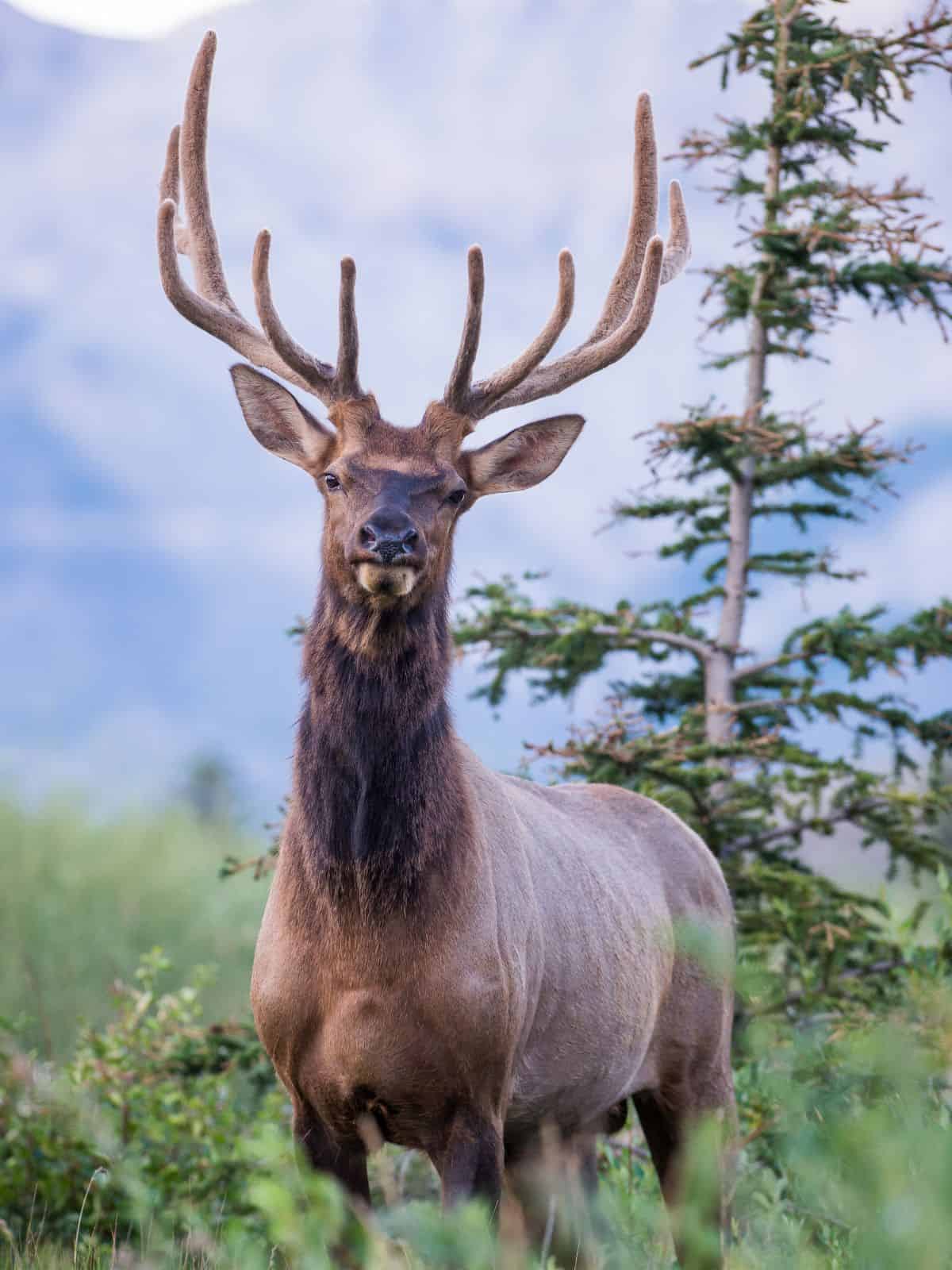
Elk are the most abundant large mammal in Yellowstone, with 10,000 to 20,000 in the park in summer.
They’re so used to people that it’s easy to forget they’re wild. They’re also massive, with bulls weighing about 700 pounds (318 kg) and carrying huge antlers.
From September to mid-October, the elk rut (mating season) turns them aggressive and unpredictable.
That’s when you’ll see and hear bulls bugling on the northern range, including Mammoth Hot Springs. A bugling bull is one of the classic sounds of fall here.
Spring brings a different danger as cow elk are especially protective of their calves from May to early July, and they’ll charge people who wander too close.
Stay at least 25 yards (23 m) from elk. If one charges, get behind a car or a sturdy barrier, or run away.
5. Moose

The Yellowstone moose population is sparse, with fewer than 200 moose living in the park.
Seeing one is very rare, but you can look for them in willow flats, marshy meadows, and lakeshores.
You’re most likely to see them in the southwestern corner of the park and along Soda Butte Creek and the Lewis River.
Moose are also enormous.
As someone who has seen a moose in the wild, they’re even more enormous than you’re imagining them to be.
Adults stand 5.5 to 7.5 feet (1.7 to 2.3 m) at the shoulder. Bulls weigh close to 1,000 pounds (454 kg).
The park says moose, especially cows with calves, are unpredictable and have chased people.
Stay at least 25 yards (23 m) away, and back off if a moose moves toward you.
6. Gray Wolves

Though a rare sighting, spotting a wolf is the highlight of many Yellowstone National Park trips.
The park had 84 wolves at the end of 2025, living in seven packs and one new group.
Encounters gone wrong are rare. Very few documented confrontations between wolves and people have happened in Yellowstone.
Some wolves, though, are getting too comfortable around people. Biologists recorded several cases of habituated behavior in two packs in 2025.
Park staff use aversive conditioning to teach these wolves to avoid people and cars, so never feed or approach one.
Stay at least 100 yards (91 m) away from wolves. If one comes close, stand your ground and don’t run.
7. Mountain Lions (Cougars)

Cougars live throughout Yellowstone in summer, but few people ever see one. The northern range is their prime habitat, and they follow their prey to lower elevations in winter.
Like wolves, they rarely cause problems for people here. The park says very few documented confrontations between cougars and humans have happened in Yellowstone.
Still, the park advises staying at least 100 yards (91 m) away and keeping small children close.
If you meet a cougar, don’t run or crouch down. Make noise, hold eye contact, show your teeth, and act big and assertive.
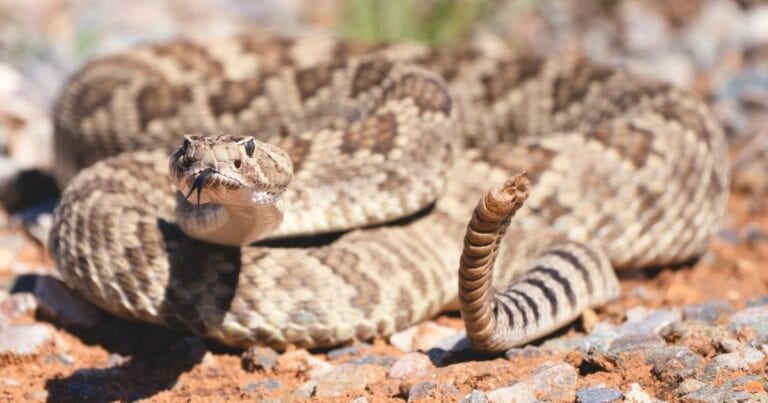
8. Prairie Rattlesnake

The park has only six confirmed reptile species, and as prairie rattlesnakes are the only dangerously venomous snakes in Yellowstone, they’re the one to watch for.
They’re most often seen in the lower Yellowstone River areas (Reese Creek, Stephens Creek, Rattlesnake Butte), as these spots are drier and warmer than the rest of the park.
They (and pretty much any snake) want nothing to do with you, so stick to trails and don’t step or reach anywhere you can’t see into, and you should be fine.
If you do hear a rattle, stop immediately in your tracks. Find the snake with your eyes before you move, then back off slowly.
Bites are rare, but a rattlesnake bite is a medical emergency.
If bitten, call 911 and hold the bitten limb still, no higher than your heart.
Don’t reach for a tourniquet or ice, and don’t cut the bite or try to suck the venom out.
9. Ticks
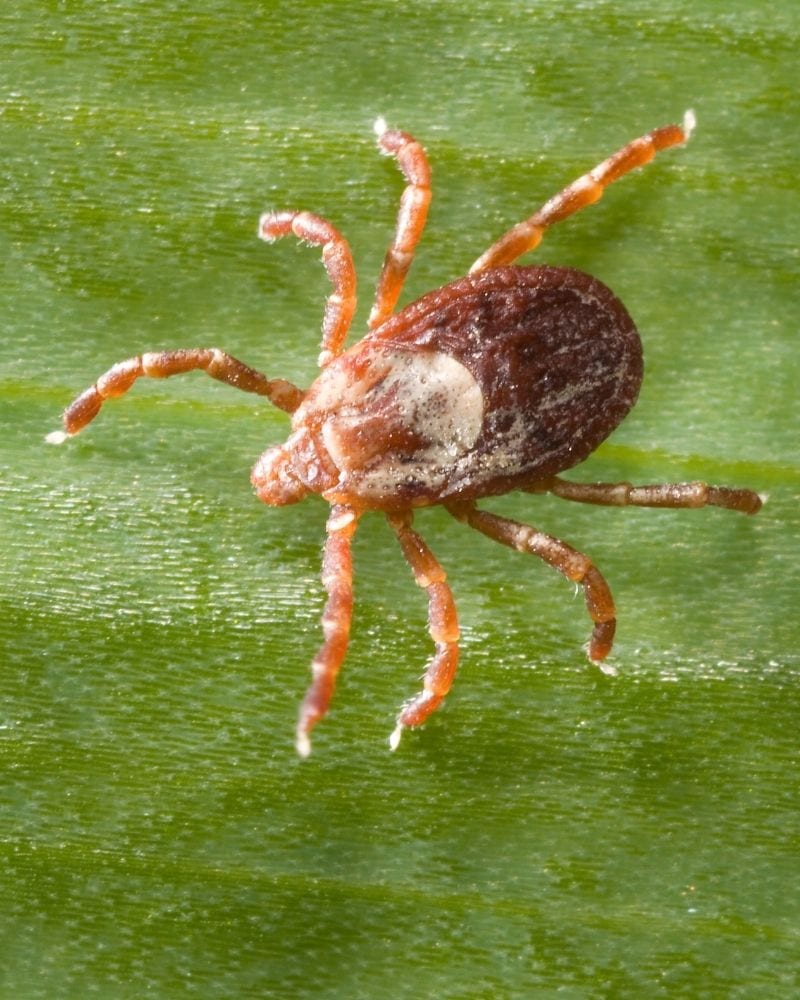
The smallest dangerous animal in Yellowstone is one you probably won’t notice until it’s attached to you.
The most common tick species found in Yellowstone National Park is the Rocky Mountain wood tick (seen above), though American dog ticks are also present.
Ticks are most common from mid-March to mid-July, and most prevalent in grassy, brushy, low-elevation areas of 4,000 and 6,500 feet (1,219 and 1,981 m).
Ticks can carry diseases, including Lyme disease, so it’s worth a few minutes of prevention. Here are some tips to keep ticks away.
- Use repellent on your shoes, socks, cuffs, and pant legs.
- Tuck your pant legs into your socks and your shirt into your pants.
- Check your clothes and your body often, especially after hiking through tall grass.
If you find a tick, pull it straight out with fine-tipped tweezers, then wash the area.
See a doctor if you develop a rash, fever, or flu-like symptoms in the weeks after your trip.
Dangerous Animals in Yellowstone FAQ
What is the most dangerous animal in Yellowstone?
The bison, by far.
Bison have injured more people in Yellowstone than any other animal, including grizzly bears, black bears, moose, mountain lion, and elk.
While grizzly bears are more dangerous than bison in a single encounter, bison attack far more people than grizzlies.
What actually injures the most people in Yellowstone?
Not animals. The park says traffic accidents are the most common cause of injury and death in Yellowstone.
Thermal features are also deadly.
More than 20 people have died from burns after entering or falling into hot springs, so always stay on boardwalks.
How close can you get to animals in Yellowstone?
Not very.
Stay at least 100 yards (91 m) from bears, wolves, and cougars, and at least 25 yards (23 m) from all other animals, including bison, elk, and moose.
If an animal walks toward you, it’s your job to move away and keep that distance — not theirs.
Are there grizzly bears in Yellowstone?
Yes. About 150 to 200 grizzlies live partly or fully in the park, and black bears live there too.
Do you need bear spray in Yellowstone?
Yes, if you’re hiking. The park recommends carrying bear spray and knowing how to use it.
It’s useful even on short day hikes, since bears live throughout the park.
Are there venomous snakes in Yellowstone?
Yes, but only one.
The prairie rattlesnake is the only dangerously venomous snake in the park, and it sticks to the lower, warmer areas along the Yellowstone River.
Are there mosquitoes in Yellowstone?
Yes.
Mosquitoes can be widespread around lakes and streams in June and July, and they usually die down by mid-to-late August.
Repellent, long sleeves, and long pants are your best defense.
Is it safe to hike alone in Yellowstone?
It’s not recommended.
Most people injured by bears in Yellowstone were hiking alone or with just one partner, so the park recommends groups of three or more.