🐻 7 Dangerous Animals in the Great Smoky Mountains to Watch Out For
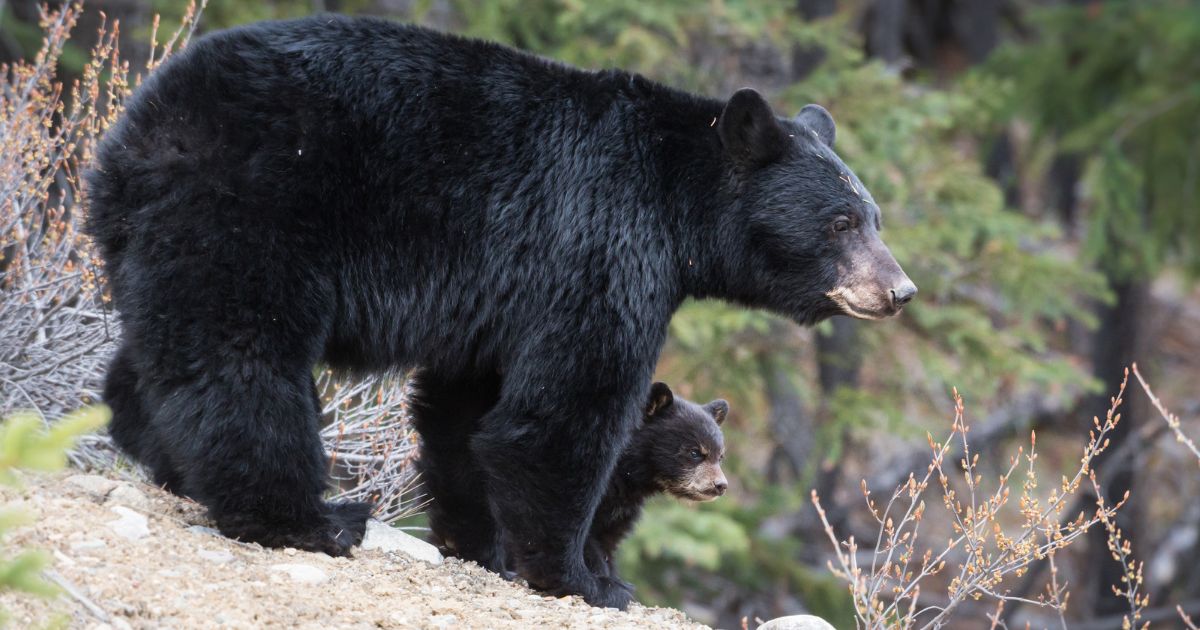
You’re creeping through Cades Cove when the car ahead stops for a black bear walking along the edge of the road.
The urge to get out for a closer photo is strong, but it’s moments like these when the dangerous animals in the Great Smoky Mountains can cause trouble.
The bears and elk people come to see are also the animals that pose a threat by just, well, being wild animals.
There are also smaller critters like venomous snakes, ground-nesting yellowjackets, and ticks to consider.
Black bears come first, as roughly 1,900 live in the park, getting within 50 yards (46 m) of one is illegal, and their attacks can be deadly.
1. Black Bear

The black bear is the symbol of the Smokies, and it’s the animal you most need to respect 🐻
Biologists estimate that roughly 1,900 black bears live in the park.
That works out to about two bears per square mile (about 0.8 per km²), so you can run into one almost anywhere.
Adult males average about 250 pounds (113 kg) in summer, while females are usually just over 100 pounds (45 kg).
Both can nearly double their weight by fall, and bears can run up to 30 mph (48 km/h).
Bear activity is especially high from May through August. Conflicts peak in late May and June, when natural foods like berries aren’t available yet.
Bear attacks in the Smokies are extremely rare, but they do happen.
In September 2020, backpackers found the remains of Patrick Madura at Campsite 82 in the Hazel Creek area, with a bear scavenging nearby.
The medical examiner found he likely died from trauma caused by a bear, making it only the second bear-related fatality in the park’s history.
In June 2022, a bear entered a tent at Elkmont Campground and scratched a 3-year-old girl and her mother.
The 350-pound (159 kg) bear had likely been getting regular access to human food.
In April 2026, rangers closed the Ramsey Cascades Trail after a bear took two backpacks and briefly chased a group.
In the same release, the park reported that a bear bit a visitor who had entered a closed area near Abrams Falls Trail.
The park also warns that bears have shown predatory behavior, such as stalking, especially toward solo hikers.
Here are seven tips on how to stay safe in bear country.
- Stay at least 50 yards (46 m) away from bears. Getting closer is illegal and can lead to fines and arrest.
- Never feed a bear. Feeding wildlife can bring fines of up to $5,000 and up to six months in jail.
- Lock your food, trash, and scented items in a hard-sided vehicle, and lock the doors, since bears can open car doors.
- In the backcountry, hang everything on the food storage cables at your campsite, and never keep food in your tent.
- Use bear-proof trash cans, and never burn trash or cook food in fire rings.
- Hike in groups, and consider carrying bear spray.
- If you see a bear near the road, stay in your car and only park in designated pull-offs.
If a bear changes its behavior because of you, you’re too close. Back away slowly while facing it, and never run because it will chase you.
If it keeps following you, stand your ground, shout, and act aggressively. Only use bear spray if necessary and the bear is within 20 yards (18 m).
If a black bear attacks, don’t play dead. Fight back with everything you have, using any object you can find.
2. Elk
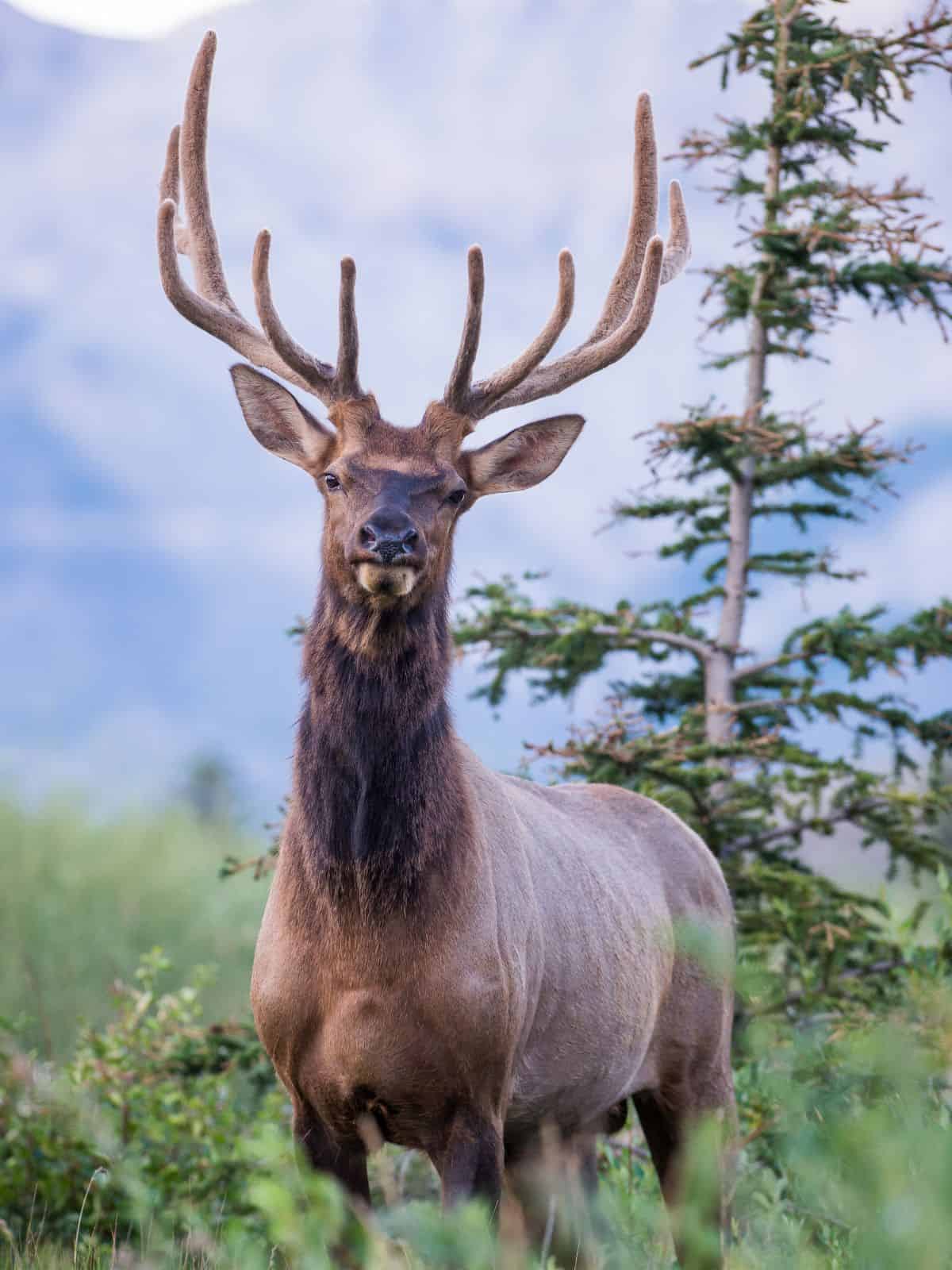
Elk vanished from North Carolina by the late 1700s but the park brought them back in 2001, releasing 25 elk into Cataloochee Valley.
Today, about 270 elk live in western North Carolina, and roughly 150 spend at least part of the year inside the park.
Elk are big, with bulls weighing up to 1,000 pounds (454 kg), and cows up to 600 pounds (272 kg).
Adults stand 4.5 to 5 feet (1.4 to 1.5 m) at the shoulder.
You’ll find them on the North Carolina side of the park, especially in Cataloochee, Balsam Mountain, and Oconaluftee. The best times to see them are early morning and late evening.
The elk rut (mating season) runs from early September to late October when bulls bugle (howl), gather harems of up to 20 cows, and get more aggressive.
The fields around Oconaluftee and Cataloochee close to all visitors during the rut, so watch from your car.
In late September 2026, a social media video showed a man getting within 25 yards of a bull elk, prompting a safety warning from the park.
Spring brings a different danger. Most cows give birth by early June, and cows with calves will defend their young.
Never touch or move an elk calf, even if it looks abandoned. Its mother is usually close by.
Stay at least 25 yards (23 m) away from elk. If an elk stops feeding or changes direction because of you, you’re too close.
3. Timber Rattlesnake

The park has 23 species of snakes, and only two are venomous: the timber rattlesnake and the northern copperhead.
The timber rattlesnake is the bigger and more famous of the two.
It’s a heavy-bodied pit viper with a rattle on its tail, and most have dark crossbands on a brown or gold background.
These snakes are ambush predators that can wait hours or even days for prey.
Here’s some reassuring news: There has never been a recorded human death from a snakebite in the park’s history.
The park also says your chances of even seeing a venomous snake, let alone being bitten, are extremely low.
According to Smoky Mountain Living, snakes only defend themselves within a body length or two, and only when directly threatened.
The biggest risk is putting your hand or foot somewhere you can’t see, especially around rocks, logs, and old buildings.
Hear a rattle? Stop where you are until you’ve spotted the snake, then ease away from it.
Don’t try to kill one, either. Killing a timber rattlesnake is illegal in the park.
If bitten, call 911, sit still, and rest the limb at or below heart level. Leave the bite alone: no cutting, no sucking, no tourniquet, and no ice.
4. Northern Copperhead

Along with the timber rattlesnake (listed above), the northern copperhead is the park’s other venomous snake — and it’s a master of camouflage.
It’s a stocky snake with a coppery head and hourglass-shaped brown crossbands, and young copperheads have a bright yellow tail tip.
They’re also good at living near people, and they’ve even been found around the millstones at Mingus Mill.
Northern copperhead snakes are nocturnal and blend right into dead leaves. Also, they aren’t looking for a fight with people.
In one study, only 2 of 69 copperheads tried to bite when researchers intentionally provoked them. And about 25% of snakebites inject no venom at all.
Watch your step on trails, use a flashlight after dark, and never reach into leaf piles, rock crevices, or woodpiles.
If bitten, call 911 or get to the nearest ER, even if the bite doesn’t seem serious.
5. Yellowjackets
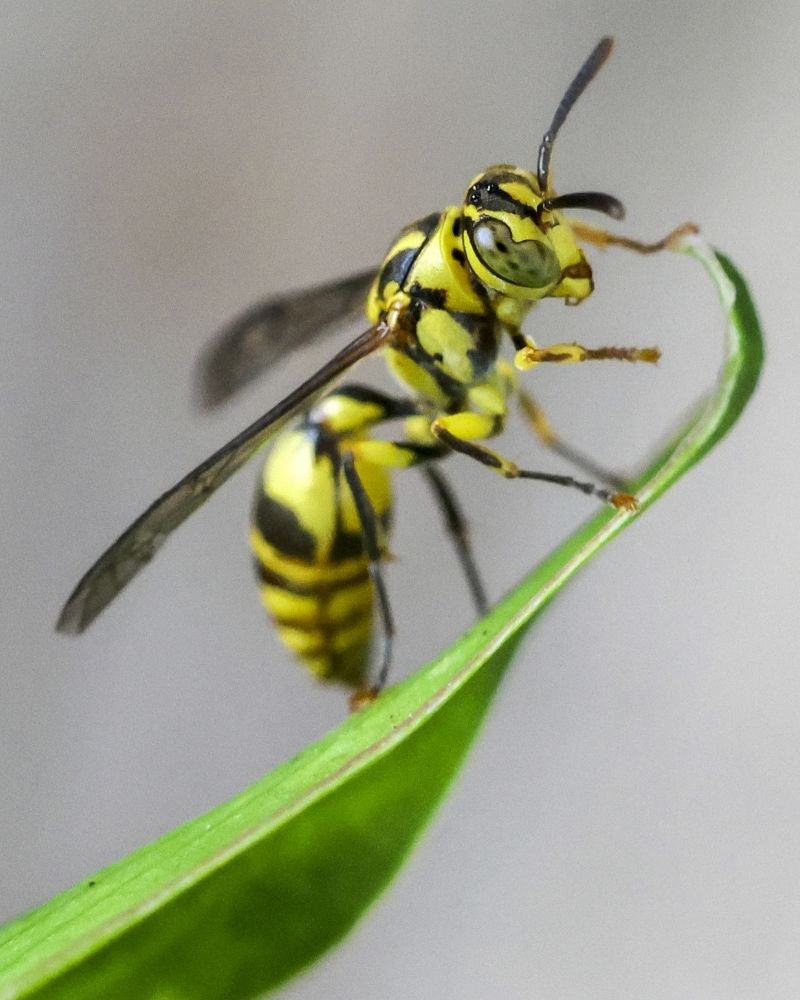
The animal most likely to hurt you on a Smokies hike might not be a bear or a snake.
Yellowjackets are common on trails within the park, according to the National Park Service.
These wasps usually nest underground, often in old rodent burrows or under rocks. That means you can step right on a nest without seeing it.
Colonies can reach up to 4,000 workers by the end of summer, and they’re extremely defensive when their nest is disturbed.
Late summer is when they’re most aggressive.
Insect stings are no joke.
In one study covering 2008 to 2015, insect stings caused 71 of the 86 U.S. deaths from venomous animals each year, on average.
If you hear buzzing coming from the ground, move away quickly.
If you’re allergic, carry an epinephrine auto-injector (EpiPen) and make sure your hiking partners know where it is.
If stung, remove any rings right away in case your hand swells, then use an ice pack and an antihistamine.
Call 911 if hives, dizziness, or trouble breathing or swallowing show up, or if the lips, face, or throat start to swell.
6. Ticks

The smallest of the dangerous animals in Great Smoky Mountains Park, which straddles North Carolina and Tennessee, is one you probably won’t notice until it’s attached to you.
According to the North Carolina Department of Health and Human Services, ticks in the park can carry several diseases.
The state’s most common tickborne illnesses are Lyme disease, spotted fever rickettsiosis (including Rocky Mountain spotted fever), and ehrlichiosis.
North Carolina reported more than 700 combined cases of those three diseases in 2024.
The lone star tick (pictured above) can also trigger alpha-gal syndrome, an allergy to red meat.
To avoid ticks as best as possible, wear clothing treated with permethrin, and put a repellent registered with the EPA on your skin.
Tuck your pants into your socks, and stay in the middle of trails, away from tall grass and brush.
Check your body and clothes for ticks after every hike, and shower as soon as you can. Also check kids and pets that went outside with you.
If you find a tick, remove it right away with fine-tipped tweezers, pulling straight up with steady pressure, then wash the area.
See a doctor if you get a rash, fever, or flu-like symptoms in the weeks after your trip.
7. Wild Hogs
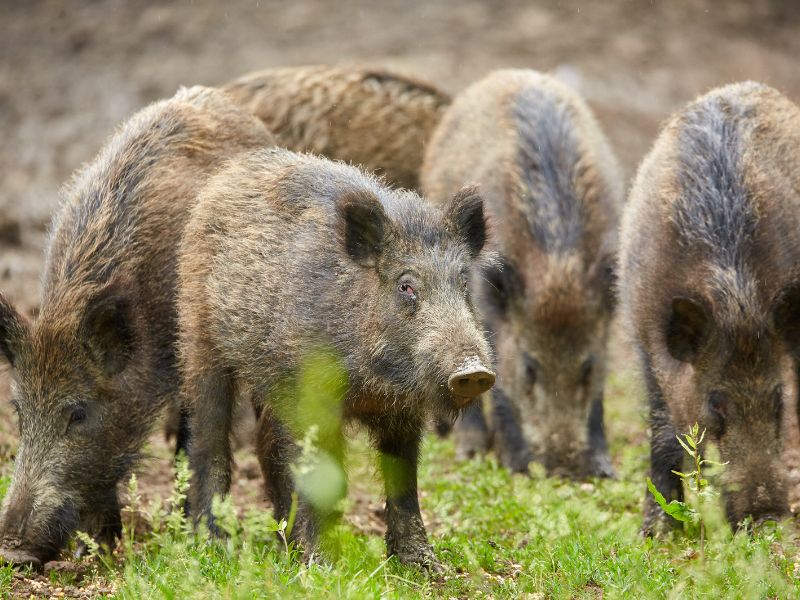
A hybrid species resulting from the interbreeding of European wild boars and domestic feral pigs, wild hogs in the Smokies are an invasive, destructive presence.
Introduced to North Carolina in 1912 for sport hunting, these non-native animals quickly escaped into the wild and breached park boundaries by the 1940s.
They can be aggressive and get pretty large with adult males weighing up to 300 pounds (136 kg).
They’re rarely seen, but if you encounter a wild boar, keep your distance, remain calm, and slowly back away without turning your back or running.
If a wild hog (wild boar) charges or attacks you, do not try to fight back on the ground.
Instead, try to climb a tree, boulder, or high structure to get out of its reach, as they cannot climb.
Dangerous Animals in the Great Smoky Mountains FAQ
What is the most dangerous animal in the Great Smoky Mountains?
The black bear.
Attacks are extremely rare, but bears have caused two deaths in the park’s history, most recently at Hazel Creek in 2020.
Are there bears in the Great Smoky Mountains?
Yes.
Biologists estimate roughly 1,900 black bears live in the park, or about two per square mile (about 0.8 per km²).
Conversely, no grizzly bears live in the Great Smoky Mountains.
How close can you get to bears and elk in the Smokies?
Not very. It’s illegal to approach bears within 50 yards (46 m) or elk within 25 yards (23 m).
Note that those are minimums; any animal that changes its behavior because of you is telling you you’re too close.
Are there venomous snakes in the Great Smoky Mountains?
Yes, but only two. The timber rattlesnake and northern copperhead are the only venomous snakes among the park’s 23 snake species.
There are no cottonmouths in the Smokies, though the harmless northern water snake is often mistaken for one.
Are there wolves or mountain lions in the Smokies?
No. Gray wolves (also correctly spelled as grey wolves) and mountain lions no longer live in the park.
Are there wild hogs in the Great Smoky Mountains?
Yes.
Wild hogs descended from European wild boars brought to North Carolina in 1912, and models estimate 1,200 to 1,500 hogs in the park.
Most visitors never see one, and injuries to people are rare and minor. Still, keep your distance, since hogs can carry diseases.
Can you bring your dog hiking in the Smokies?
Only on two trails. Dogs are allowed on the Gatlinburg Trail and the Oconaluftee River Trail.
The park says dogs are involved in most bear-human incidents, so be careful out there with your doggo.
What actually kills the most people in the Smokies?
Surprise; it’s not animals. The park says motor vehicle accidents and drownings are the leading causes of death.
Drive slowly on the park’s winding roads, watch for wildlife crossing, and be careful around rivers and waterfalls.