🐍 The 15 Dangerous Animals in Georgia Visitors Need to Watch Out For
Wondering, Are there dangerous animals in Georgia? That’s Georgia the U.S. state, by the way, not Georgia the country — and the answer is yes.
This southern U.S. state has seven venomous snakes, an estimated 200,000 to 250,000 alligators, and sharks off its coast.
Serious injuries are still uncommon, though, as Georgia recorded only nine alligator attacks on humans since 1980.
The Georgia Department of Natural Resources (DNR) has no record of bear attacks ever taking place in the state.
The animals you’re more likely to tangle with are smaller: copperheads in suburban parks, ticks in tall grass, and more — so let’s get to the list.
1. Eastern Diamondback Rattlesnake

The eastern diamondback is North America’s longest and heaviest venomous snake, according to the Smithsonian’s National Zoo 🐍 Most adults are 3 to 6 feet long (0.9 to 1.8 m), and some reach 8 feet (2.4 m).
In Georgia, it lives south of the Fall Line in the Coastal Plain, in pine woods, sandy scrub, and brushy fields.
Your best bet is to stay on trails, wear boots, and never step or reach where you can’t see.
If you hear a rattle, stop moving, figure out where the snake is, and then ease away from it.
If bitten, call 911 and keep the bitten limb still and level with your heart. Leave the wound alone: no cutting, no sucking out venom, no ice, and no tourniquet.
Its venom kills red blood cells and damages tissue, but deaths are rare thanks to antivenom.
The Georgia Poison Center says the state gets about 450 to 550 snakebite reports a year, and about a quarter of them need antivenom.
2. American Alligator

Just like you would see on any dangerous Florida animals list, Georgia also has a sizable population of alligators 🐊 Georgia DNR estimates about 200,000 to 250,000 alligators live in the state.
They live along and south of the Fall Line, which runs roughly from Columbus to Macon to Augusta.
That covers the Okefenokee Swamp, the Savannah area, and the rest of coastal Georgia.
Male alligators can grow up to 16 feet long (4.9 m), and females reach about 10 feet (3 m).
Even so, Georgia recorded only nine alligator attacks on humans from 1980 to July 2023, and just one was fatal.
Here’s what you need to know about gators in Georgia so you can avoid any incidents with these wild animals.
- Feeding alligators, on purpose or by accident, is illegal in Georgia.
- Assume any pond, lake, river, or marsh could have one, especially after storms or floods.
- Swim only in daylight, avoid thick vegetation, and keep kids and pets (even leashed ones) away from the water’s edge.
If an alligator does grab you, don’t go limp. Hit and kick at its eyes and snout until it lets go, then get medical help.
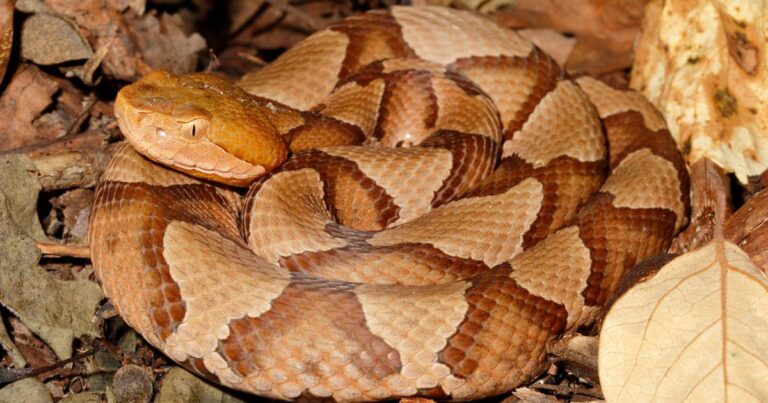
3. Copperhead Snake

The copperhead causes more reported venomous snakebites in Georgia than any other snake, according to the Georgia Poison Center.
It has hourglass-shaped bands in tan, copper, and brown that blend perfectly into dead leaves.
Georgia DNR says it’s the only venomous snake in Georgia that usually thrives in suburban areas — so you could meet one in a park or backyard near Atlanta.
Bites are very painful and cause swelling, but they’re rarely fatal.
Wear shoes outside, use a flashlight on paths after dark, and wear gloves when moving firewood or rocks.
If bitten, call 911 or Poison Help at 1-800-222-1222 and get to a hospital.
4. Sharks

Sharks swim off Georgia’s coast, from Tybee Island to St. Simons and Jekyll Island 🦈 Bites are rare here, and Georgia recorded zero unprovoked shark bites in 2025, according to the International Shark Attack File.
Bites still happen, though.
In July 2021, a shark bit a surf instructor’s leg off Tybee Island while he was helping a young camper reach shore.
Though the risk is low, here are some tips to further lower your risk of a shark attack in Georgia.
- Swim near a lifeguard, and stay in groups.
- Avoid swimming at dawn and dusk.
- Stay away from fishing piers, jetties, and people fishing from the beach.
- Get out of the water if you see baitfish jumping.
- Leave shiny jewelry on the beach, since it can look like fish scales to sharks.
If someone is bitten, call 911, get them onto the beach, and press firmly on the wound until help arrives.
5. Cottonmouth (Water Moccasin)

The cottonmouth, also called the water moccasin, flashes the bright white inside of its mouth as a warning when threatened.
Georgia has two kinds, found in swamps, rivers, and ponds across the Coastal Plain and western Georgia.
Unlike many snakes, a cottonmouth often stands its ground instead of slithering away. Its bite causes severe pain, swelling, and tissue damage.
Many harmless water snakes look similar, so treat every snake near water as a cottonmouth. Watch your step around docks, logs, and pond edges when fishing or paddling.
Bitten? Stay calm, call 911, and head straight to the nearest hospital.
6. Timber Rattlesnake (Canebrake Rattlesnake)

The timber rattlesnake, called the canebrake rattlesnake in the southern lowlands, lives across most of Georgia, including the north Georgia mountains.
Timber rattlers are usually calm and rely on camouflage, but their venom is potent, and a bite is a medical emergency.
Watch where you step and sit, especially around logs, rock ledges, and stone walls.
Georgia also has the pygmy rattlesnake, a small rattler whose tiny rattle sounds more like a buzzing insect. Their bites are painful, but usually not life-threatening.
If bitten, call 911, stay calm, and keep the bitten limb still.
7. Cannonball Jellyfish

Jellyfish, particularly the cannonball jellyfish (aka jellyball), wash up on Georgia’s beaches every summer, sometimes by the thousands.
The University of Georgia Cooperative Extension (UGA), an outreach and public service arm of the University of Georgia, offers warnings and also perspective on these sea critters.
According to the UGA, most jellyfish stings in Georgia feel like a bee sting and don’t need medical treatment.
Your best defense is to never touch one with bare hands, as even jellyfish washed up on the sand can sting.
8. Portuguese Man O’ War

Like the cannonball jellyfish, the Portuguese man o’ war also turns up on Tybee Island — however, their sting is intensely painful.
It looks like a jellyfish, but it’s actually a colony of tiny organisms.
If stung, don’t rinse with fresh water, which can make it worse.
Find the closest Tybee lifeguard who will wipe off the stinging cells with wet sand and then spray on a vinegar and water mix.
If no lifeguard is nearby, and you have hot water on hand, pouring some on the sting area can make a big difference for pain management.
If you have trouble breathing, get medical help as it could be a sign of anaphylactic shock.
9. Eastern Coral Snake
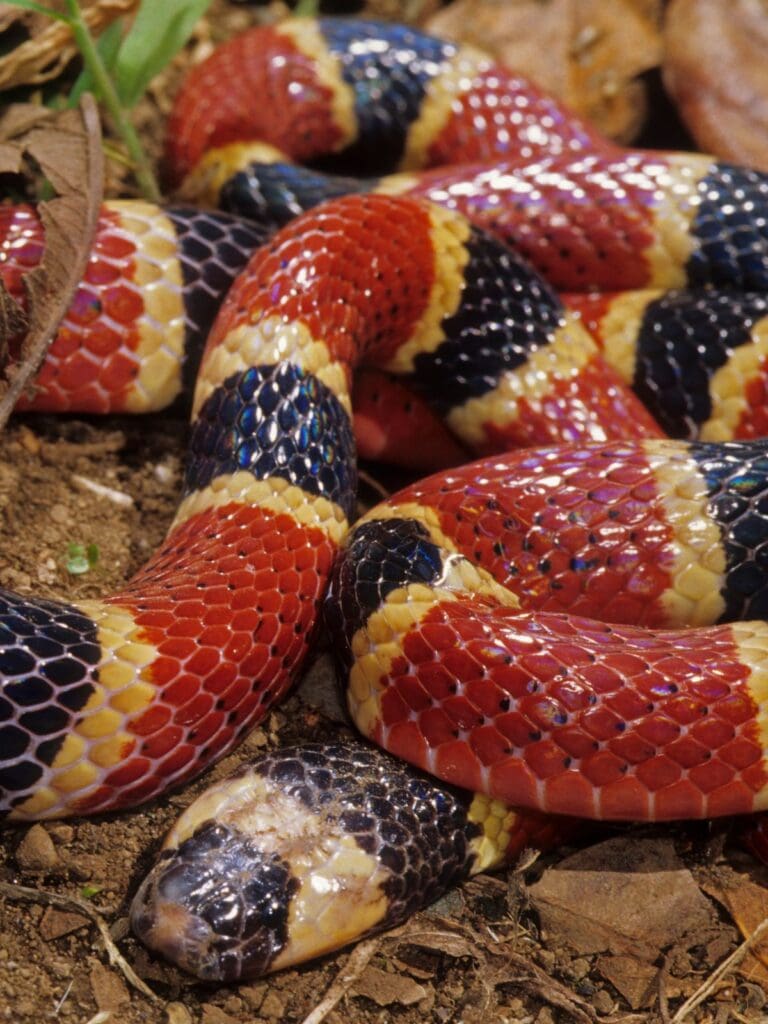
The eastern coral snake is small and shy, but its venom can paralyze the muscles you need to breathe.
In Georgia, it lives mainly in the Coastal Plain, with a few in the lower Piedmont along the Flint River basin.
It’s banded in red, yellow, and black, and easy to confuse with harmless scarlet kingsnakes.
In the U.S., this rhyme can help: “Red touches yellow, kills a fellow; red touches black, venom lack.”
What makes them sneaky is that a bite may barely hurt, and symptoms can take hours to start.
Coral snake antivenom is also no longer made, so supplies are limited.
If a coral snake bites you, get to a hospital now. Don’t wait to see whether symptoms show up.
10. Stingrays

Stingrays bury themselves in the sandy shallows of Georgia’s beaches and sounds, and most stings happen when someone steps on one.
The ray whips its tail and drives a barbed spine into your foot or ankle, causing intense pain.
In May 2022, the Coast Guard rescued a stingray victim in Wassaw Sound near Tybee Island.
Shuffle instead of stepping. Sliding your feet through the sand as you wade warns rays you’re coming, and they swim off.
Slip on a pair of water shoes like these and your feet get some cover, too.
If a stingray gets you, put the wound in hot water, as hot as you can take without burning your skin, and then have a doctor look at it.
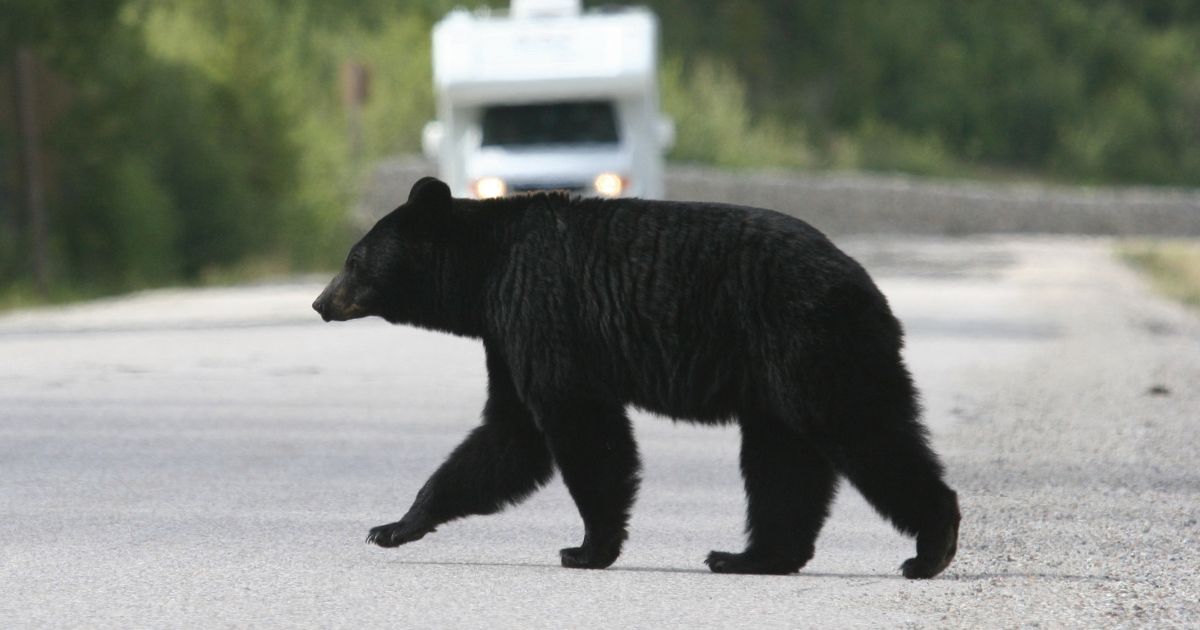
11. Black Bears
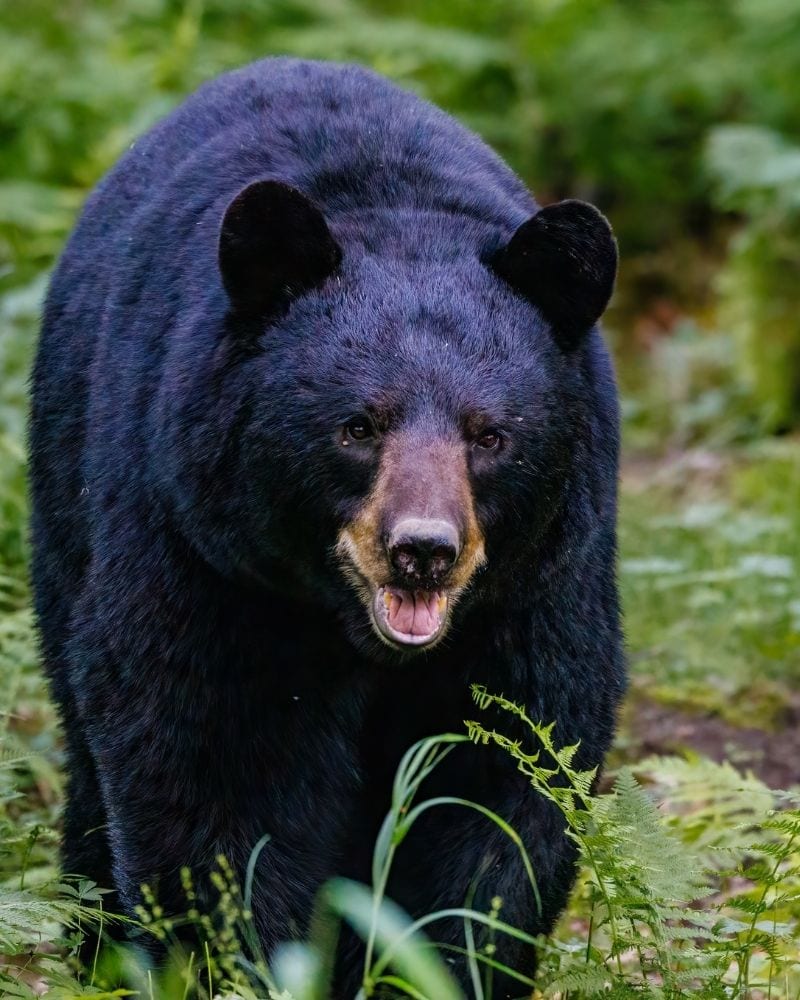
Georgia DNR estimates about 5,100 black bears live in Georgia 🐻
They live in three areas: the north Georgia mountains, along the Ocmulgee River in central Georgia, and around the Okefenokee Swamp.
Adult males can weigh more than 500 pounds (227 kg).
Black bears usually go out of their way to avoid people, and the DNR’s bear fact sheet reports no recorded bear attacks on humans in Georgia.
Still, here are some tips to avoid bear attacks in Georgia.
- Store food and toiletries in a locked car or bear-resistant container.
- Never leave trash out.
- If you see a bear before it sees you, don’t approach it.
- If one comes toward you, hold your ground and make noise.
If a black bear makes contact with you, don’t play dead. Fight back aggressively.
12. Black Widow Spiders

The UGA Cooperative Extension says black widows are common throughout Georgia.
They’re shiny black with a red hourglass on the belly, and they build webs in woodpiles, sheds, and piles of trash or lumber.
Wear gloves in sheds, and shake out shoes and stored clothes before putting them on, as their bites can cause intense pain and muscle cramps.
If bitten, wash the bite, apply ice, and get medical attention.
13. Ticks

Ticks are everywhere in Georgia, and the lone star tick (pictured above) is the most common.
According to UGA, Rocky Mountain spotted fever is the most commonly reported tick-borne disease in Georgia.
Lone star ticks and blacklegged ticks can also spread ehrlichiosis, which causes flu-like symptoms and can be deadly.
Lyme disease isn’t a major problem in Georgia, but a few cases are reported each year.
Do a full tick check every day, spray on repellent, and treat your clothes with permethrin.
If you find a tick, grab it with tweezers right at the skin and pull it out.
A rash or fever in the following days means a trip to the doctor.
14. Mosquitoes

Mosquitoes may be the deadliest animals in Georgia. They spread West Nile virus, and Georgia reported 18 West Nile cases and 3 deaths in 2025.
Most people infected never have symptoms, but some get fever, headache, and body aches.
Use repellent with DEET, picaridin, IR3535, or oil of lemon eucalyptus. Wear long sleeves and pants, and choose lodging with good window screens.
A fever or a bad headache after mosquito bites is your cue to call a doctor.
15. Fire Ants

The most surprising dangerous animal in Georgia might be the one under your picnic blanket.
All 159 Georgia counties report fire ant infestations, according to UGA.
When something disturbs a mound, hundreds of ants swarm out to bite and sting at once 🔥 A white, itchy pustule usually forms at each sting by the next day, and it can get infected if you scratch it.
For people who are allergic, fire ant stings can cause anaphylaxis, a life-threatening reaction.
Watch where you stand and sit, and keep kids away from mounds of loose dirt.
If stung, brush the ants off quickly, since they cling to skin, then wash the area and apply a cold pack.
If breathing gets hard or the face or throat starts to swell, call 911.
Dangerous Animals in Georgia FAQ
What is the most dangerous animal in Georgia?
Two snakes share the title. The eastern diamondback rattlesnake is Georgia’s largest venomous snake, and the copperhead causes the most snakebites.
But mosquitoes kill more Georgians by spreading West Nile virus.
How many venomous snakes are in Georgia?
Seven. Georgia DNR says only 7 of the state’s 47 native snake species are venomous.
They’re the copperhead, two kinds of cottonmouth, the eastern diamondback, timber, and pygmy rattlesnakes, and the eastern coral snake.
Does Georgia have brown recluse spiders?
Yes, they do, but these spiders are much less common in Georgia than many people think.
A UGA study found them almost exclusively north of the Fall Line, in only 31 of Georgia’s 159 counties.
Are there alligators in Georgia?
Yes. About 200,000 to 250,000 alligators live in Georgia, along and south of the Fall Line.
You won’t find wild alligators in Atlanta or the north Georgia mountains.
Are there sharks in Georgia?
Yes, but bites are very rare. In fact, Georgia has had only 19 recorded unprovoked shark attacks since 1876.
Are there bears in Georgia?
Yes. About 5,100 black bears live in the north Georgia mountains, central Georgia, and the Okefenokee Swamp area.
Are there killer bees in Georgia?
They’ve been found here.
Africanized honey bees were confirmed in Georgia in 2010, when a Dougherty County man died after more than 100 stings.
If bees chase you, run and get inside a car or building.
Is it safe to swim at Georgia beaches?
Yes, for the most part.
Swim near a lifeguard, shuffle your feet in the shallows, and watch for purple flags, which warn of stinging marine life.