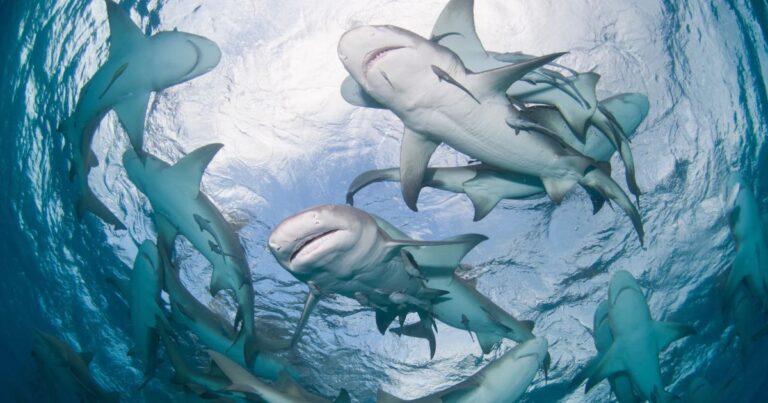
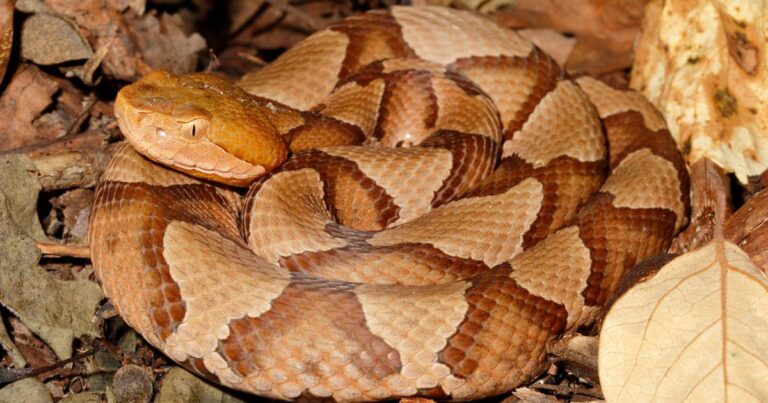
🦈 8 Dangerous Animals in San Diego (and Why Sea Lions Aren’t the Worst)
Wondering, Are there dangerous animals in San Diego? And are they actually likely to hurt you?
While few, there are some dangerous animals travelers will want to know about, because several of them live right where visitors spend their days.
Round stingrays bury themselves in the sand where you wade.
Sea lions crowd the stairs at La Jolla Cove, and rattlesnakes sun themselves on coastal trails a short walk from the beach.
Inland, mountain lions roam the canyons and backcountry, and invasive mosquitoes have settled into city neighborhoods.
Rattlesnakes lead off this list because they’re venomous and turn up everywhere from the bluffs of Point Loma to the desert.
1. Rattlesnakes
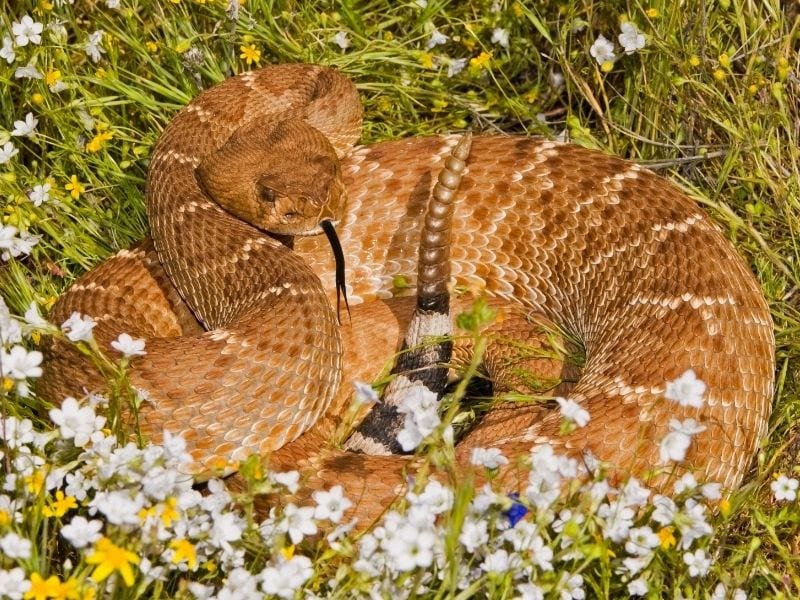
California has seven rattlesnake species, and several of them live in San Diego County 🐍
Coastal hikers may encounter two of them: the southern Pacific rattlesnake, which lives in coastal Southern California, and red diamond rattlesnake (pictured above).
Considered a Species of Special Concern, the red diamond ranges only from southwestern California into Mexico’s Baja California Peninsula.
Head east into the desert and the speckled rattlesnake and sidewinder take over.
Even at Cabrillo National Monument on Point Loma, the Park Service warns that rattlesnakes may be present, and it advises staying on marked paths.
Bites are uncommon, and California Department of Fish and Wildlife (CDFW) says most happen between April and October.
In spring and summer, rattlesnakes are most active at dawn, dusk, and night.
Keep to the trail at places like Torrey Pines and Mission Trails, and check before you grab a rock or sit on a log.
Rattlesnake bite? Call 911, remove rings, watches, and tight shoes, and head for a hospital.
Leave the tourniquet, ice pack, and knife out of it, and never try to suction the poison out.
2. Round Stingrays

The round stingray is a small ray that’s most abundant in Southern California’s coastal and bay waters from spring to fall.
Its scientific name, Urobatis halleri, honors a boy who was stung while wading in San Diego Bay.
Stings usually start with a foot landing on a buried ray, which whips its tail up and jabs its barbed spine in.
At Seal Beach, up the coast in Orange County, researchers describe 500 or more reported stings a year.
Three out of four injuries in their study were to the foot.
The sting is very painful, but it’s rarely serious. No one in that study was admitted to the hospital.
Slide your feet along the bottom instead of stepping, and the rays will usually scoot away before you reach them.
Wearing water shoes like these gives the spine something to hit besides your skin.
If you’re stung, find a lifeguard. Hot water is the fix: soak the foot in water you can stand, up to about 113°F (45°C), for 30 to 90 minutes.
Get any broken bit of spine removed, and see a doctor if the wound looks infected later.
3. California Sea Lions

At La Jolla Cove (pictured above), you can get very close to sea lions — which is exactly the problem.
In July 2024, the City of San Diego asked people to keep away from sea lions after a viral video showed two women getting much too close.
Pupping season runs from May through December, when mothers can be protective.
That same day, a reporter watched a woman step over a resting sea lion on the stairs.
The city’s chief park ranger said they hadn’t had incidents of sea lions harming visitors.
He said a visitor is more likely to slip on a rock trying to get away from one.
Sea lions can bite, though. In 2025, toxic algae left some Southern California sea lions disoriented and aggressive.
One of them bit a teenage swimmer at junior lifeguard tryouts in Long Beach.
Harassing sea lions is also illegal under the federal Marine Mammal Protection Act so stay at least 50 yards (46 m) away.
Also, give mothers and pups extra space, per NOAA’s viewing guideline for seals and sea lions.
4. Great White Sharks

Great white sharks swim along the San Diego coast, but bites are rare.
In all of California, there have been recorded 5 unprovoked shark bites in 2025, and one was fatal.
That death happened in Monterey Bay though, not in San Diego — San Diego County’s most recent fatal attack was in April 2008.
A 66-year-old triathlete was killed by a great white while training about 150 yards (137 m) off Fletcher Cove in Solana Beach.
The Florida Museum’s tips for lowering your risk are simple, so make sure to follow them at San Diego’s beaches.
- Swim with a buddy.
- Stay near shore.
- Stay out of the water at dawn and dusk when sharks are feeding.
- Give fish schools and anglers plenty of room.
- Ditch the jewelry because it looks like shiny fish scales to a shark.
- Keep splashing to a minimum, as it looks like an injured animal (which is easy prey) to a shark.
If a shark approaches, keep it in sight and back away. If it tries to bite, hit its eyes or gills.
5. Mountain Lions

Mountain lions live in San Diego County’s canyons and mountains, and they don’t always stay far from town.
CDFW lists four verified mountain lion attacks in San Diego County.
Two happened in Cuyamaca Rancho State Park, including the death of a 56-year-old woman in December 1994.
The other two involved 4-year-old boys, both of whom survived.
One was attacked in Los Peñasquitos Canyon Preserve in May 2019, and the other in the Blue Sky Ecological Reserve near Poway in June 2020.
Statewide, there have been fewer than 50 verified attacks since 1890. In most of them, the person was alone.
CDFW’s advice: don’t hike or run alone at dawn, dusk, or night, keep pets leashed, and keep small children right beside you.
Facing a mountain lion? Stand tall and get loud, and never run or crouch.
Pick up small children so they don’t run. If the lion attacks, the Park Service’s advice is to fight back.
6. Mosquitoes

San Diego’s mosquitoes aren’t just a nuisance anymore.
Invasive Aedes mosquitoes arrived in the county in 2014. They bite during the day, often around the ankles, and they can spread dengue and Zika.
Most dengue cases in the county are travelers who caught it elsewhere. But in 2025, the county reported its first locally acquired case, in someone who hadn’t left the area.
West Nile virus is here too.
As of Oct. 9, 2026, San Diego County had 6 human West Nile cases for the year, plus 102 positive mosquito samples.
The county says even a quarter inch (6 mm) of water is enough for Aedes to breed. Dump plant saucers, buckets, and kids’ toys at your rental.
Pick a repellent made with DEET, picaridin, or lemon eucalyptus oil, and see a doctor about any fever, rash, or joint pain after your trip.
7. Ticks

San Diego County’s grassy, brushy trails are good tick country, and there are two tracked tick species.
The western blacklegged tick (pictured above), which can carry Lyme disease, and the Pacific Coast tick, which can carry tularemia and spotted fevers.
County testing of ticks from hiking trails turned up 38 detections of Pacific Coast tick fever from January through July 2026.
They came from communities including Poway, Ramona, Julian, and Palomar Mountain.
Tick-borne diseases are still rare in San Diego County.
Keep to the middle of the trail, and wear long pants. Permethrin-treated clothing helps on brushy hikes.
After each hike, do a full tick check on everyone, dog included, and shower within two hours.
Pull off any tick with fine-tipped tweezers close to the skin, and see a doctor if a rash or fever follows.
8. Black Widow Spiders

The western black widow (pictured above) lives in most of California, including San Diego.
The University of California Statewide IPM Program calls it the most common harmful spider in the state.
Adult females are glossy black in color and have a prominent red or orange hourglass marking on the belly ⌛️
They hide in dark, dry, sheltered spots like garages, woodpiles, and other undisturbed corners.
Bites usually happen when someone reaches into one of those spots.
The symptoms are mostly internal, and kids, seniors, and anyone with health problems tend to have the worst reactions.
Death is very unlikely. The brown recluse, often blamed for bites, doesn’t live in California.
If a black widow bites you, stay calm, put ice on the bite, and call your doctor or the poison line at 1-800-222-1222.
Dangerous Animals in San Diego FAQ
Are there sharks in San Diego?
Yes, but bites are rare. Great white sharks swim along the coast, and California as a whole had five unprovoked bites in 2025.
San Diego County’s last fatal attack was in Solana Beach in 2008.
Do sea lions bite at La Jolla Cove?
Rarely. In 2024, the city’s chief park ranger said there hadn’t been incidents of sea lions harming visitors.
They’re still wild animals that can bite, so stay at least 50 yards (46 m) away.
When is stingray season in San Diego?
Mostly spring through fall. Round stingrays are most abundant in Southern California’s coastal and bay waters in those months.
Shuffle your feet as you wade to avoid stepping on one.
Are there rattlesnakes in San Diego?
Yes. Southern Pacific and red diamond rattlesnakes live near the coast, and other species live in the desert. Most bites happen from April to October.
Are there mountain lions in San Diego?
Yes. They live in the county’s canyons and mountains, and CDFW has verified four attacks on people in San Diego County.
The most recent was in 2020, near Poway.
What is the most dangerous animal in San Diego?
Rattlesnakes, for most people. They’re venomous and turn up on popular coastal and inland trails.
Round stingrays cause more injuries, but those stings are rarely serious.