🇬🇷 9 Dangerous Animals in Greece You Need to Avoid at All Costs When You Visit
Greece beckons travelers with stunning beaches, ancient ruins, and Mediterranean charm.
While this beautiful country is generally safe for visitors, certain dangerous animals in Greece deserve your attention and respect.
From venomous snakes basking on sun-warmed rocks to marine creatures lurking in crystal-clear waters, knowing what to watch for can make the difference between a dream vacation and a medical emergency.
In Greece, venomous snakes, poisonous spiders, biting insects, and dangerous animals can turn an adventurous getaway into a vacation from hell.
This guide will help you identify and avoid the most hazardous creatures you might encounter during your Greek adventure.
1. Nose-Horned Viper (Ohia)

The nose-horned viper, known locally as the ohia (the Greek word for viper), is the most widespread venomous snake in Greece ☠️
It’s one of five vipers harmful to humans in Greece, and it’s often called the most venomous snake in Europe.
The nose-horned viper has distinctive horn-like scales above its eyes, giving it an unmistakable appearance.
Their excellent camouflage makes them easy to step on accidentally, which triggers most bites.
They aren’t aggressive. They usually stay still or slip away, but they will bite if stepped on or grabbed.
They prefer dry farmland, vineyards, rocky areas, and grasslands where they blend perfectly with their surroundings.
Encounters are rare and deaths are even rarer, but every bite needs a hospital.
If bitten, stay calm and get to a hospital right away.
Don’t walk on the bitten limb; keep it still and below heart level, and remove rings or tight clothing before swelling starts.
Don’t put ice on the bite or try to cut it. Symptoms include severe swelling, tissue damage, numbness, headaches, difficulty breathing, and high fever.
2. Mauve Stinger Jellyfish (Purple Jellyfish)

You may have read about Portuguese man o’ war in Greece, but research shows they rarely, if ever, reach the eastern Mediterranean Sea.
What you actually need to watch for is the small mauve stinger jellyfish — a pinkish-purple bell jelly covered in tiny warts with long, thin tentacles trailing behind it.
Its scientific name, Pelagia noctiluca, means “night light,” because the mauve stinger jellyfish (aka purply jellyfish) glows in the dark when disturbed.
Mauve stingers often drift into Greek bays in large swarms during summer, especially after warm, calm weather.
Even small pieces of broken tentacle floating in the water can still sting. The sting causes immediate burning pain, red welts, and itching that can last for days.
Severe reactions are rare, but children and people with allergies face the highest risk.
⚠️ If stung, get out of the water and rinse the area with seawater (never fresh water).
Remove any tentacles with tweezers or the edge of a card, don’t rub the skin, and get medical help for severe reactions.
It’s one of many weird sea creatures that look harmless but pack a punch — and can quickly ruin your Greece vacation.
3. Stingrays

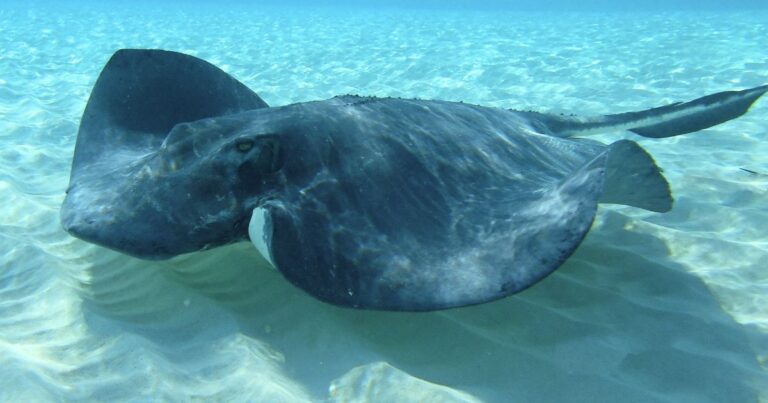
Stingrays inhabit sandy shallow waters around Greek islands and coastlines, often burying themselves just beneath the sand.
Their tail contains a barbed spine that delivers venom when stepped on, or if the animal feels threatened and “throws” it defensively.
While the venom likely won’t kill you, it is very painful. The sting causes excruciating pain that can last for hours or even days.
Some of the venom symptoms from the stingrays include diarrhea, vomiting, muscle pain, inflammation, and excruciating pain, among other dangerous side effects.
In severe cases, untreated wounds can become infected and lead to tissue damage requiring medical intervention.
In the most severe cases, you can die from a sting, like “The Crocodile Hunter” Steve Irwin (RIP), who was pierced through the heart.
This shuffle step motion will help prevents stingray encounters.
To do it, drag your feet along sandy bottoms rather than taking normal steps. This gives stingrays warning to swim away before you step directly on them.
Most stingray injuries occur when people inadvertently step on buried rays.
If stung, immerse the wound in hot water as tolerable as you can stand to help break down the venom proteins, then seek medical attention.
4. Scorpions

Scorpions are stinging arachnids that have been around since prehistoric times.
Today, Greece has the most scorpion diversity in Europe with at least 32 confirmed species, belonging to three different families 🦂
The most intimidating is the Mediterranean checkered scorpion (Mesobuthus gibbosus), which grows up to 4.5-inches-long (12 cm).
Like all scorpions, Cretan scorpions like the Cretan small wood-scorpion (pictured above) are venomous, but their venom is normally not life-threatening.
However, stings are extremely painful and can cause swelling, numbness, nausea, and elevated heart rate.
People with allergies or young children should seek medical attention immediately after being stung.
These nocturnal hunters hide under rocks, in woodpiles, and inside hollow olive trees during daylight hours.
Scorpions become most active after dark when they hunt spiders 🕷️ and insects.
As a precaution, always shake out shoes and clothing before dressing, especially in rural areas. Check bedding before climbing in at night.
When lifting rocks or exploring old stone walls, use a stick first. Most scorpion stings occur when people accidentally put hands or feet where scorpions are hiding.
5. Mediterranean Black Widow Spider
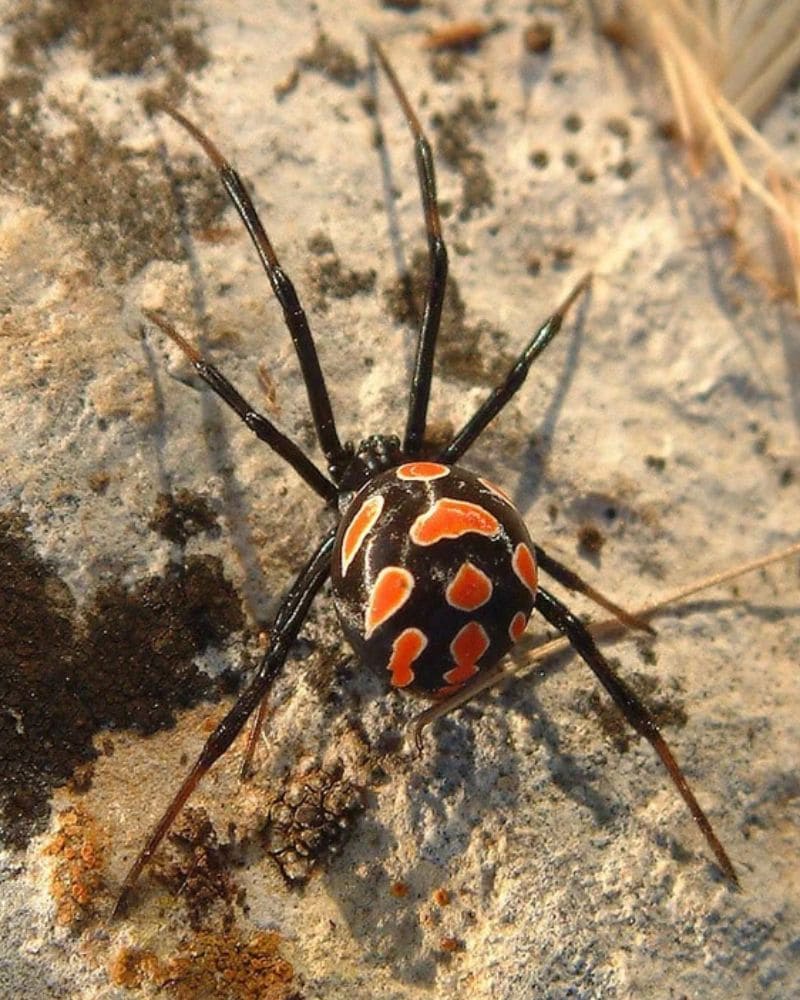
Greece has several spider species, but only a few can be considered potentially dangerous, like the Mediterranean black widow (pictured above).
This small spider has a shiny black body with distinctive red markings on its abdomen. Females are larger and more dangerous than males.
⚠️ Black widow venom is neurotoxic, meaning it affects the nervous system.
Bites cause severe muscle pain, cramps, sweating, elevated heart rate, and difficulty breathing.
While rarely fatal with modern medical treatment, black widow bites require immediate medical attention.
Children, elderly people, and those with compromised immune systems face the highest risk.
These spiders inhabit dry, warm areas including stone walls, woodpiles, and garden sheds.
They’re not aggressive and typically bite only when accidentally pressed against skin or when defending egg sacs.
6. Brown Bears

While your chances of encountering a brown bear may be low as there are only about 150 inhabiting Greece, brown bears are very dangerous animals.
These powerful omnivores roam the forests of northern Greece, particularly in the Pindus and Rhodope mountain ranges.
Brown bears typically avoid humans, but encounters can turn deadly if bears feel threatened or if you surprise a mother with cubs.
Bears can run 35 mph (56 km/h) despite their size, climb trees, and possess strength capable of killing with a single swipe.
⚠️ Never approach a bear for photographs or attempt to feed one.
If hiking in bear country, make noise to avoid surprising bears. Travel in groups and stay on marked trails.
Store food properly in bear-proof containers.
If you encounter a bear, back away slowly while facing it. Never run, as this triggers chase instincts.
Most bear attacks in Greece are defensive rather than predatory.
7. Weever Fish

Weever fish, AKA she-dragons or drakena, pose one of the most common threats to swimmers and beachgoers in Greece.
These small fish bury themselves in sandy bottoms with only their venomous dorsal spines protruding. Stepping on a weever delivers an incredibly painful sting.
The venom causes immediate intense burning pain that can last for hours.
The affected foot or hand swells dramatically, and pain often radiates up the entire limb.
Some victims report pain so severe they require hospitalization. Secondary infections can develop if wounds aren’t properly treated.
Weever fish inhabit shallow waters near beaches where people wade and swim.
Wearing water shoes like these provides excellent protection against weever stings.
The shuffle step technique, explained above in the Stingray section, also helps.
If stung, immerse the wound in hot water as tolerable for 30 to 90 minutes to denature the venom proteins, then clean the wound and seek medical attention.
8. Stray Dogs

Greece counts some of the worst stray stats in Europe, with a whopping 3 million stray dogs in total 😢
That’s nearly one stray dog per three people, so sadly, stray dogs and cats are among the animals in Greece you’re more likely to encounter on your trip.
While many street dogs are friendly, packs can become territorial and aggressive, especially around food and/or if they’re protecting puppies.
The danger comes from our instinct to approach dogs. Unlike snakes or scorpions that we naturally avoid, we’re hardwired to want to help dogs.
However, stray dogs may carry rabies, have unpredictable temperaments, or react defensively when approached by strangers.
Dog bites can cause serious injuries and infections.
To be safe, never approach stray dogs, especially packs or mothers with puppies. Don’t make eye contact or reach out to pet them, especially with food.
If a dog acts aggressively, stand still with arms at your sides and avoid direct eye contact. Back away slowly once the dog loses interest.
Most stray dogs want to avoid confrontation with people, but cornered or scared dogs may bite defensively.
9. Scorpionfish
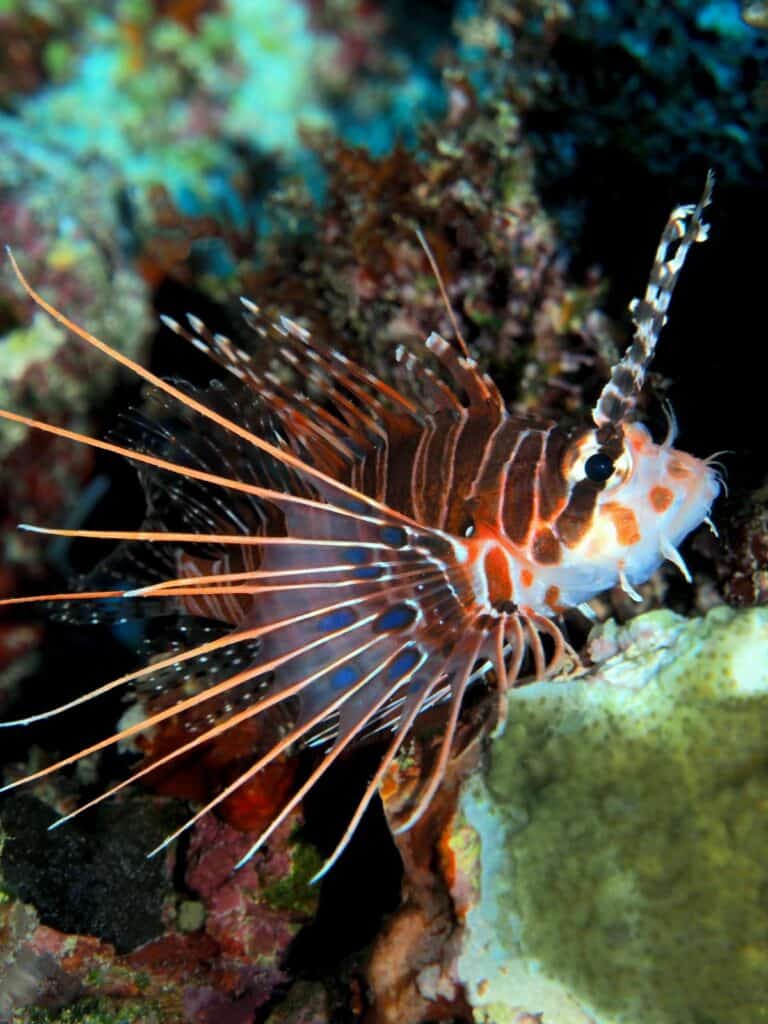
Although small in size, scorpionfish venom can be fatal to humans, so be careful of these dangerous Greek animals in the water.
Even dead scorpionfish retain venom in their spines, so never handle them on beaches either.
These masters of camouflage blend perfectly with rocky reefs and sandy bottoms throughout Greek waters.
Divers and snorkelers often pass by without noticing them.
Scuba divers should maintain neutral buoyancy and never touch anything underwater, while snorkelers should watch where they place their hands on rocks.
These ambush predators remain motionless for hours waiting for prey to swim close.
Their perfect camouflage makes them nearly impossible to spot until you’re dangerously close.
Scorpionfish have venomous spines along their dorsal fins that deliver toxins when touched or stepped on.
The venom causes excruciating pain, swelling, tissue necrosis, nausea, difficulty breathing, and in severe cases, paralysis or death.
🚨 Immediate medical treatment is essential after any scorpionfish sting.
The Most Dangerous Animals on the Greek Islands
Many visitors only see Greece’s islands, and the risks change from one island to the next.
The sea creatures above (weever fish, stingrays, scorpionfish, and jellyfish) can turn up around any island. Snakes are a different story.
1. Dangerous Animals in Mykonos

Mykonos does not have large or aggressive terrestrial predators, though a few land and marine creatures require caution — namely scorpions and the nose-horned viper.
2. Dangerous Animals in Crete
Crete has no vipers and no snakes that are dangerous to humans.
Its only snake with venom is the cat snake, a rear-fanged species that’s harmless to people.
The dangerous animals in Crete are mostly in the water, plus scorpions, including Crete’s own Mesobuthus gallianoi.
3. Dangerous Animals in Santorini

Santorini has very few dangerous land animals, though small scorpions are occasionally found in dry, rocky areas or inside old walls.
Similarly, the surrounding waters see common stinging marine life, including weever fish and mauve stinger jellyfish.
4. Dangerous Animals in Rhodes
Rhodes is part of the southern Aegean arc of islands (with Crete and Karpathos) that has no vipers at all.
The snakes you’ll see on Rhodes are harmless, so the dangerous animals in Rhodes are mainly scorpions and the stingers in the sea.
5. Dangerous Animals in Corfu
Corfu is one of the islands where the nose-horned viper has been recorded, so watch your step on rural trails.
Corfu also has the most recorded shark attacks 🦈 in Greece, though attacks there are extremely rare.
6. Dangerous Animals in Naxos and Paros

Like much of mainland Greece and some other Greek isles, Naxos and Paros have vipers (including the nose-horned viper), scorpions, and spiders (including Mediterranean black widows).
Located near one another, they have the same marine animals to look out for as well. These include weever fish, scorpionfish and jellyfish.
Greece’s Aegean waters near Naxos and Paros also see the silver-cheeked toadfish, an invasive species with a powerful beak and potent neurotoxins.
7. Dangerous Animals in Milos, Kimolos, Polyaigos and Sifnos
These Cyclades islands are the only place on Earth where the endangered Milos viper (aka Cyclades blunt-nosed viper) lives.
It’s venomous, so watch where you step and where you put your hands on rocky paths and stone walls.
Dangerous Animals in Greece FAQ
Are there dangerous animals in Greece?
Like all countries on Earth, yes, Greece has dangerous animals — though serious encounters are rare.
The main risks are vipers, stinging sea creatures like weever fish and jellyfish, scorpions, black widow spiders, stray dogs, and brown bears in the northern mountains.
What is the most dangerous animal in Greece?
The nose-horned viper is generally considered the most dangerous animal in Greece, as it’s widespread and a bite needs urgent medical care.
Are there scorpions in Greece?
Yes — Greece has several scorpion species on the mainland and islands, including Crete.
Their stings are very painful, but usually not dangerous for healthy adults.
Are there poisonous spiders in Greece?
Yes — The Mediterranean black widow is the main venomous spider in Greece, and its bite needs immediate medical attention.
Does Greece have venomous snakes?
Yes — Of Greece’s 23 snake species, five are considered harmful to humans, and all of them are vipers.
Are there snakes on the Greek islands?
Some — Most islands have snakes, and some have vipers: Corfu has nose-horned vipers and Milos has the endangered Milos viper. Crete has no vipers.
Are there sharks in Greece?
Yes, but shark attacks in Greece are extremely rare.
Only about 15 confirmed attacks have been recorded in Greek waters over roughly 180 years. Six have occurred around Corfu.
What are the most dangerous sea creatures in Greece?
Weever fish, stingrays, scorpionfish, and mauve stinger jellyfish cause the most injuries to swimmers in Greece.
Not every Greek sea creature is out to get you, though: Greece’s national animal is far friendlier.