🦅 This is the World’s Most DANGEROUS Bird (They Have Been Known to Kill People)
Deep in the rainforests of Australia and New Guinea lurks a creature that looks like it stepped straight out of the Jurassic period.
The southern cassowary, a massive flightless bird with razor-sharp claws and an aggressive temperament, has earned the terrifying title of the world’s most dangerous bird.
While encounters with these prehistoric-looking creatures are rare, their reputation is well-deserved, as cassowaries have killed humans and can inflict devastating injuries with a single kick.
A Living Dinosaur

The cassowary is a ratite, a group of flightless birds that includes ostriches, emus, and kiwis, but the cassowary stands apart as uniquely dangerous.
The southern cassowary can stand up to 6 feet tall and weigh as much as 160 pounds, making it the third-tallest and second-heaviest living bird after the ostrich and emu.
Adult females can weigh up to 87 pounds, while males typically average between 64 and 75 pounds, making the species highly sexually dimorphic.
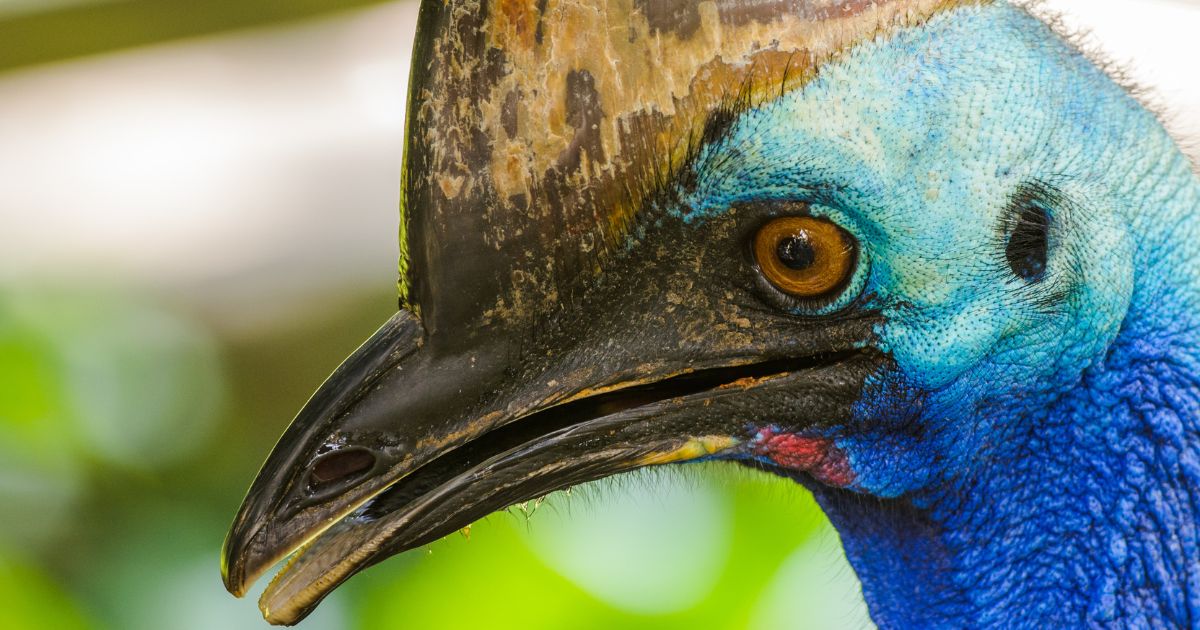
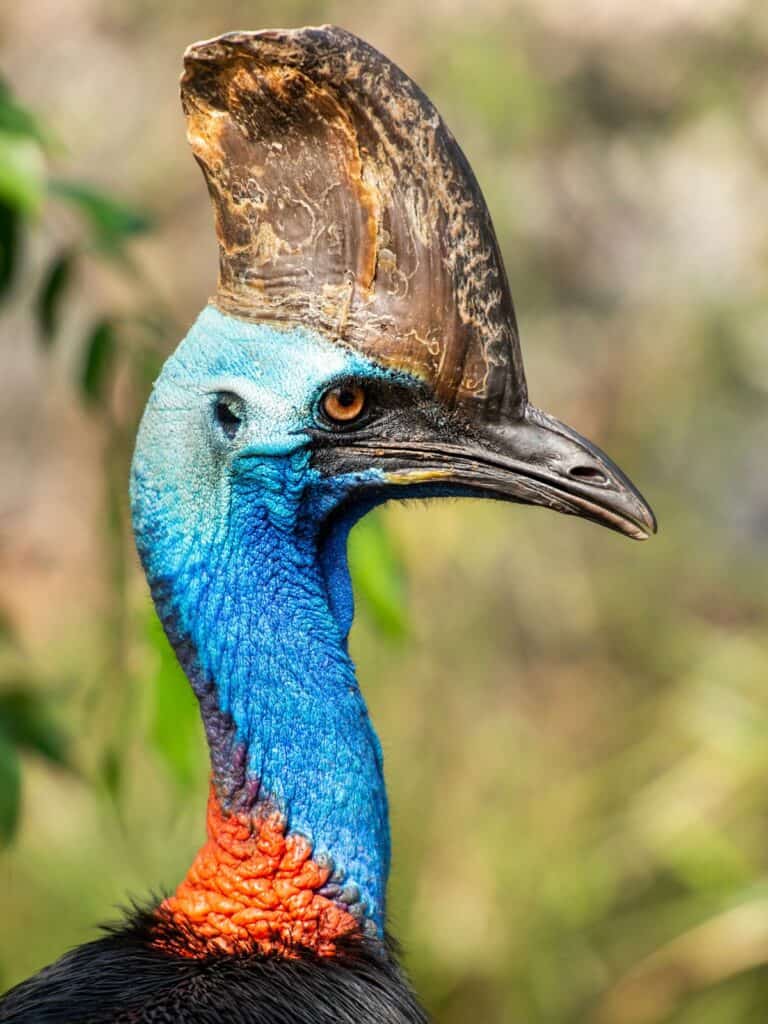
The bird’s appearance is striking: It has stiff, bristly black plumage, a bright blue head and neck, and two red wattles measuring around 7 inches in length that hang from its throat.
Atop its head sits a large, bony casque — a helmet-like structure covered in keratin that can grow to between 5-7 inches tall and is thought to help the bird push through dense vegetation.
Scientists believe the casque may also amplify the cassowary’s extremely low-frequency calls, which boom at around 23 Hertz, which is barely within the range of human hearing.
Deadly Weapons: The Cassowary’s Claws

What makes the cassowary truly dangerous are its powerful legs and dagger-like claws.
Each three-toed foot is equipped with a lethal claw on the inner toe that can measure up to 12 centimeters (4.7 inches) long.
According to the San Diego Zoo, “The cassowary is rightfully considered the most dangerous bird in the world!
Each 3-toed foot has a dagger-like claw on the inner toe that is up to 4 inches long!”
These claws are sharp enough to slice open predators like crocodiles, pythons, and dingoswith a single kick.
The cassowary can leap up to 7 feet straight into the air and deliver a series of downward slashing kicks while airborne, using its claws like daggers.
Combined with their ability to run at speeds up to 31 miles per hour through dense rainforest undergrowth, cassowaries are formidable opponents when threatened.
The Library of Congress notes that cassowaries “can use their sharp dagger-like claws… to slice and puncture any animal that is a threat, including humans.”
Fatal Encounters: The Human Victims

Despite their fearsome reputation, cassowary attacks on humans that result in death are extremely rare — but they do happen.
Only two human deaths have been reported since 1900, though both cases illustrate just how dangerous these birds can be.
The first documented human death occurred on April 6, 1926, in Australia when 16-year-old Phillip McClean and his 13-year-old brother encountered a cassowary on their property near Mossman, Queensland.
The two boys decided to try to kill the bird by striking it with clubs.
After the younger brother was kicked and fled, the older McClean struck the bird and then tripped and fell to the ground.
While he was down, the cassowary kicked him in the neck, opening a 1.25-centimeter wound that severed his jugular vein, and the boy died shortly thereafter from his injuries.
The second documented human death occurred on April 12, 2019, in Florida, making headlines around the world.
Marvin Hajos, a 75-year-old man who had been raising cassowaries on his property, apparently fell near a fenced area where one of the birds was kept.
While he was on the ground and within striking distance, the cassowary attacked him, inflicting more than a dozen lacerations across his face, neck, back, abdomen, thighs, legs, and right arm.
The autopsy showed deep puncture wounds and slashing cuts from the animal’s sharp talons that severed the major brachial artery in his arm.
Hajos was able to call 911, and on the recording he can be heard pleading weakly, “Would you send an ambulance, please?” before being transported to the hospital.
He later died there from blood loss and cardiac arrest caused by the lacerations.
Attack Statistics and Behavior
While fatal attacks are rare, cassowaries attack humans more frequently than many people realize.
A 2003 historical study analyzed 221 cassowary attacks and found that 150 had been against humans, providing valuable insights into when and why these birds become aggressive.
The study revealed that 75% of attacks involved cassowaries that had been fed by people, demonstrating that human feeding creates dangerous situations by habituating the birds to expect food from people.
According to the research, 71% of the time the bird chased or charged the victim, while only 15% of attacks involved actual kicking — though kicks are far more likely to cause serious injury or death.
- 73% of attacks involved birds expecting or snatching food
- 5% involved defending natural food sources
- 15% involved self-defense
- 7% involved defending chicks or eggs
In a 1999 study, Christopher P.
Kofron of the Queensland Parks and Wildlife Service documented that cassowary attacks tend to happen “every year” in Queensland, Australia.
In one documented incident, an Australian tourist named Dennis Ward was kicked off a cliff into a body of water by a cassowary in 2012 while visiting Babinda Boulders in Queensland.
Ward told reporters: “It just came straight up to me, decided to pick on me for some reason, I don’t know what for.
Next thing, thump, I copped a boot in the back and I was tumbling down the bank.”
Why Cassowaries Attack
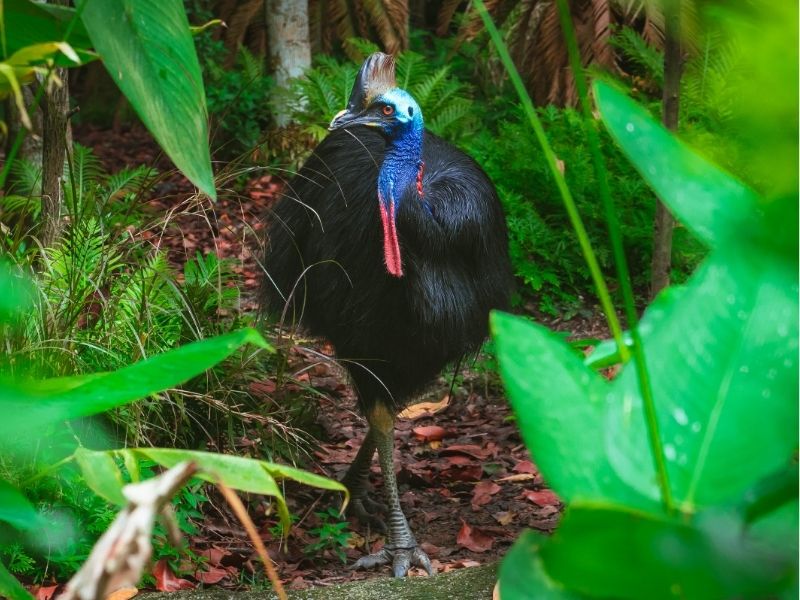
Cassowaries are generally shy and reclusive birds that prefer to avoid human contact when possible.
According to Guinness World Records, cassowaries “do not seek out trouble” and “would much rather avoid conflict, only choosing fight over flight as a last resort.”
However, these birds are easily startled and highly unpredictable, especially when they feel threatened or when protecting their young.
Male cassowaries are particularly dangerous during breeding season when they are incubating eggs or raising chicks, as they take sole responsibility for parenting and will aggressively defend their offspring.
The Washington Post reported that cassowaries are birds “around which even experienced zookeepers take precautions,” highlighting the danger they pose even to trained professionals.
Human feeding of cassowaries creates particularly dangerous situations because it draws the birds closer to human-inhabited areas and makes them more likely to approach people aggressively when they expect food.
Comparisons to Other Dangerous Birds

While cassowaries hold the title of world’s most dangerous bird, it’s worth noting the context of this designation.
According to Wikipedia, “in terms of recorded statistics, it pales in comparison to the common ostrich, which kills two to three humans per year in South Africa.”
However, HowStuffWorks notes that cassowaries, ostriches, chickens and roosters are the only birds worldwide that have caused human deaths from physical contact, making the cassowary part of a very small and dangerous group.
The cassowary’s deadly reputation comes not just from its kill count but from the devastating nature of its attacks when they do occur.
Conservation and Human Coexistence

Ironically, humans pose a far greater threat to cassowaries than these birds pose to us.
The Australian population of southern cassowaries is listed as Endangered under federal and Queensland state legislation due to habitat loss and human activity.
Studies have found that motor vehicle strikes account for 55% of cassowary deaths, while dog attacks produce another 18% of fatalities.
The environmental organization Rainforest Rescue has issued guidelines for people who encounter cassowaries, including never feeding them, keeping dogs leashed or at home in cassowary areas, and slowly backing away if confronted.
If a cassowary acts aggressively, experts recommend backing away slowly, taking cover behind trees or shrubs, and never running, as cassowaries can easily outrun humans.
People are also advised to move backpacks or bags to the front of their body to shield their chest and vital organs if a cassowary charges.
The most important rule: Never approach cassowaries, especially when they are with chicks or near nests.
The Bottom Line on the Southern Cassowary — The World’s Most Dangerous Bird

The southern cassowary’s reputation as the world’s most dangerous bird is well-earned based on its physical capabilities, unpredictable behavior, and documented attacks on humans.
With powerful legs, dagger-like claws up to 5 inches long, the ability to leap 7 feet high, and running speeds of 31 miles per hour, cassowaries are equipped to inflict catastrophic injuries.
The two confirmed human deaths since 1900 — one in 1926 and one in 2019 — demonstrate that cassowary attacks, while rare, can be fatal when they occur.
Both victims died after falling to the ground, where they were vulnerable to the bird’s devastating kicks and slashing claws that severed major blood vessels.
For those who live in or visit cassowary habitat in Australia and New Guinea, the message is clear on what to do: Maintain a respectful distance and never feed these birds
Also, remember that despite their dinosaur-like appearance and fearsome capabilities, cassowaries deserve our protection as much as our caution.

Want to learn about similar birds? Check out our list of the World’s Scariest Birds.